Clickport Blog
Thoughts on web analytics, privacy, and building a Google Analytics alternative. From the founder of Clickport.
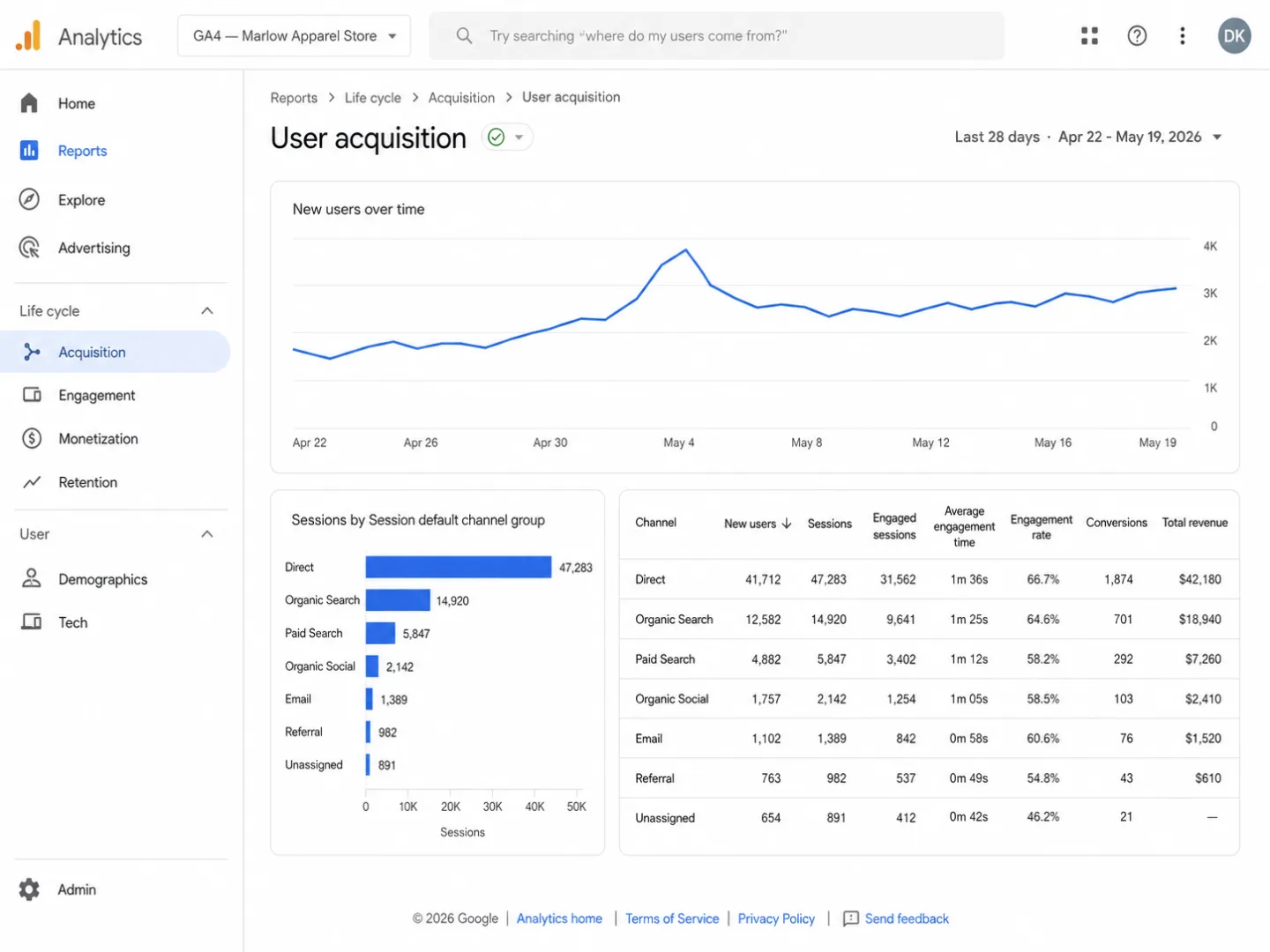
Which AI Search Engines Bring You Leads and Sales?
AI search brought 283 visits to a content website. Of those, 38 included a click on a retailer link. Here is what the traffic totals miss.
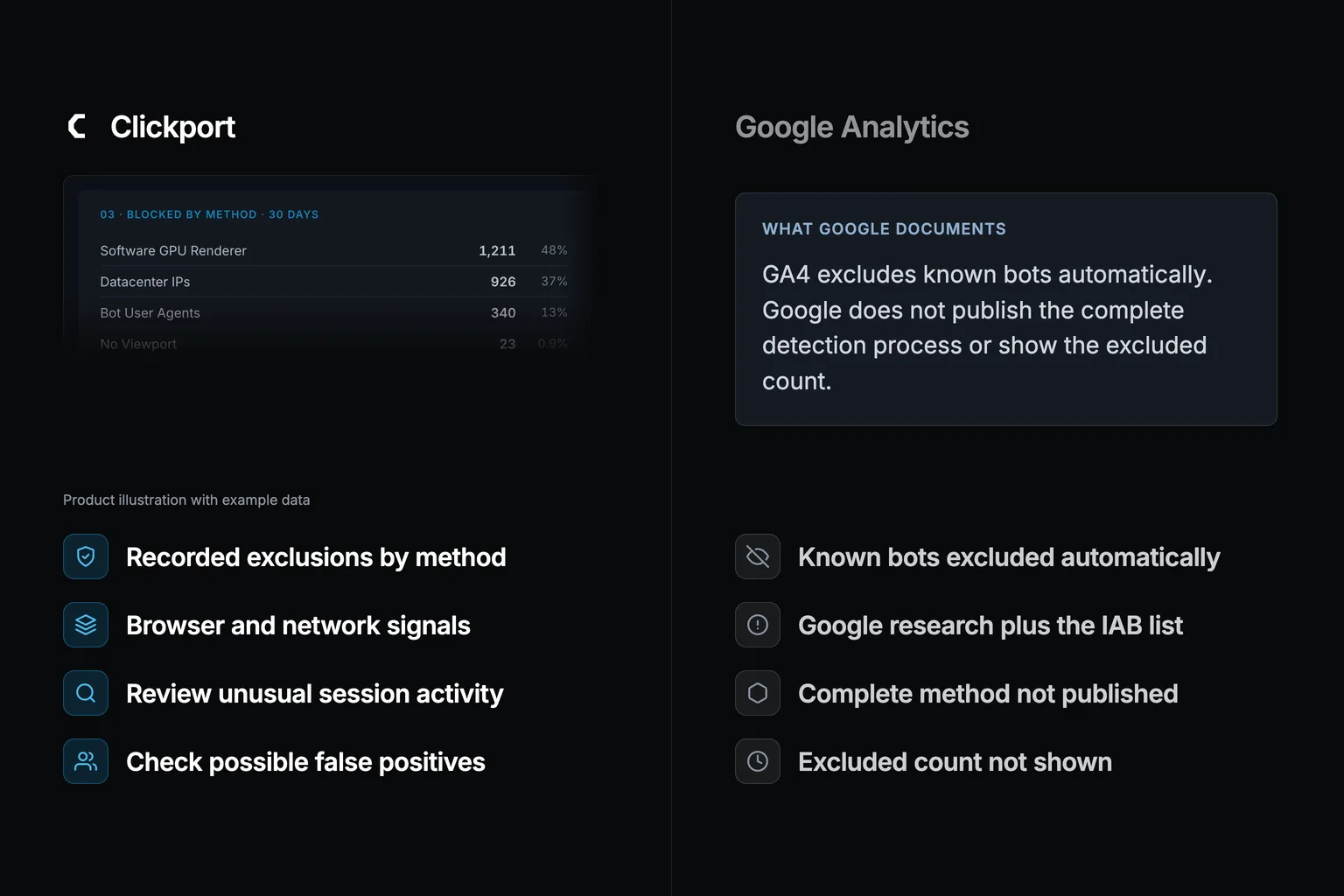
How Bot Detection Actually Works in Web Analytics (2026)
Bot detection checks browser, network, and activity signals before traffic reaches your reports. Here is what GA4 discloses, what Clickport shows, and where detection can fail.
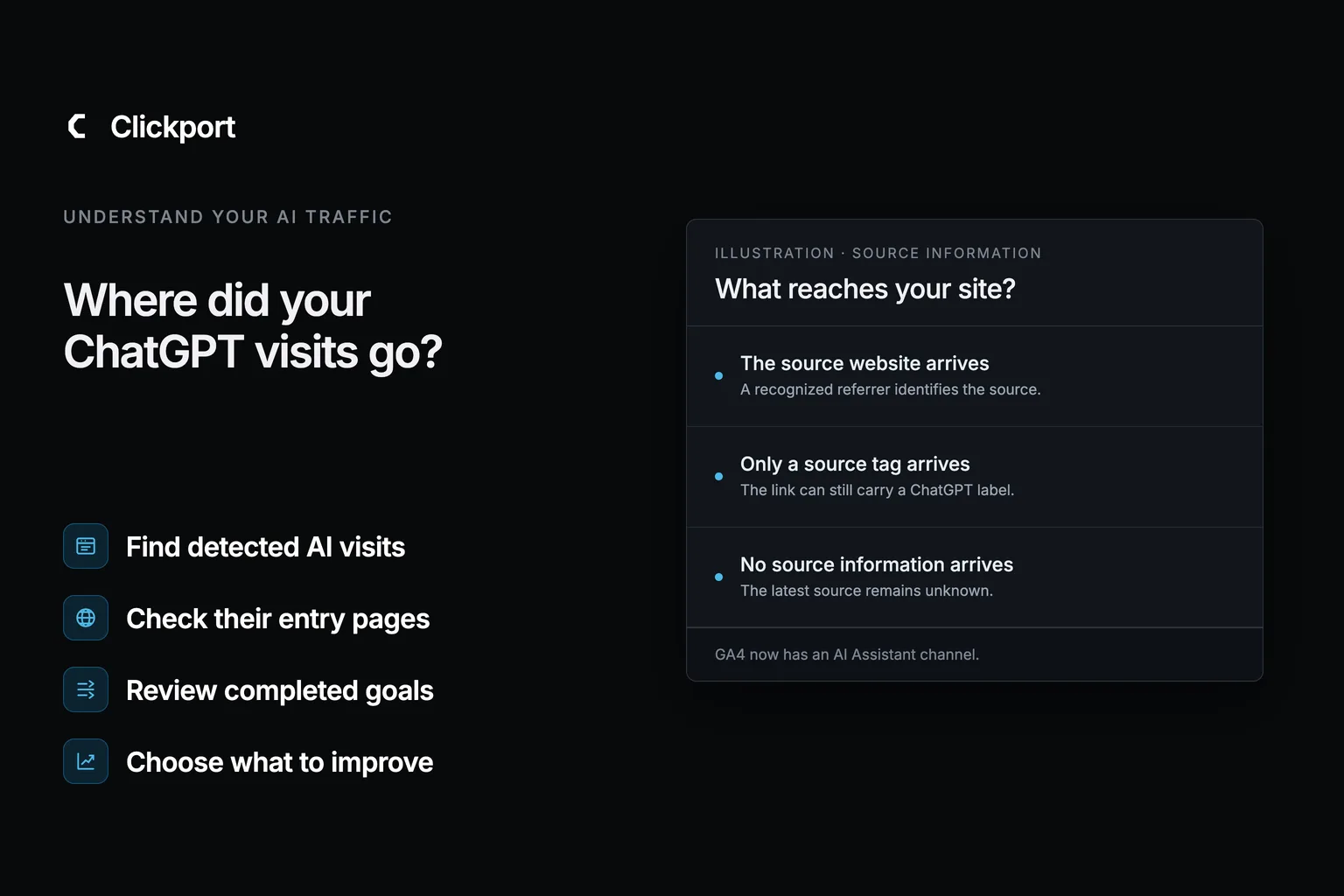
Why ChatGPT Traffic Shows as Direct in GA4 (2026)
ChatGPT traffic can appear as Direct when its source information is missing. GA4 now has an AI Assistant channel. Here is how to find the visits you can identify and check what they do.
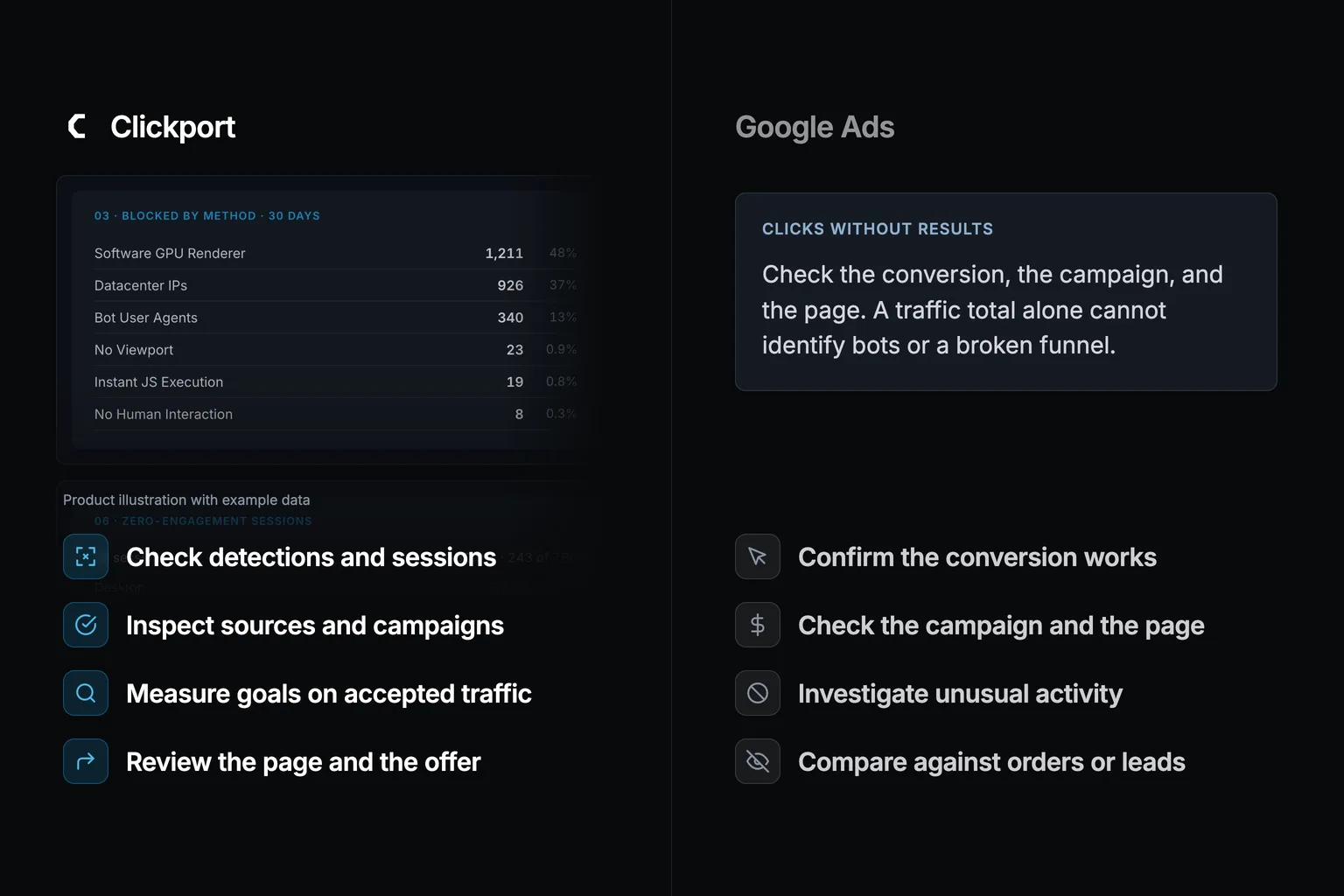
Clicks But No Conversions: Is It Bots or Your Funnel?
Clicks but no conversions? Most of the time it really is your funnel, only about 8.5 percent of paid clicks are invalid, so roughly 11 in 12 are human. The problem is you can't prove that in GA4, because it won't show you how many of those clicks were people. Here's how to tell a broken funnel from a bot-diluted one, and the order to check things in.
Do I Need a Cookie Banner on My Website? (2026)
Using ads, Google Analytics, or just a few essential website features? Get a quick answer, check your setup, and keep the statistics you need.
Do You Need MonsterInsights? Free vs Paid (2026)
MonsterInsights is optional. See what Lite gives you, when a paid plan helps, and what Plus and Pro cost after renewal. Then choose the reports you will use.
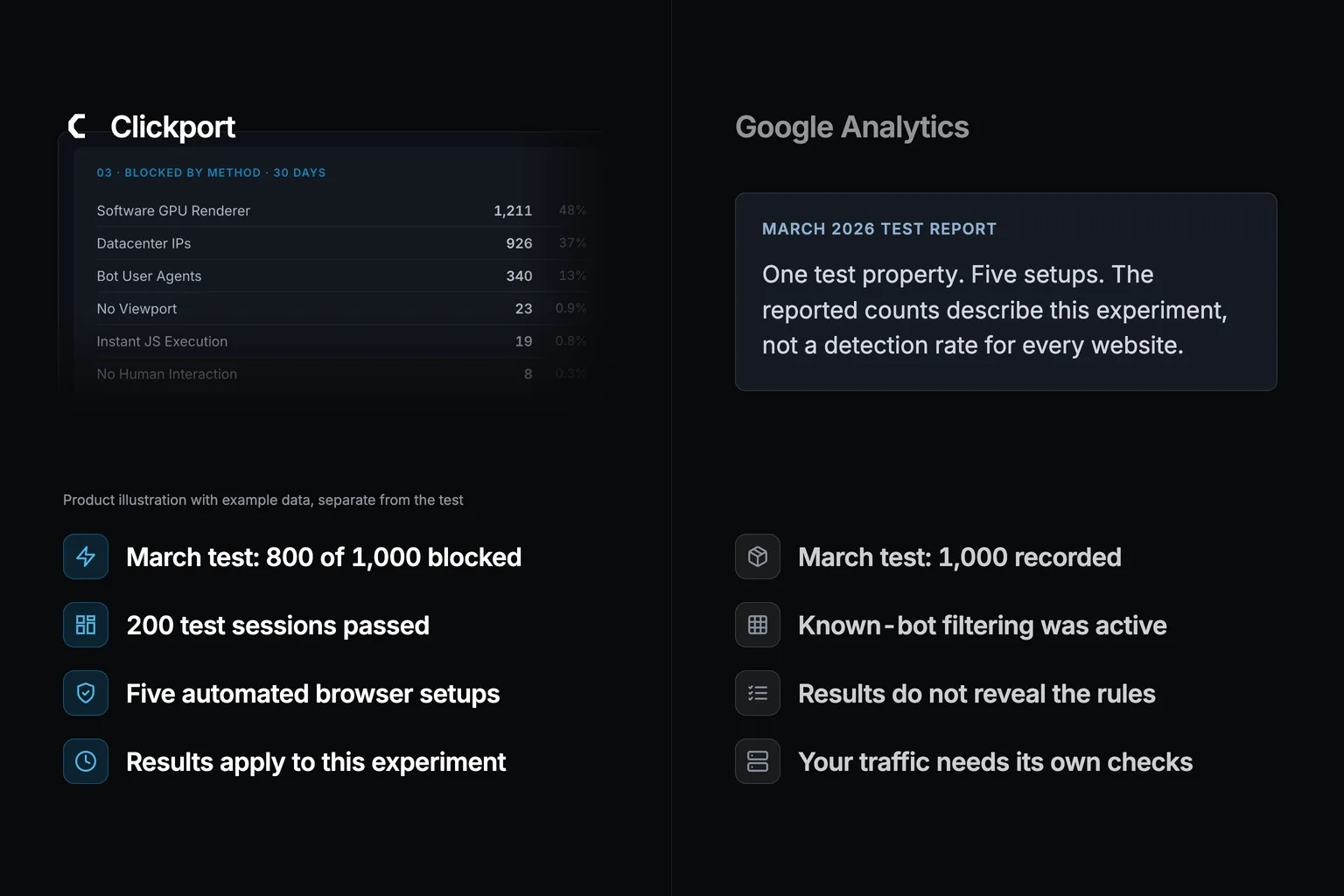
GA4 Bot Traffic Test: 1,000 Sessions in March 2026
Our March 2026 test reported 1,000 automated sessions counted by GA4 and 800 blocked by Clickport. This historical report covers five setups and their limits.
Bot Form Fills Are Counting as Conversions in GA4. Here's Why You Can't Filter Them Out.
A spam bot fills your contact form, fires form_submit, and because you marked form_submit as a Key Event, GA4 writes a permanent fake conversion into your count. Then that junk conversion trains Google Ads to chase more of the same. Here's why no GA4 setting un-counts it, and what scores the visitor before it can count.
Is GA4 Accurate? What You Can Fix and What You Can't
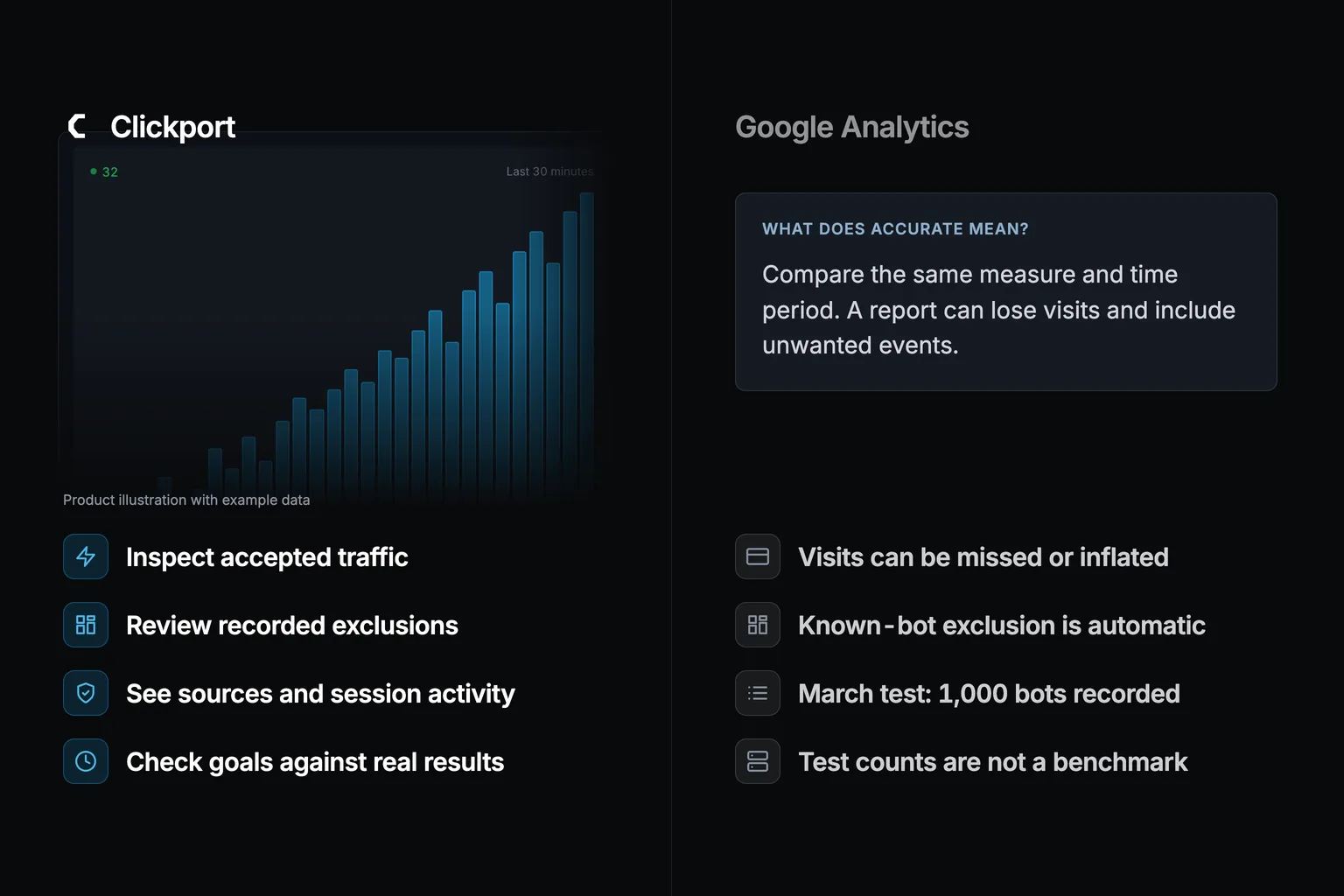
GA4 can miss visits and include automated activity that passes its checks. Here are the tracking problems you can investigate and the reporting limits to understand.
Is My Website Traffic Real or Bots? 5 Checks (2026)
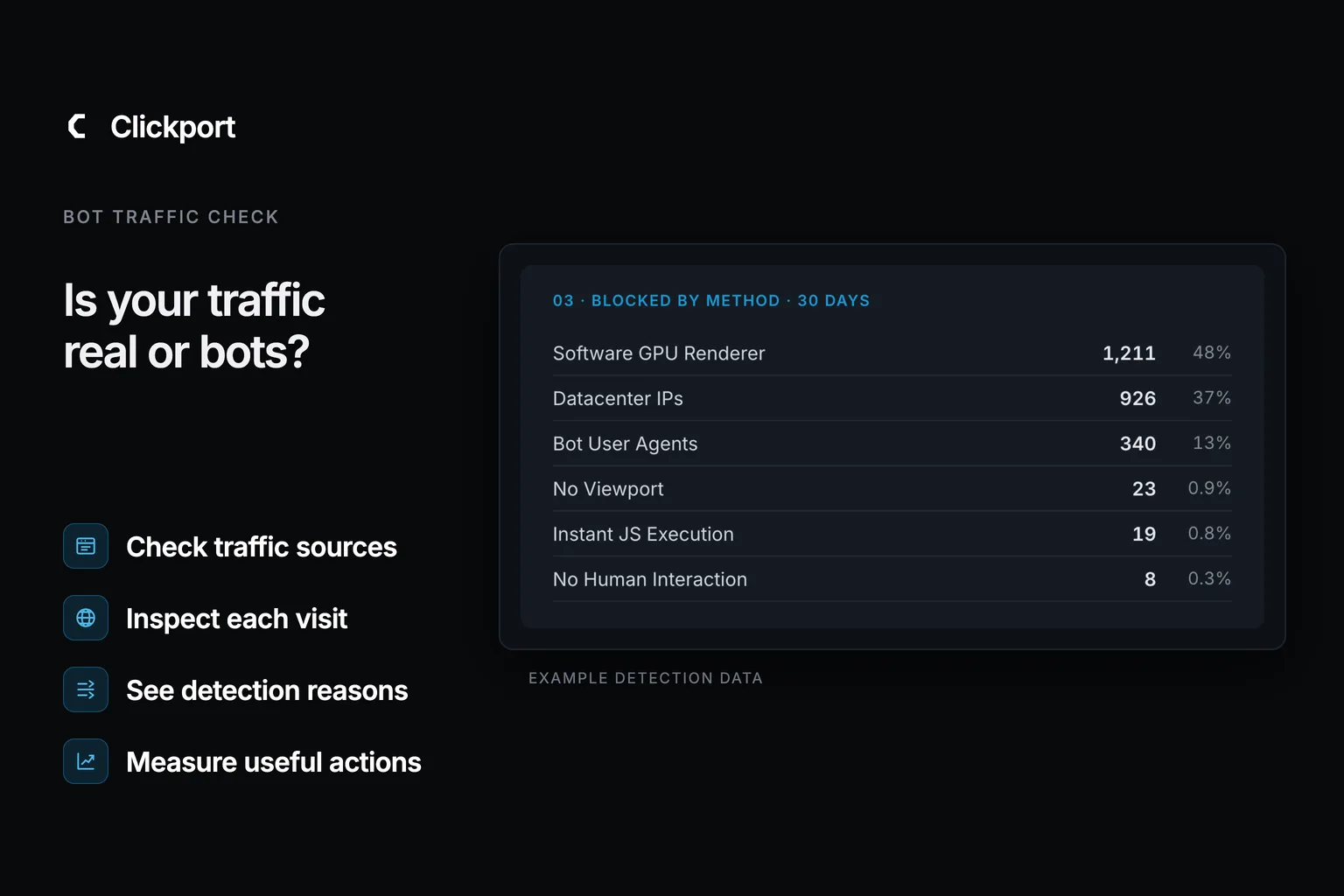
A traffic spike does not prove that your visitors are bots. Use five checks to investigate unusual visits, understand GA4's limits, and see the evidence in Clickport.
Privacy-Friendly Analytics: See What Drives Results (2026)
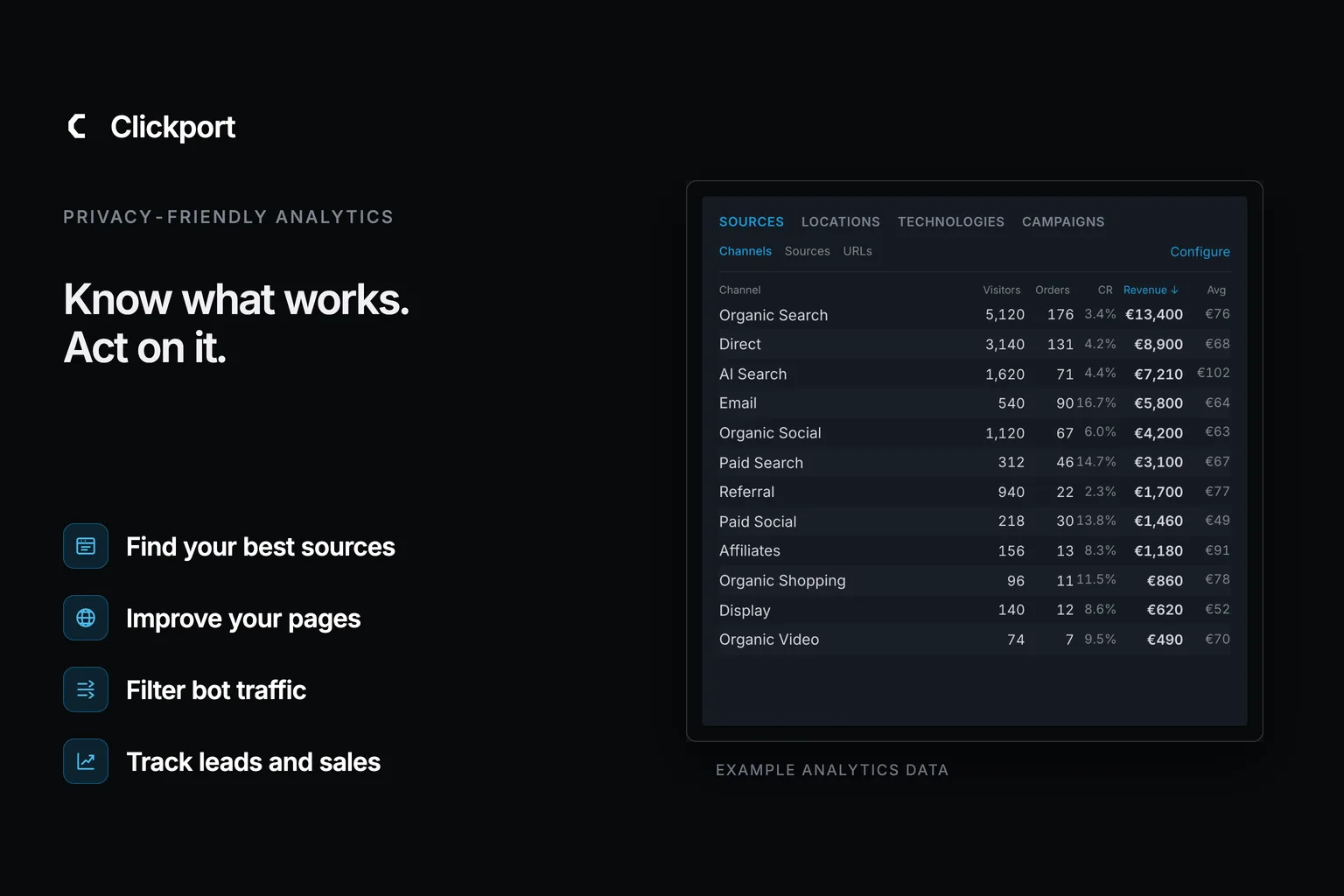
Find the sources that bring leads, improve your pages, and connect visits to sales. Clickport combines engagement, revenue, journeys, and bot filtering in one dashboard.
Google Traffic Dropped: What Did It Cost Your Business?
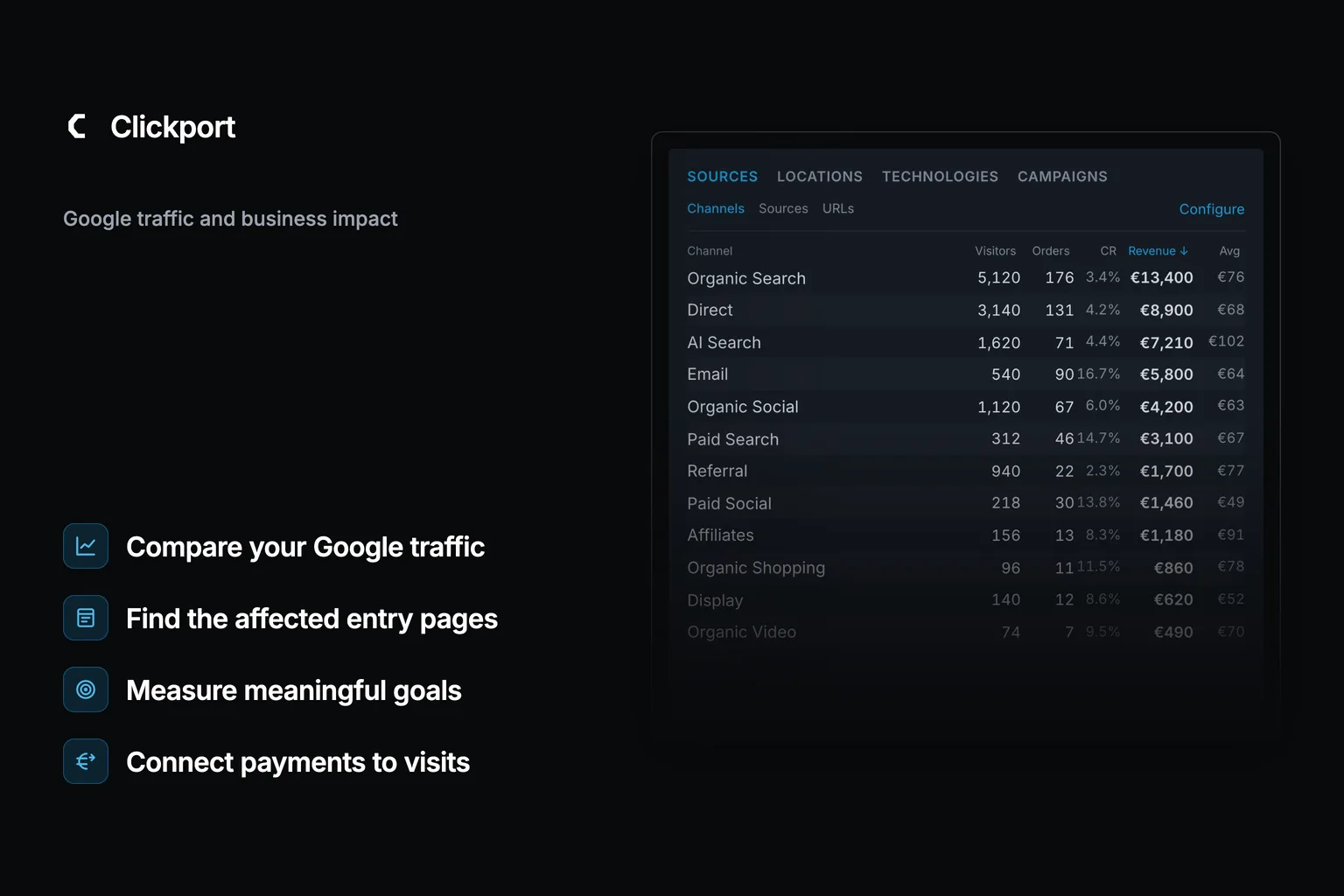
A traffic decline doesn't tell you what happened to sales. Compare the right periods, find the affected landing pages, and calculate a clearly labelled estimate.
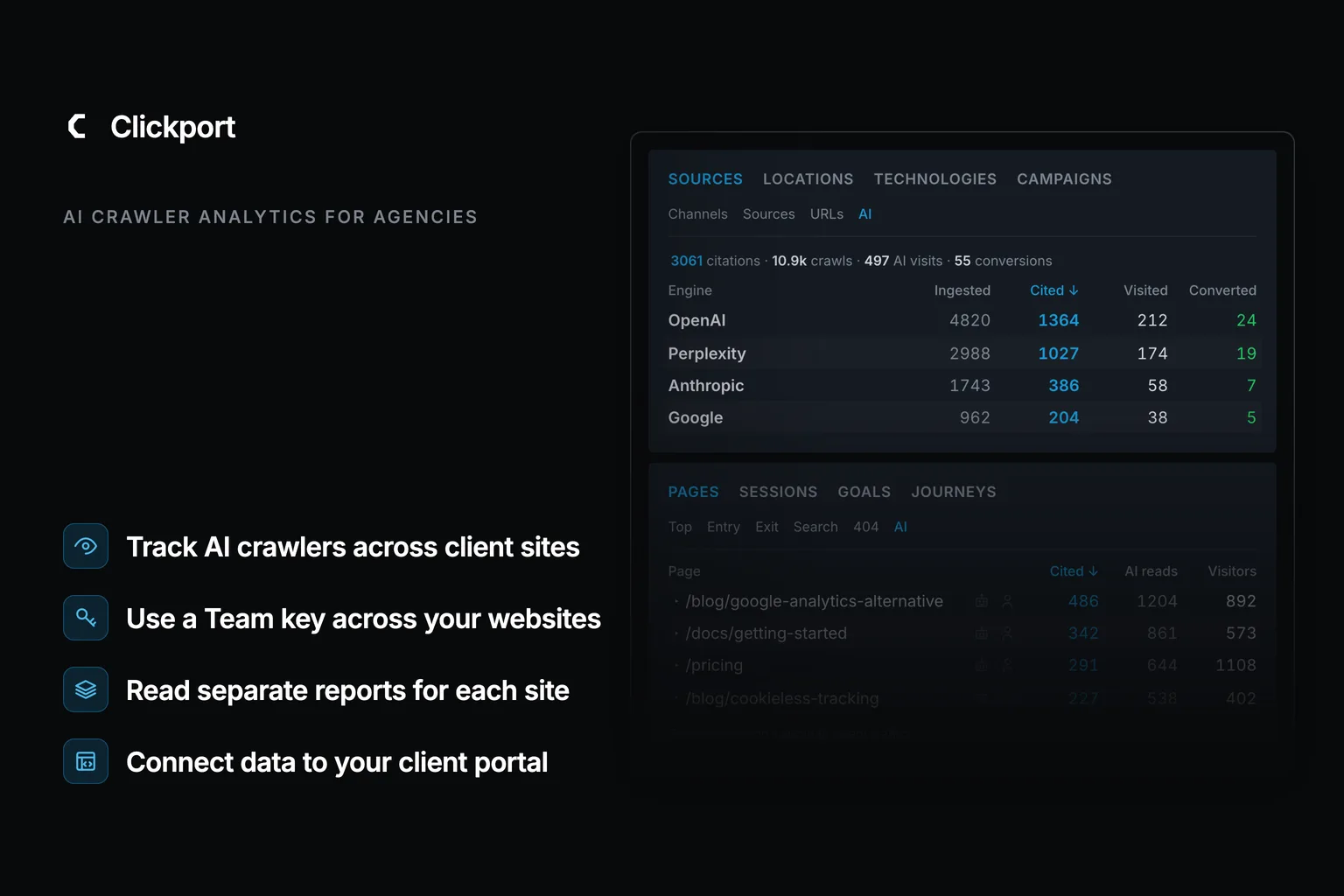
AI Crawler Analytics for Agencies: Track Client Websites Through One API
Add crawler activity to your agency's client reports through one API. A tested two-site example covers collection, site selection, access checks, and the limits behind the numbers.
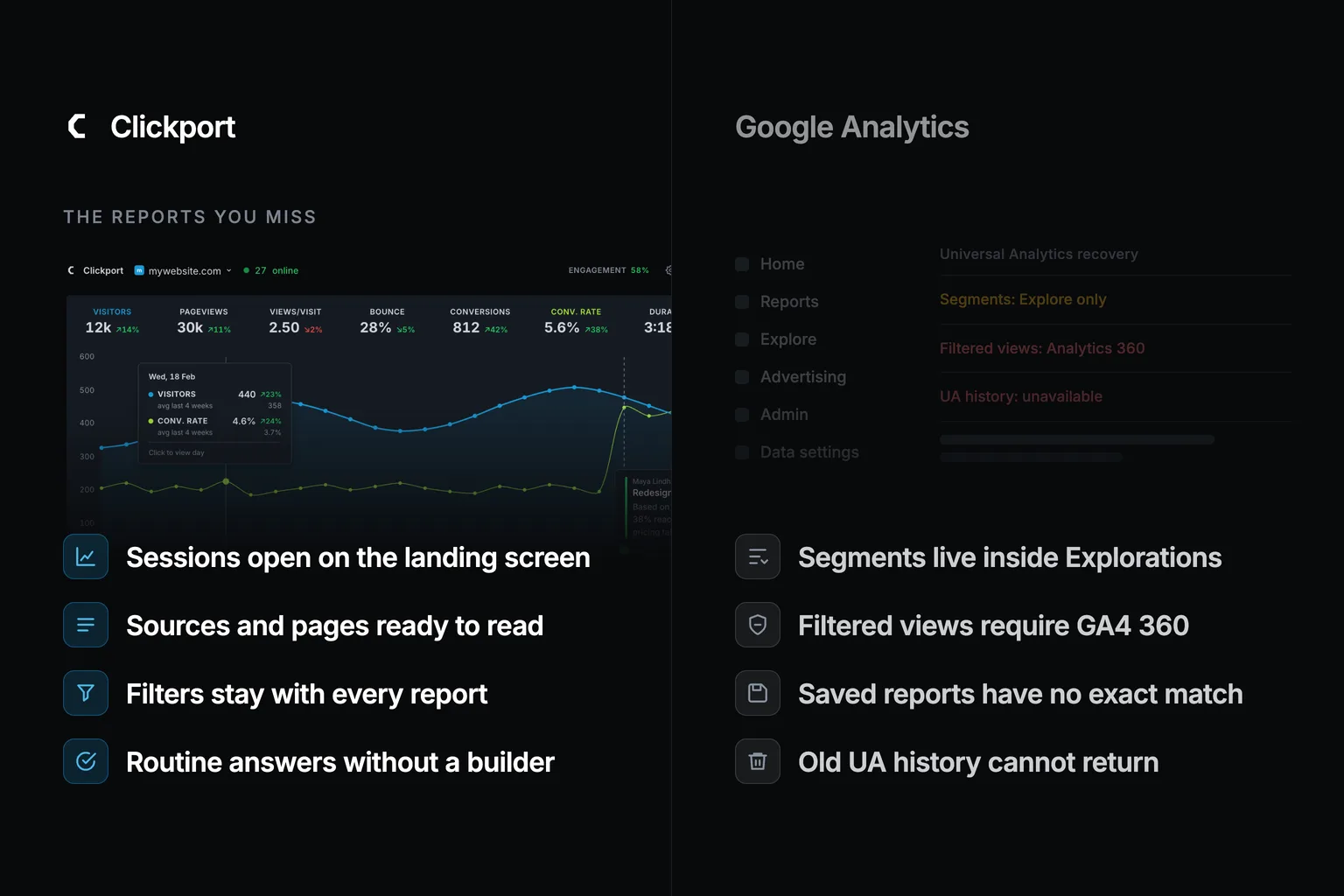
I Miss Universal Analytics: What GA4 Took Away and How to Get It Back
Universal Analytics was easier because its reports answered normal questions quickly. Here is where 12 familiar workflows went in GA4, including the features that quietly returned.
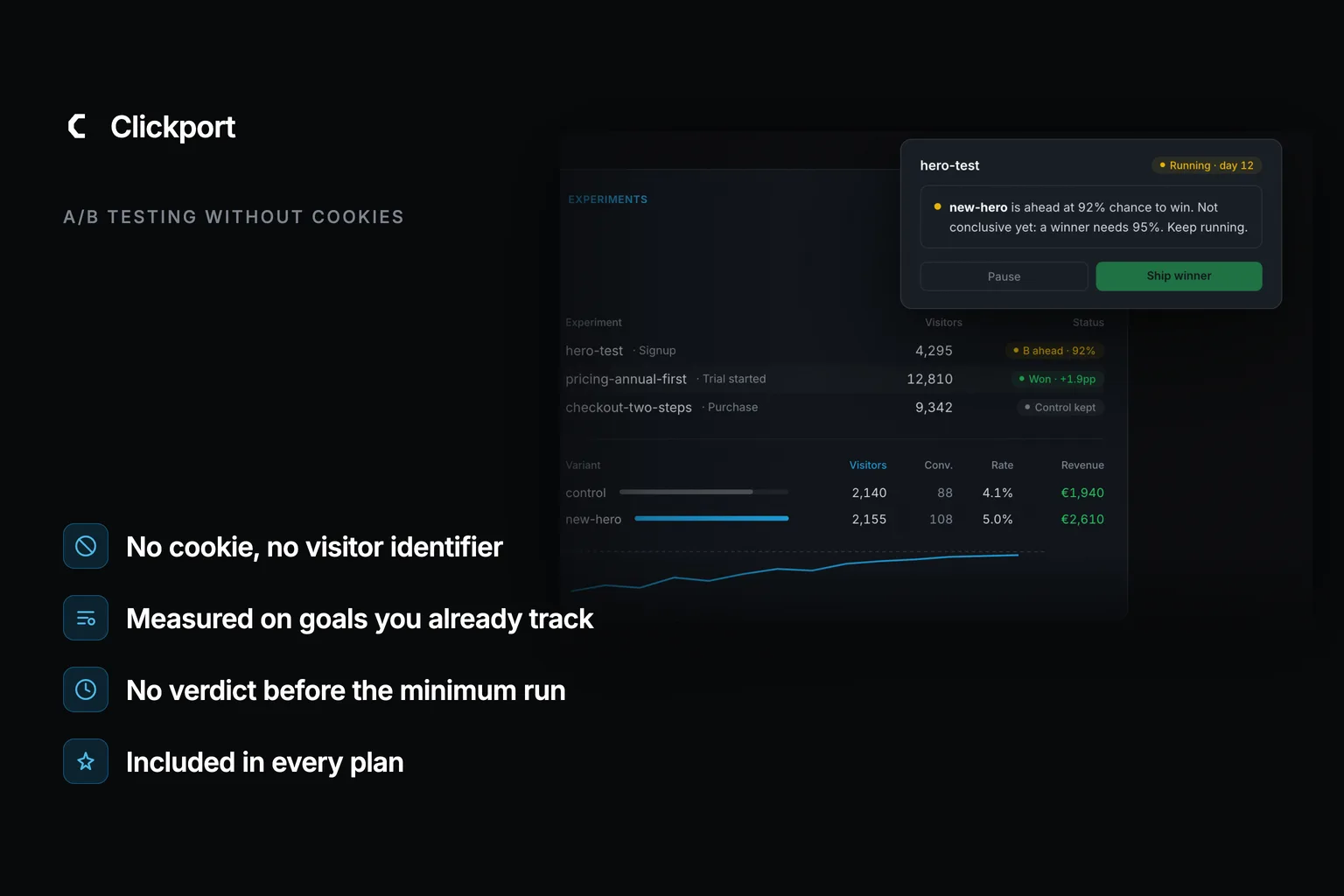
A/B Testing Doesn't Need to Track People
A/B testing is a coin toss with a scoreboard. It never needed to follow people around the web. Five changes I'd test on a normal website, what to measure, and when your traffic is too thin to bother.
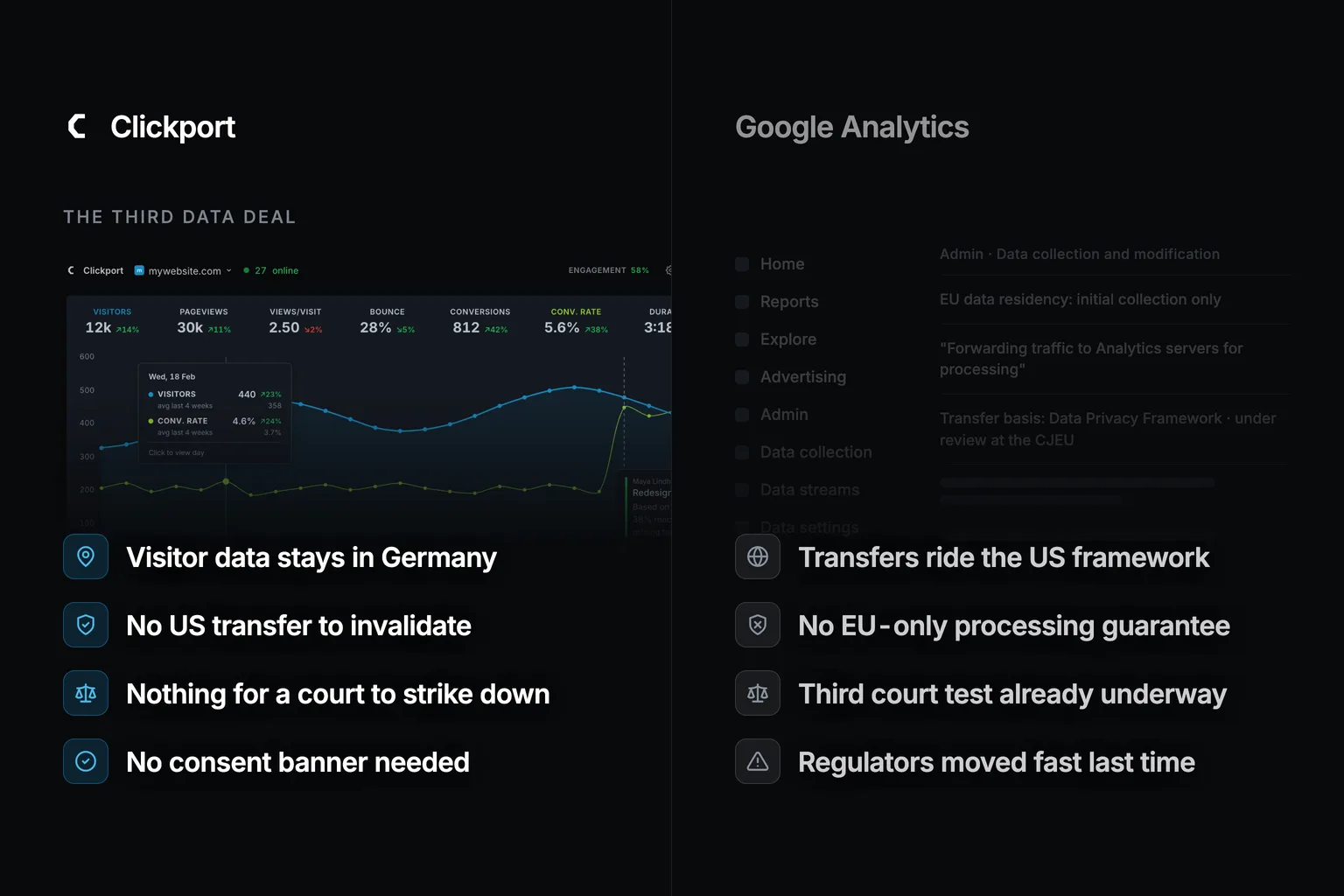
Schrems III: What Happens to Google Analytics Now
The US Supreme Court knocked out a leg of the EU-US data framework on June 29. Max Schrems asked Brussels to withdraw it. Here's what that means if you run Google Analytics.
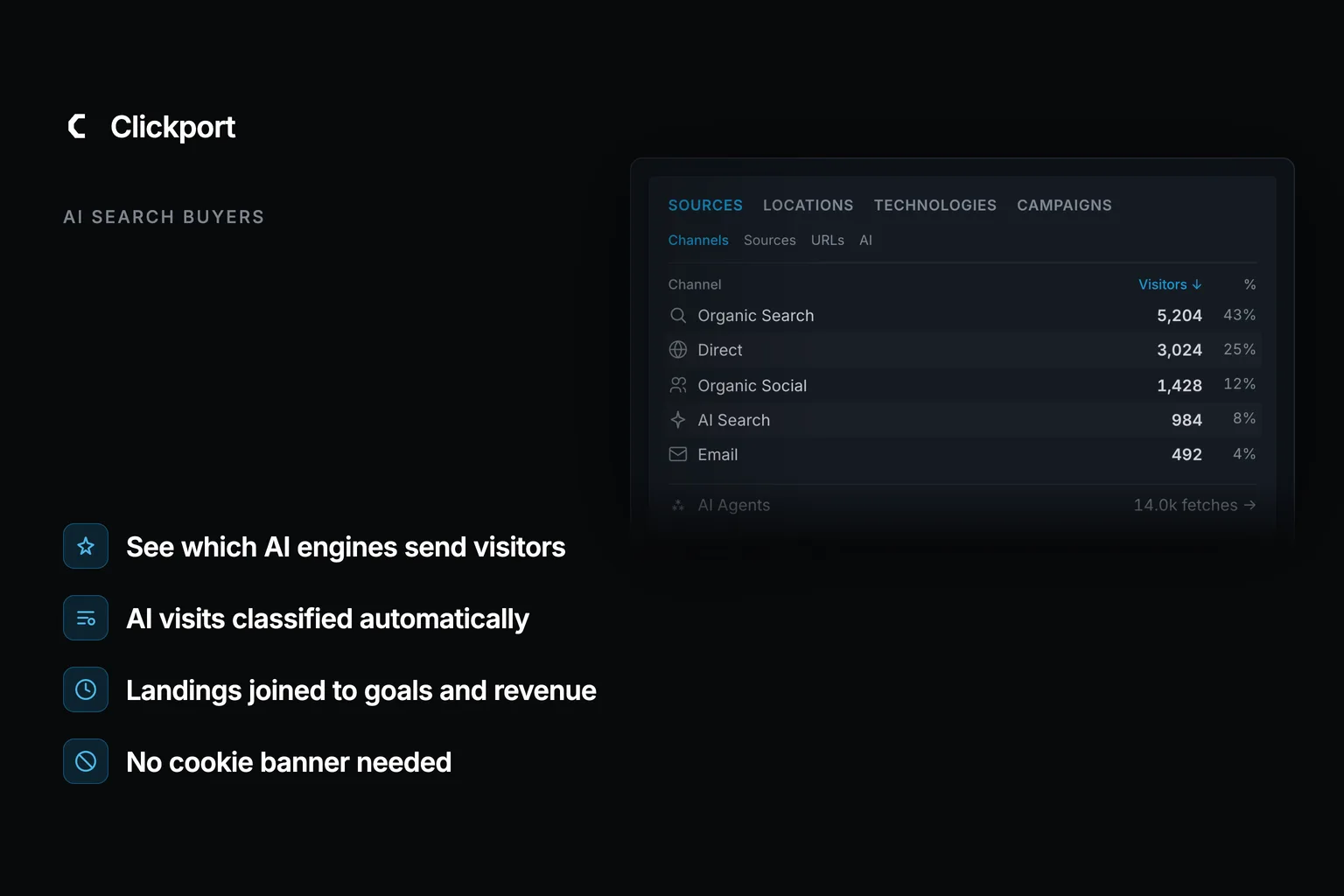
AI Search Traffic: More Buyers, Fewer Readers in 2026
AI search is swapping publishers for products. On a marketplace we measure, 72.8% of AI visitors land on product listings. ChatGPT shops. Perplexity reads.
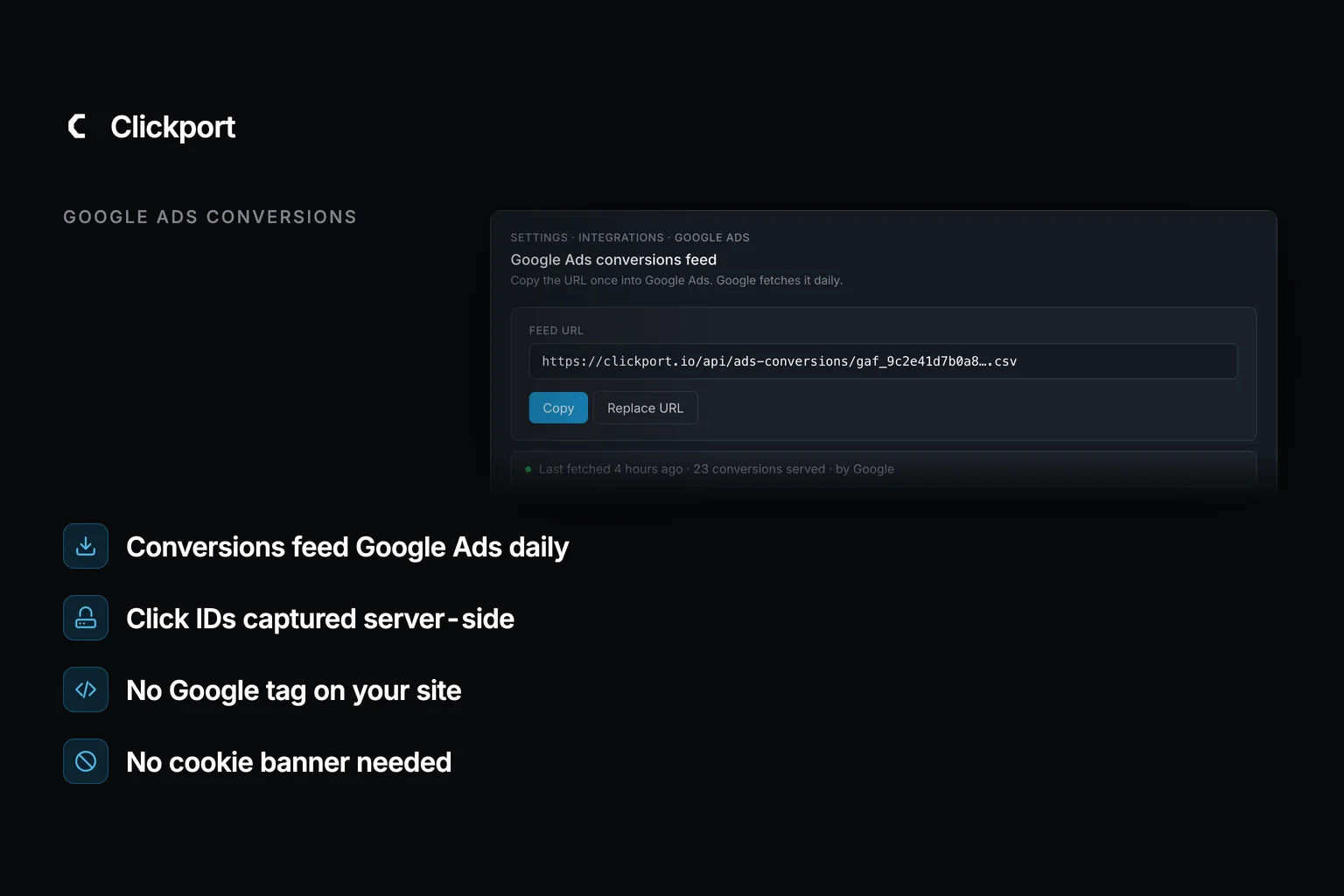
Google Ads Conversion Tracking Without the Google Tag
Google Ads accepts conversions from a scheduled file import. No gtag, no cookie banner. Here's how the mechanism works and how to use it.
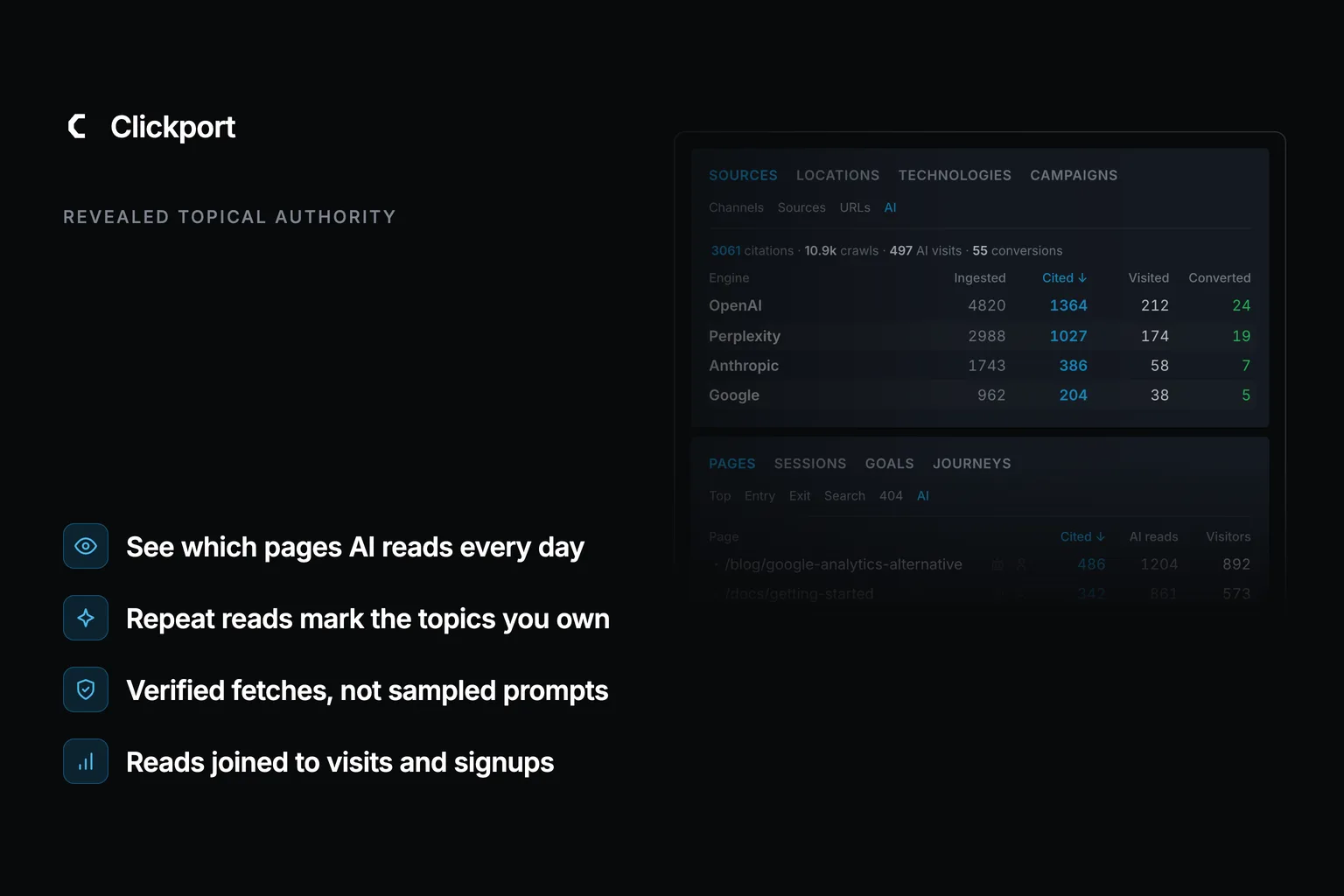
Which Topics Do AI Assistants Think You Own?
AI assistants read with strong preferences: the top 10% of pages get 59% of all live reads. Your server logs already show which topics the machines think you own.
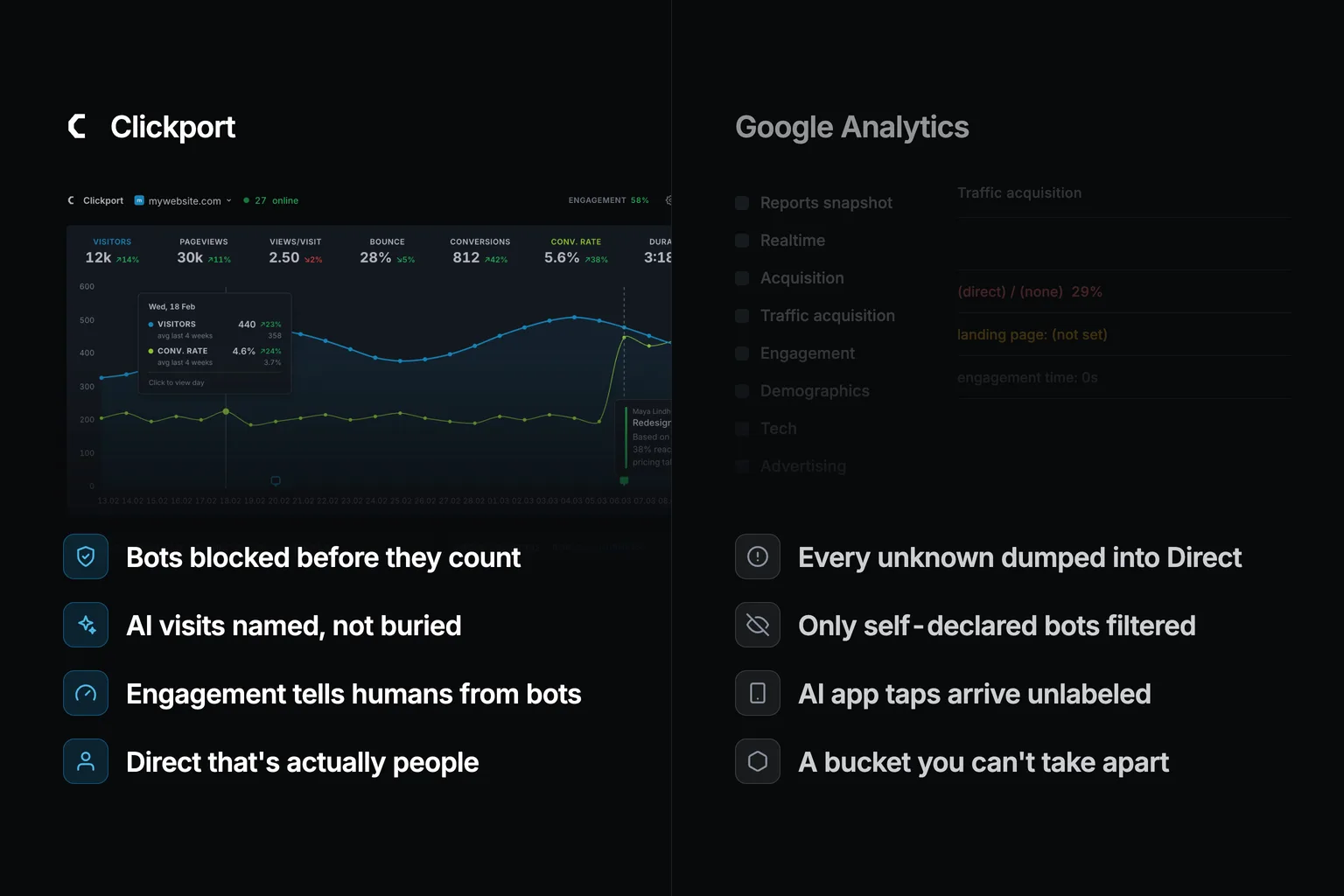
Why Is My GA4 Direct Traffic So High? The Real Answer
The median site we measure sees 29% of its sessions land in Direct, and almost none of that is people typing URLs. Direct is where GA4 puts every visit it can't explain: stripped referrers, AI app clicks, consent holes, and bots. Here's what's inside the bucket, the one part you can fix, and a 10-second test that separates humans from junk.
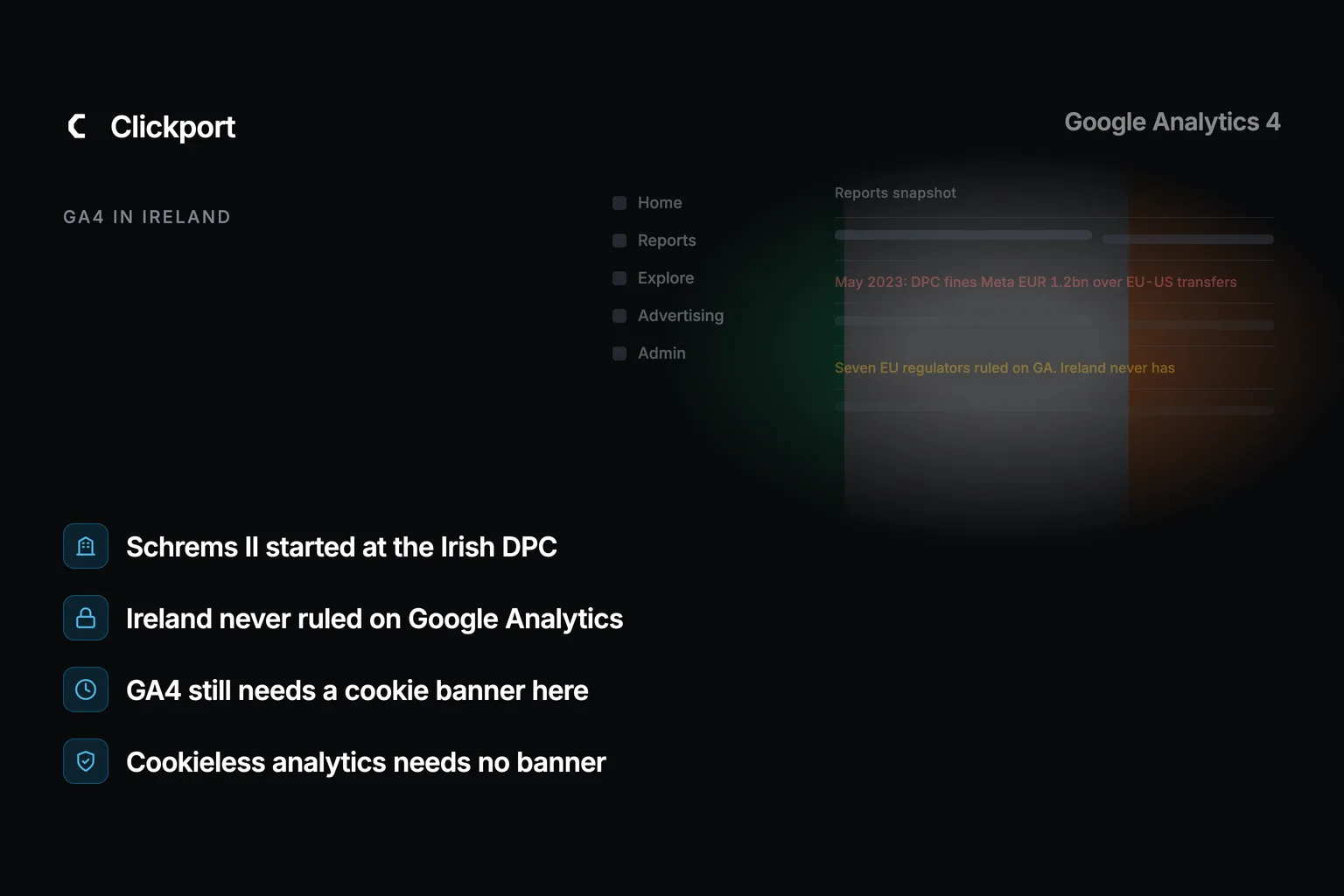
Is Google Analytics Legal in Ireland? The DPC, the One-Stop Shop, and What It Means for Your Site
Seven European regulators ruled on Google Analytics between 2022 and 2023. Ireland's DPC, the lead EU regulator for Google and Meta, never did. Meanwhile it fined Meta EUR 1.2 billion over the exact same data-transfer problem.
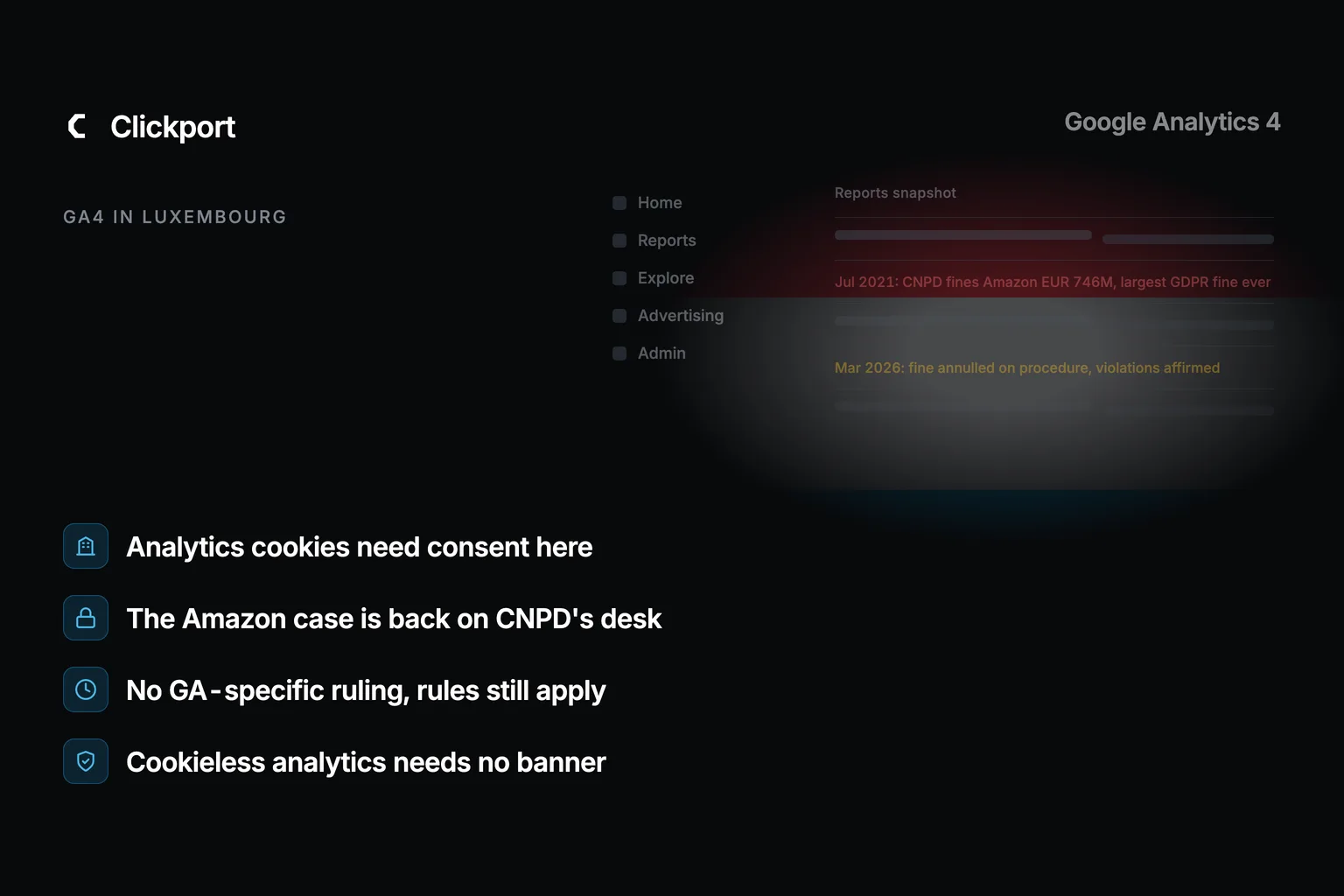
Is Google Analytics Legal in Luxembourg? The CNPD, the Amazon Case, and Your Cookie Banner
Luxembourg's CNPD issued the biggest GDPR fine in history: EUR 746 million against Amazon. In March 2026 a court annulled it and sent the case back. Meanwhile analytics cookies still need consent, and Google Analytics has never been cleared.
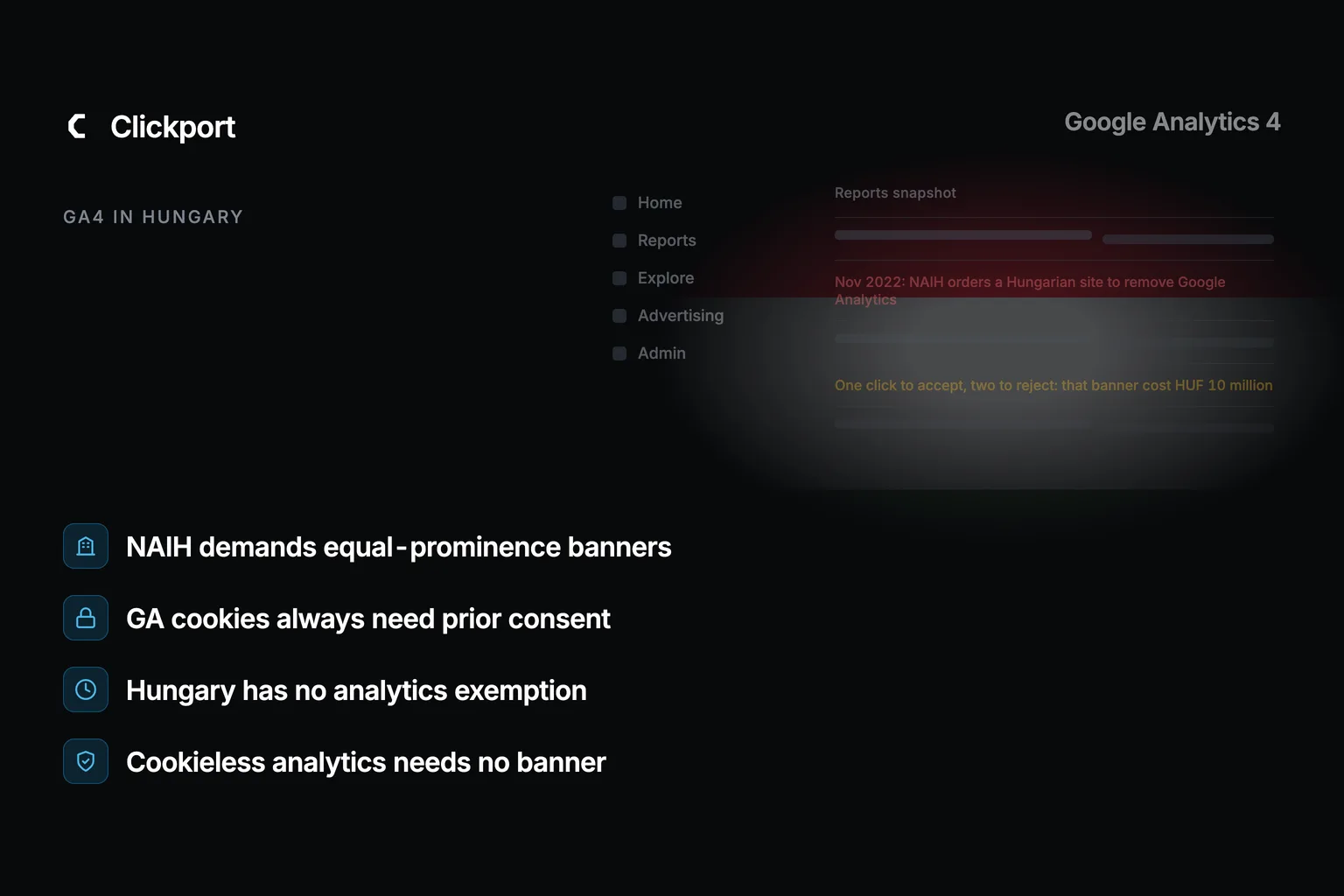
Is Google Analytics Legal in Hungary? The 'Equal-Prominence' Cookie Standard and What It Demands
NAIH fined Hungary's biggest commercial broadcaster HUF 10 million because rejecting cookies took one click more than accepting them. It ordered another site to delete Google Analytics entirely. And Hungary has no consent exemption for analytics. None.
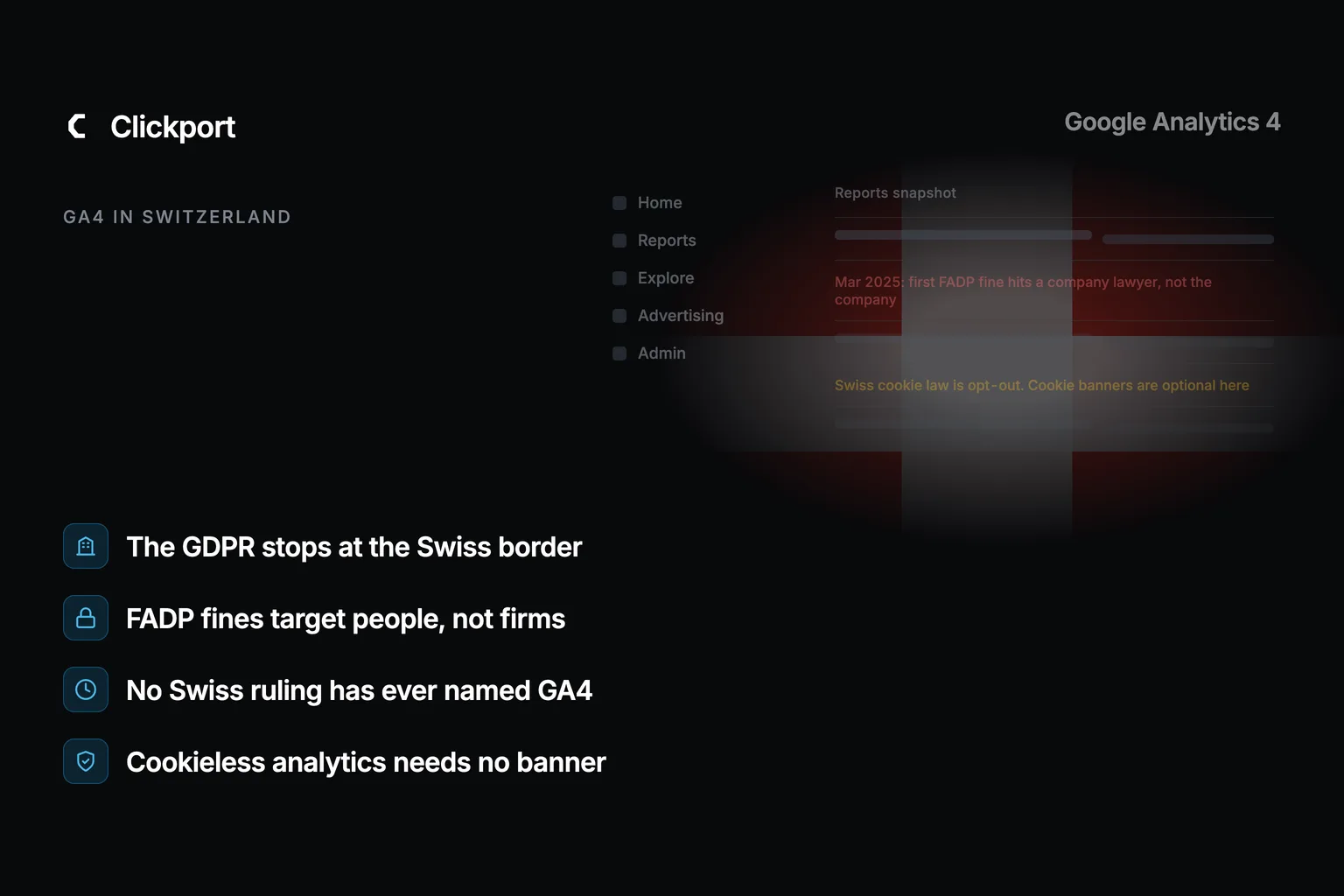
Is Google Analytics Legal in Switzerland? The FADP, FDPIC Guidance, and the Non-EU Twist
Switzerland's first published privacy fine under the new FADP was CHF 600, and it hit a company lawyer personally. Swiss cookie law is opt-out, not opt-in. And no Swiss authority has ever ruled on Google Analytics.
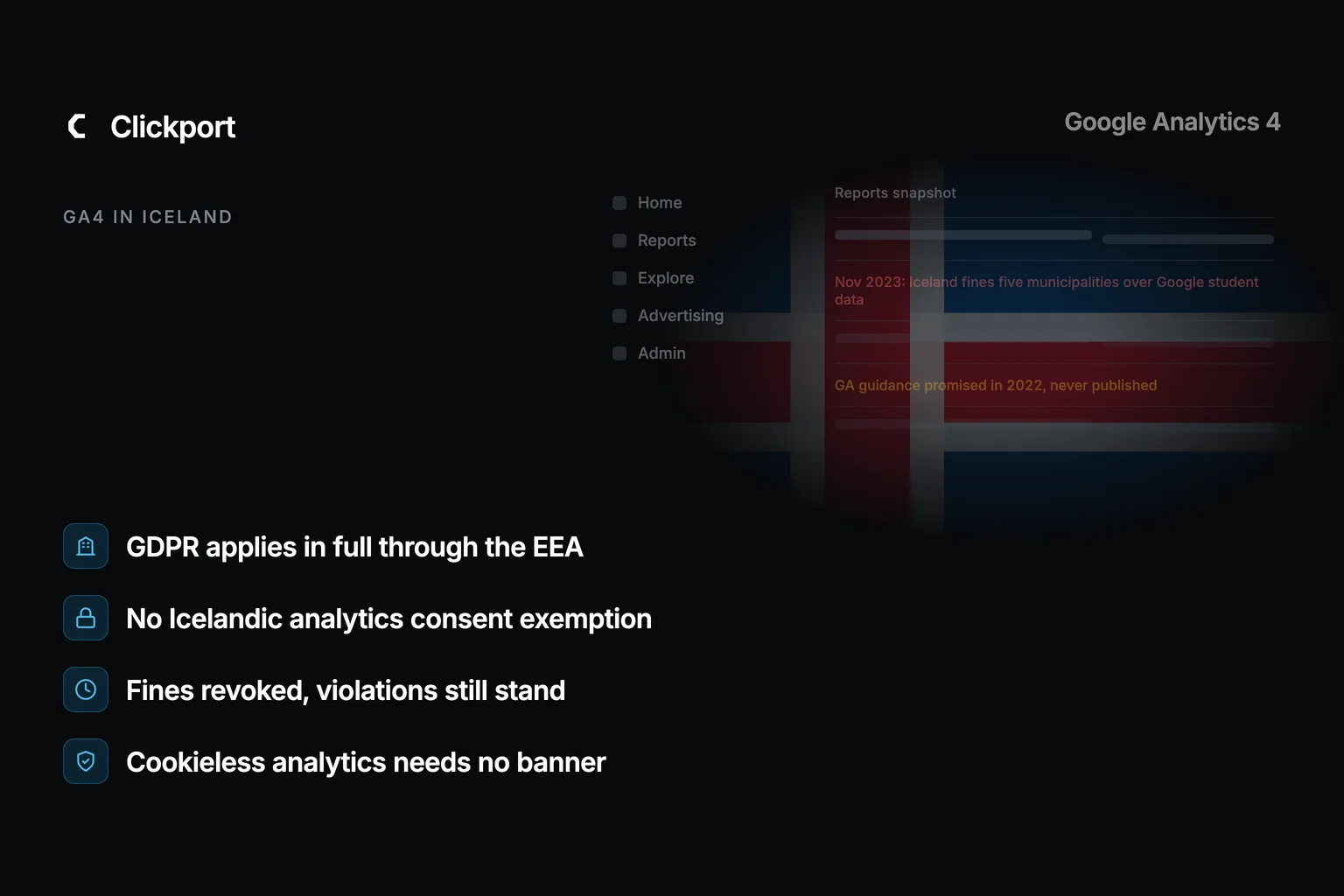
Is Google Analytics Legal in Iceland? Persónuvernd, the Google Fines, and Schrems II
Iceland's regulator fined five municipalities ISK 12.8 million for handing schoolchildren's data to Google. In 2026 the fines were revoked, but the violation findings still stand. And the Google Analytics guidance Persónuvernd promised in 2022 has never been published.
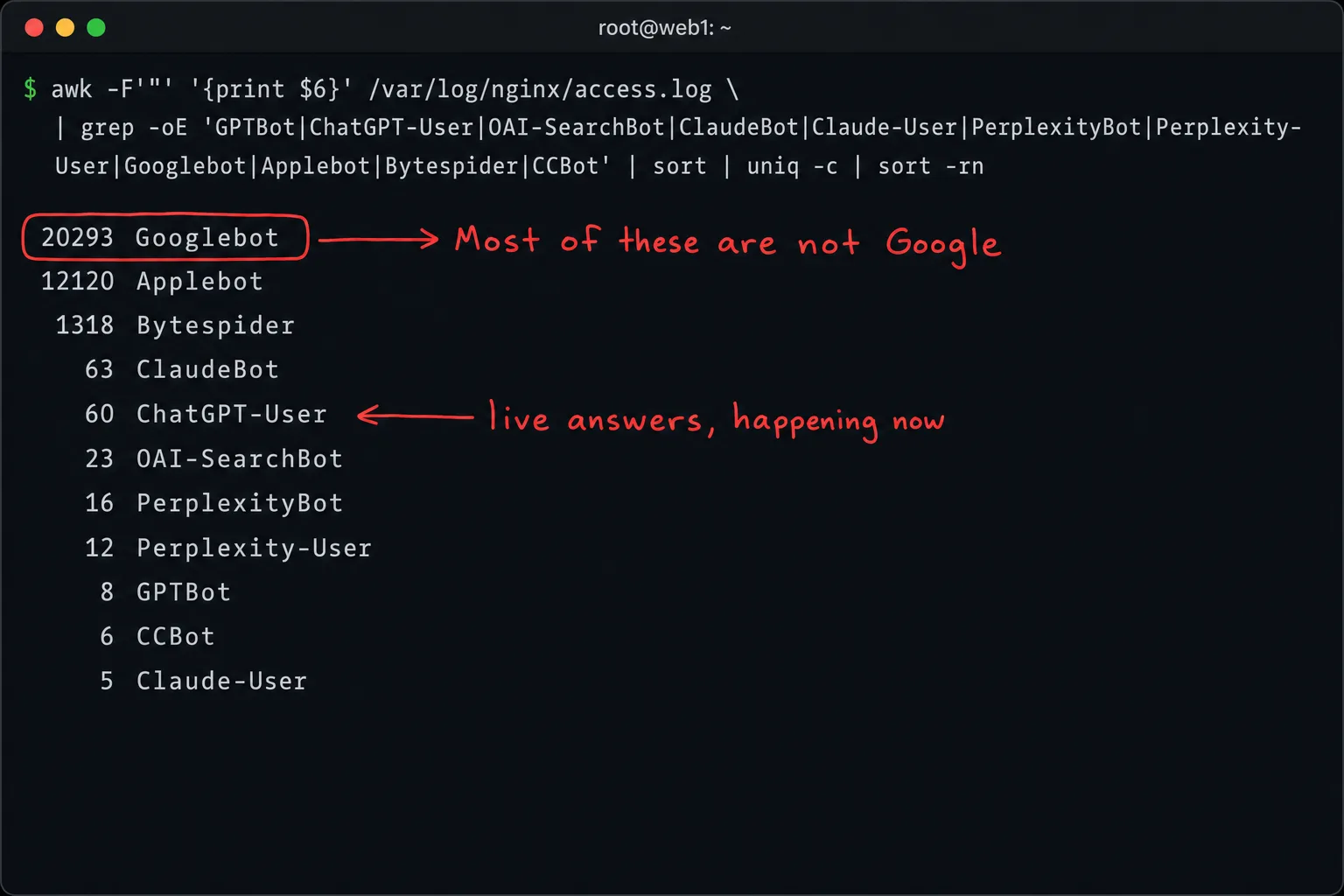
Which AI Bots Are Reading Your Website? Now You Can Watch Them Work
Across a subset of the sites we measure, bots wearing AI and crawler names hit more than 20,000 times in 15 days. The biggest verified reader wasn't Googlebot. It was ChatGPT, answering live questions, at 10.8x Googlebot's reads. Here's the full taxonomy, the grep commands to see it on your own server, and what the reads are good for.
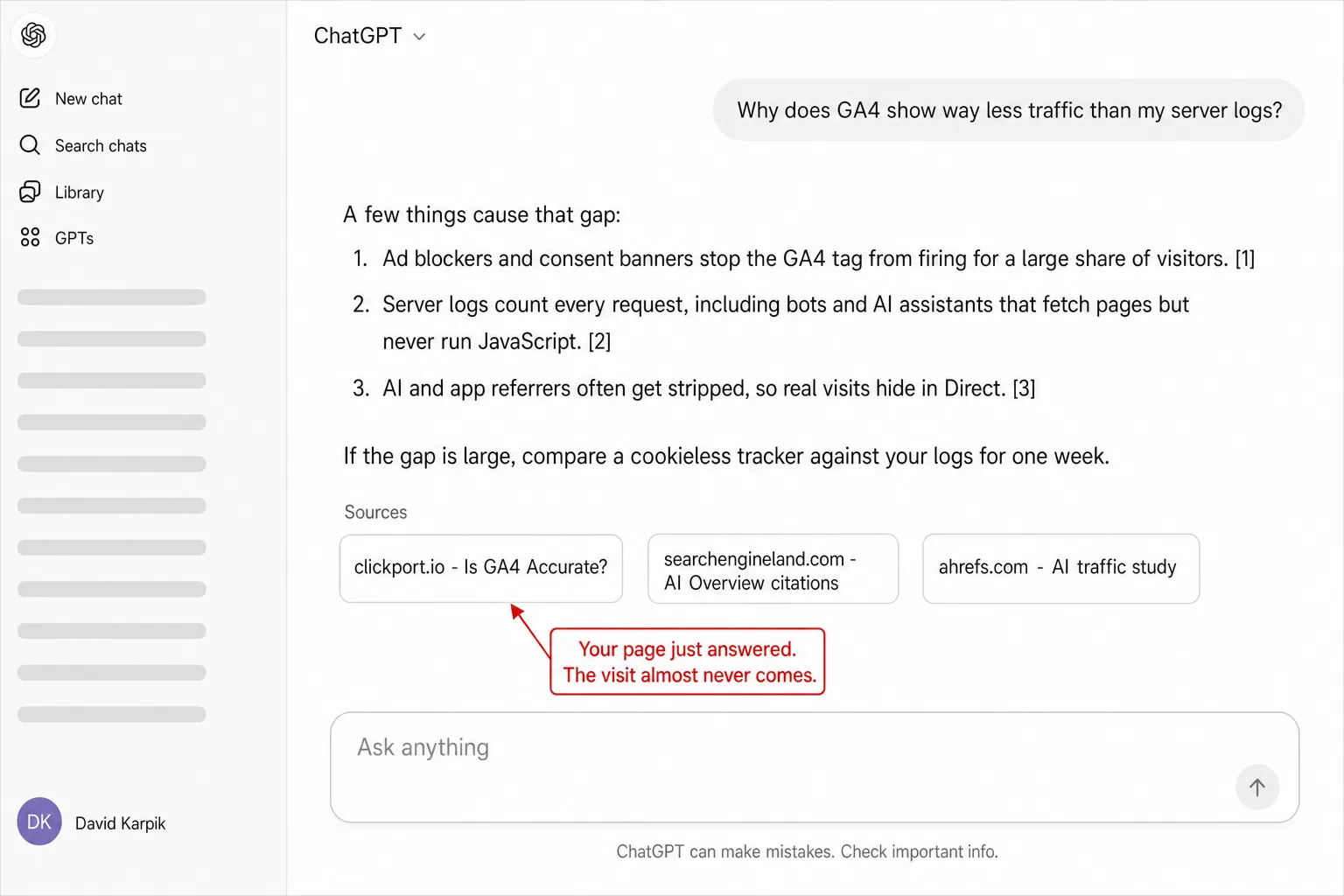
ChatGPT Read Our Pages 7,825 Times. It Sent 23 Visitors.
We counted every verifiable AI citation across two sites for 14 days: 8,280 fetches by ChatGPT, Claude, and Perplexity answering live user questions. Then we counted the AI search visits in the same window: 83. That's the AI citation gap, and no visibility score will show it to you.
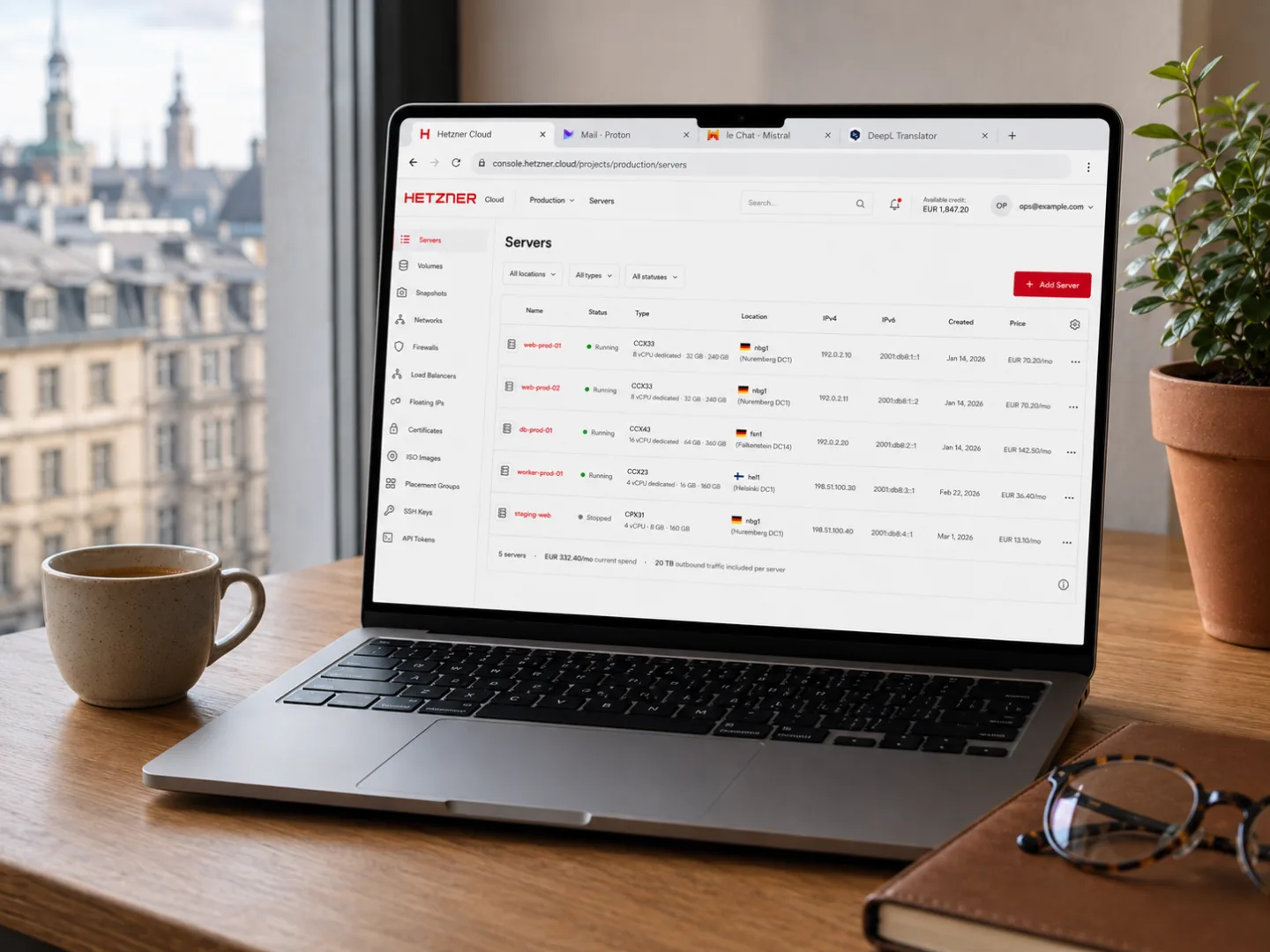
50+ European Alternatives to US Tech: The Privacy-First Business Stack
The only guide that covers 50+ European tools across 10 categories with real pricing, clear trade-offs, and migration difficulty ratings. Built from firsthand experience running a business on a fully European stack.
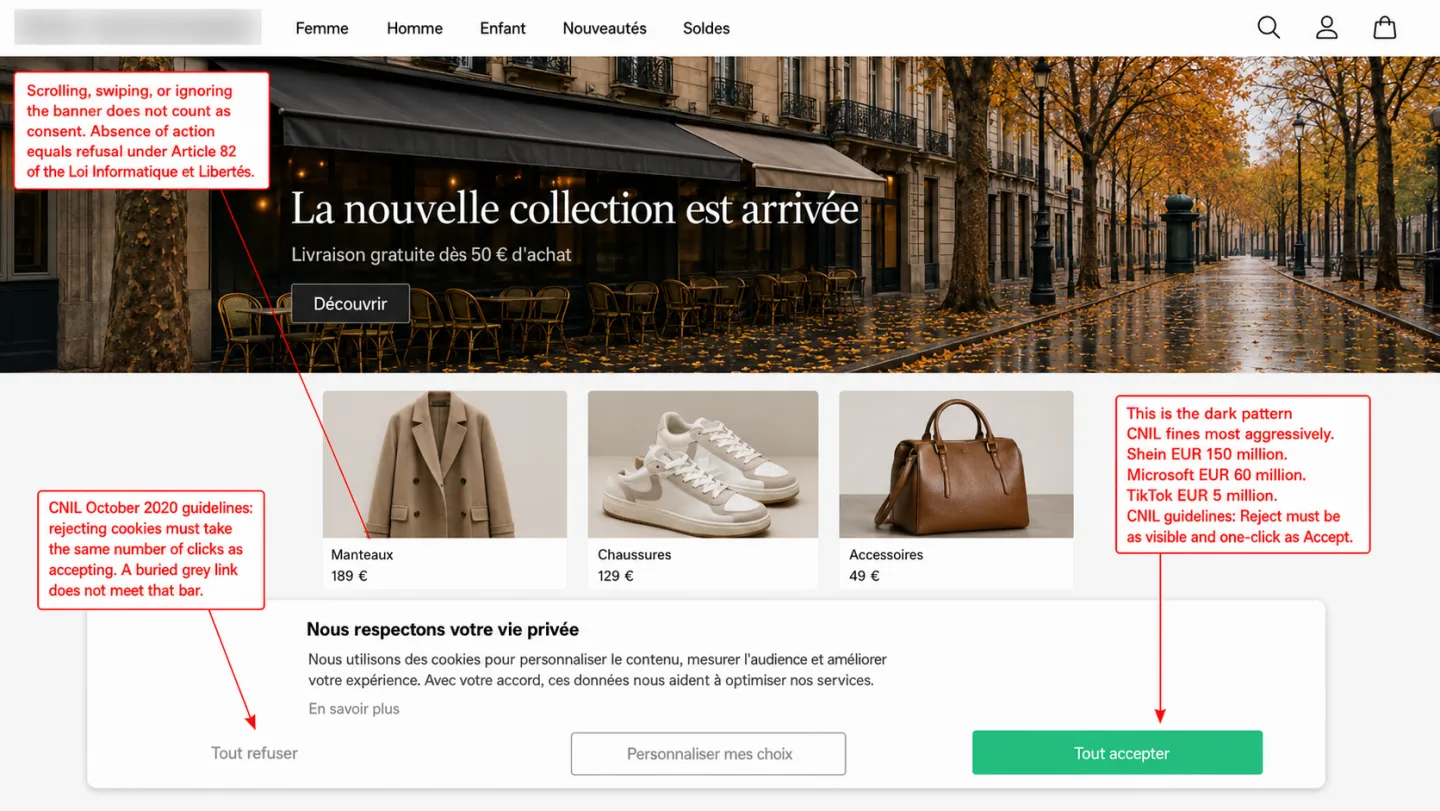
Is Google Analytics Legal in France? Cookie Consent, the CNIL Exemption, and Who's Exempt
CNIL has issued nearly 900 million euros in cookie fines since 2020. Fewer than 25% of French visitors accept cookies. And there's a consent exemption most French websites don't know about.
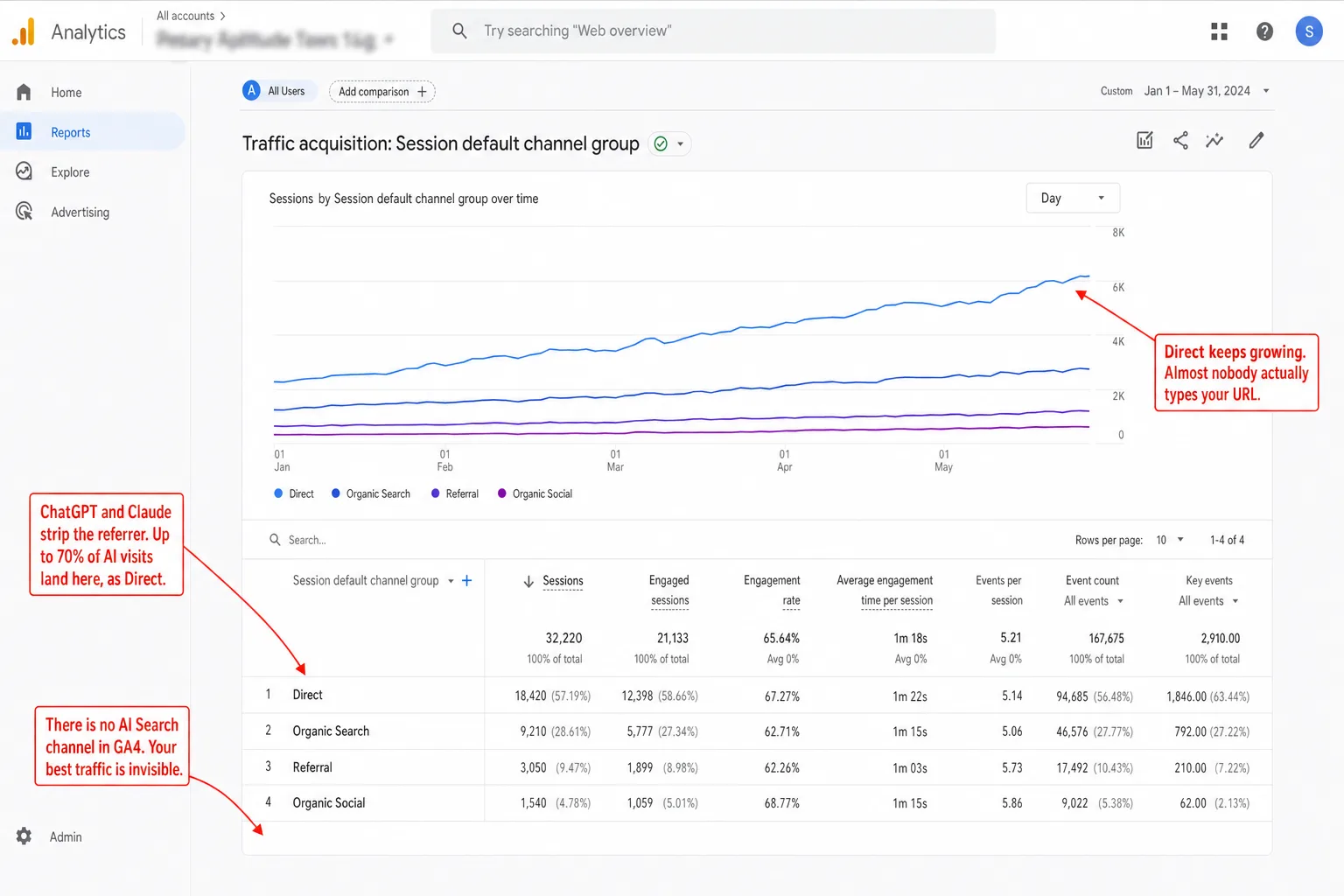
How to Track AI Search Traffic (ChatGPT, Perplexity, Claude) in 2026
AI visitors are the best traffic I can measure: 3.4x conversion in our own study, up to 5x in third-party ones. But 70.6% of it lands as 'Direct' because AI apps strip the referrer. Here's how to see the channel your dashboard is hiding.
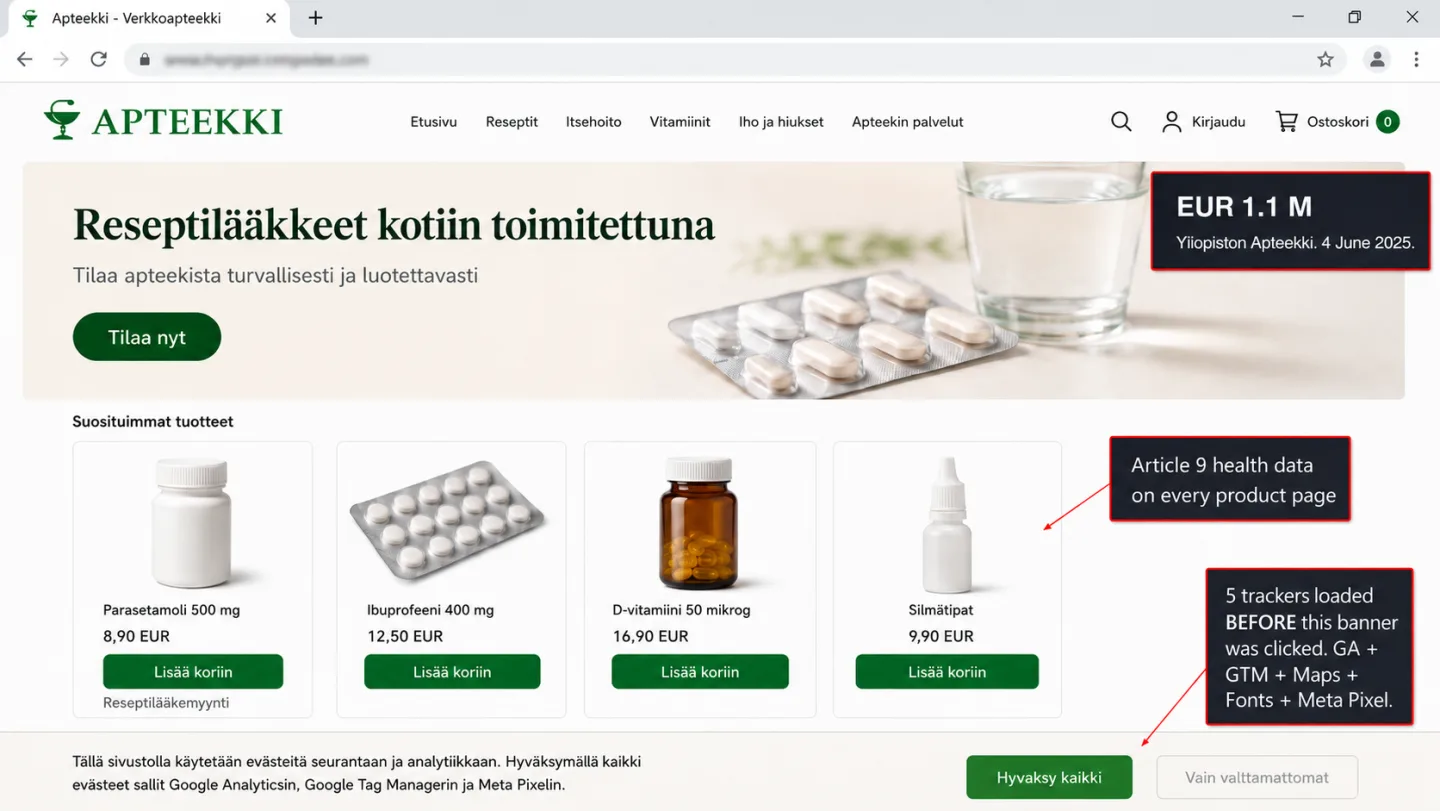
Is Google Analytics Legal in Finland? The EUR 1.1M Pharmacy Fine and Three Rulings
Finland's largest GDPR fine is EUR 1.1 million. The pharmacy that paid it was running Google Analytics. Two earlier rulings already named GA. The country's privacy regulator runs no analytics. The cookie regulator runs Matomo. Here is what the rules actually say.
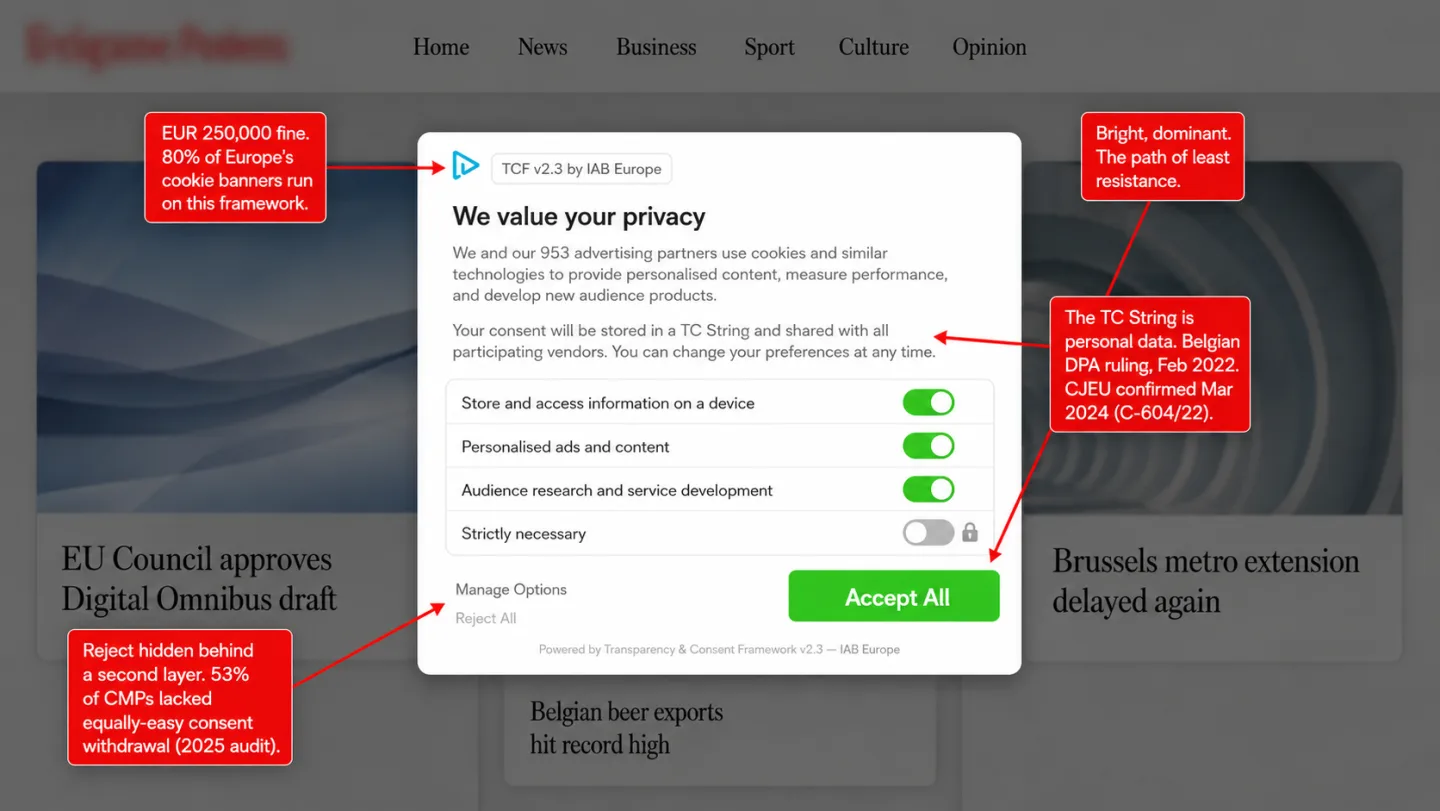
Is Google Analytics Legal in Belgium? Cookie Consent, the IAB Ruling, and What It Means
Belgium has the strictest analytics cookie rules in Europe. No exemption for first-party analytics, no exemption for audience measurement. Seven industry associations lobbied the DPA to change this. The DPA said no. Belgium also produced the most consequential cookie ruling in European history: declaring the IAB's consent framework non-compliant.
Why I Chose to Build Clickport Instead of Using Matomo
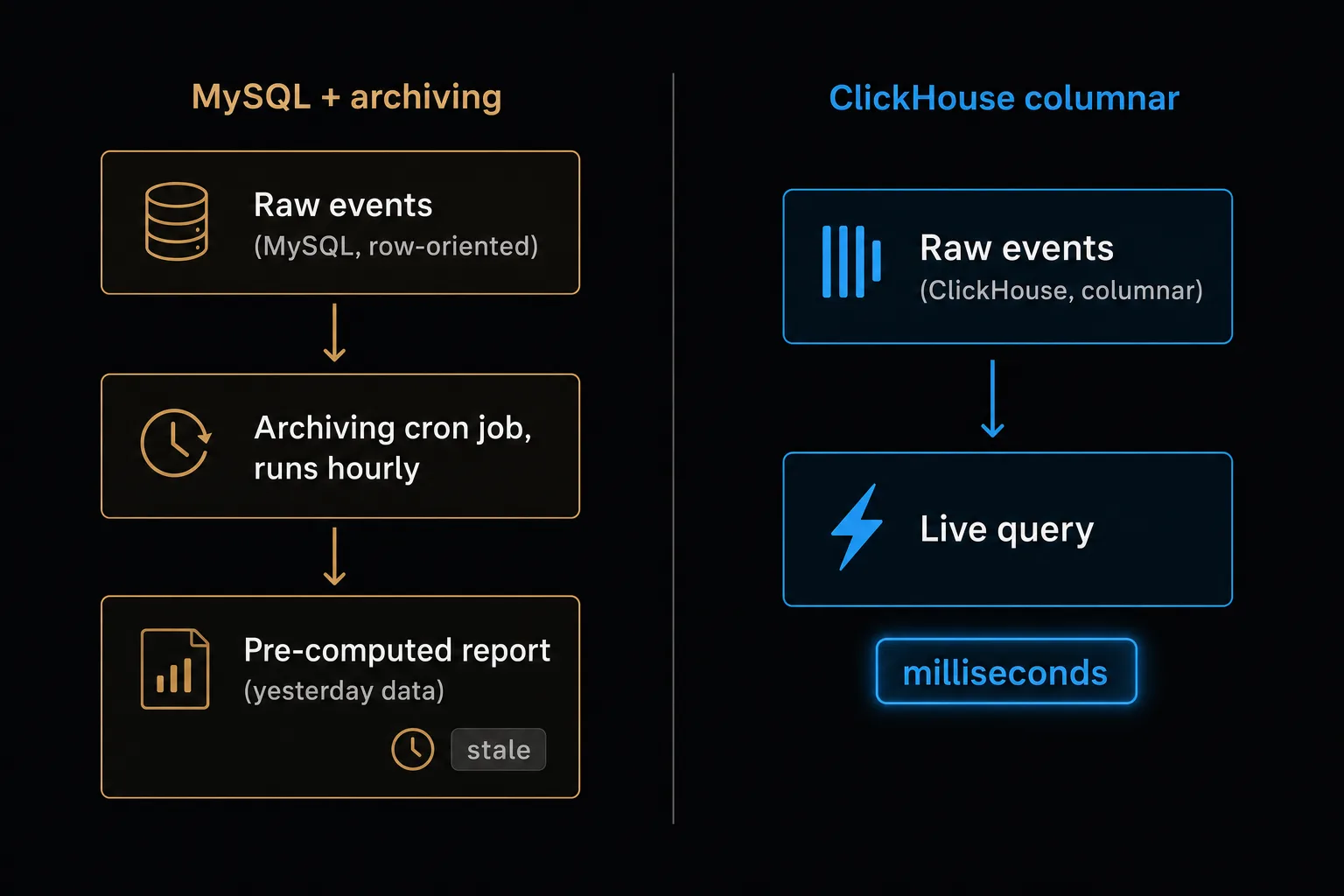
Matomo is the most respected open-source analytics project in the world. I considered using it. Then I looked at the MySQL archiving cron job, the 12-step GDPR configuration, and the 217 WordPress database tables. This is the story of what I found.
Is Google Analytics Legal in Austria? Cookie Consent, the GA Ban, and Your Alternatives
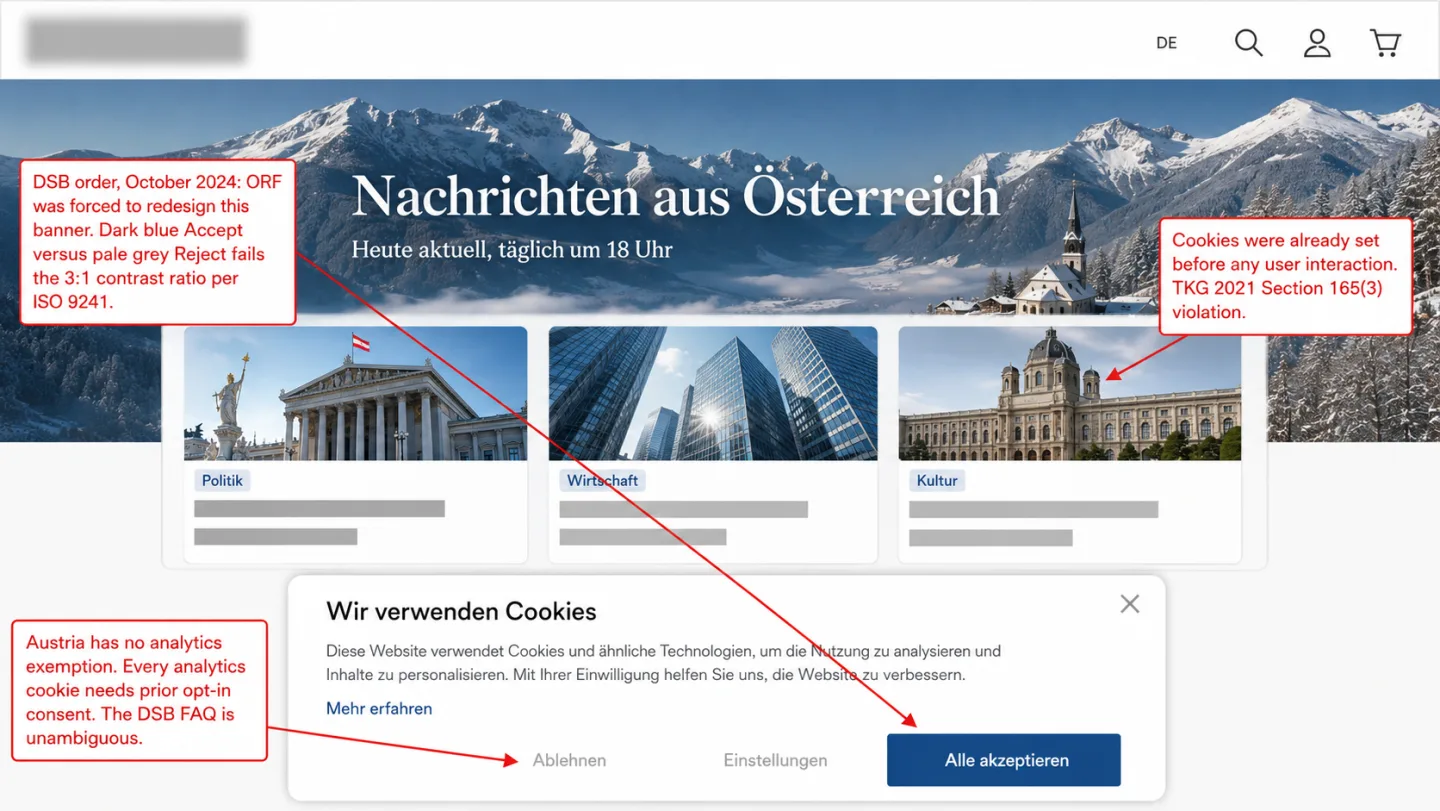
Austria was the first EU country to rule Google Analytics illegal. Unlike France, there is no consent exemption for analytics cookies. 34% of Austrian websites dropped GA after the ruling. The remaining 66% need consent that most visitors reject.
Shop Pay, Apple Pay, PayPal: Why GA4 Misses Revenue
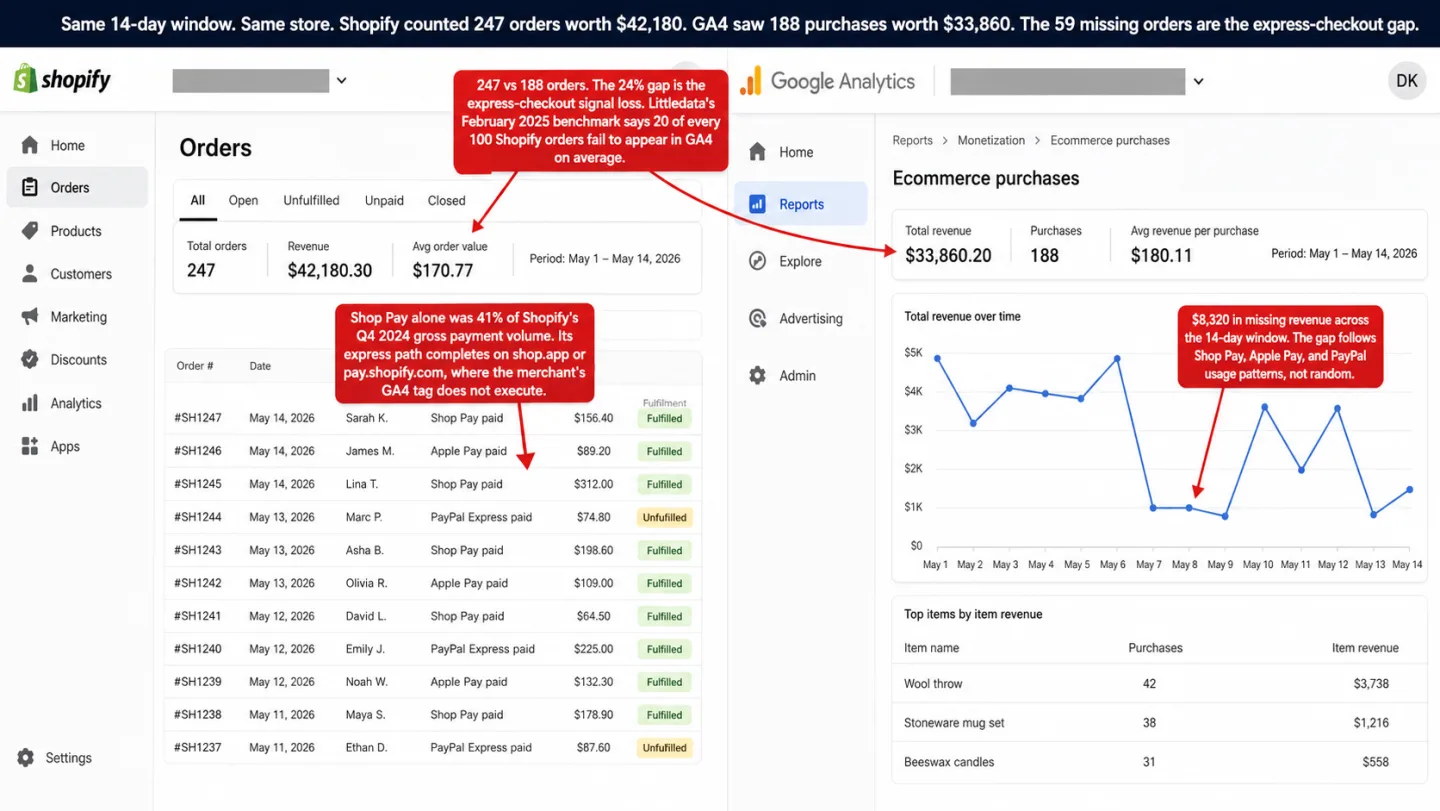
Shop Pay drives 41% of Shopify's payment volume. In our April 2026 audit of 27 top DTC brands, 78% route checkout through domains where the merchant's analytics cannot execute. Here is why GA4 misses revenue, why the $450-a-month server-side pipe barely moves the numbers, and the architecture that actually closes the gap.
Is Google Analytics Legal in Denmark? Cookie Consent, 84% Non-Compliant, and What's Coming
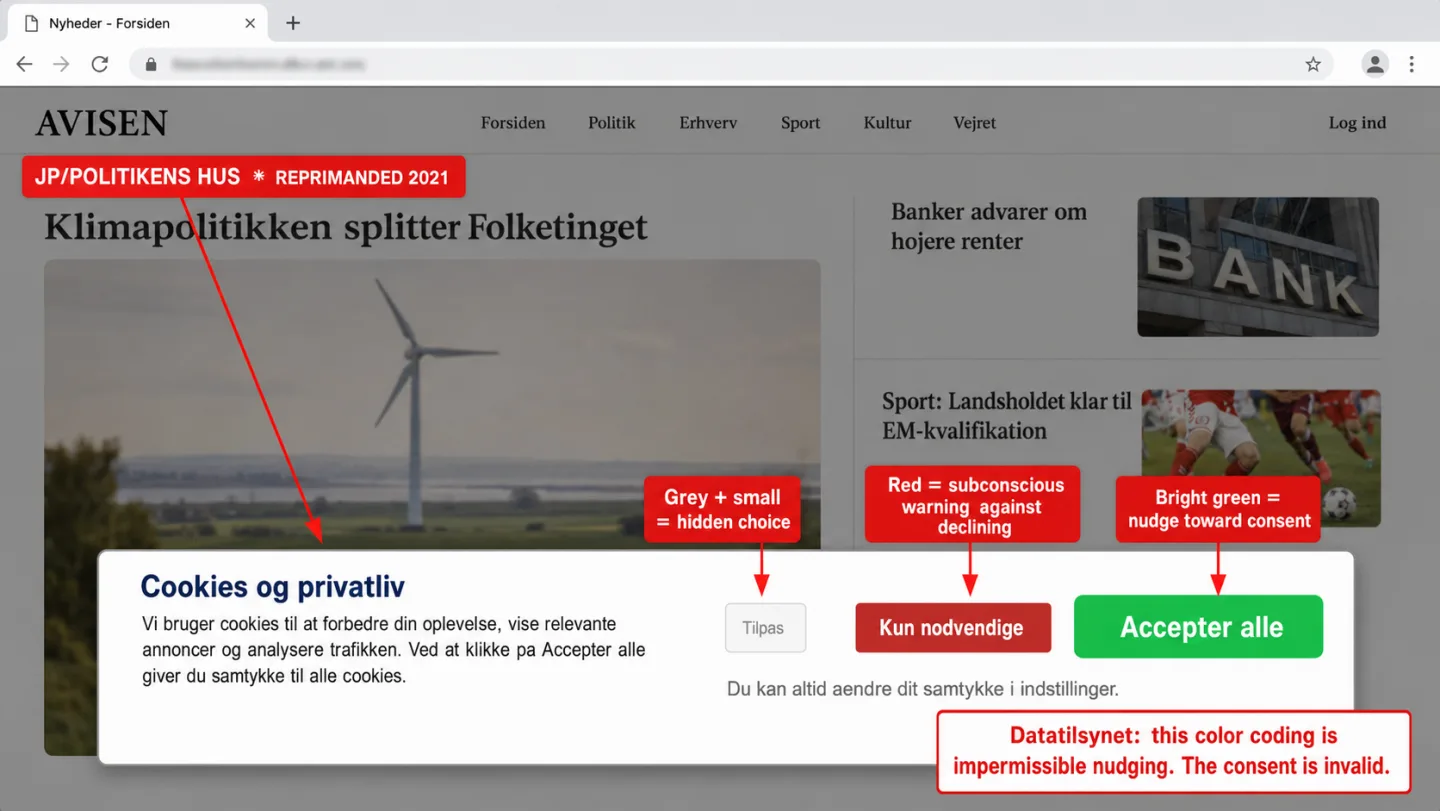
84% of Danish websites violate cookie consent rules. 70% fire tracking cookies before asking permission. Datatilsynet just made cookie enforcement a 2026 priority.
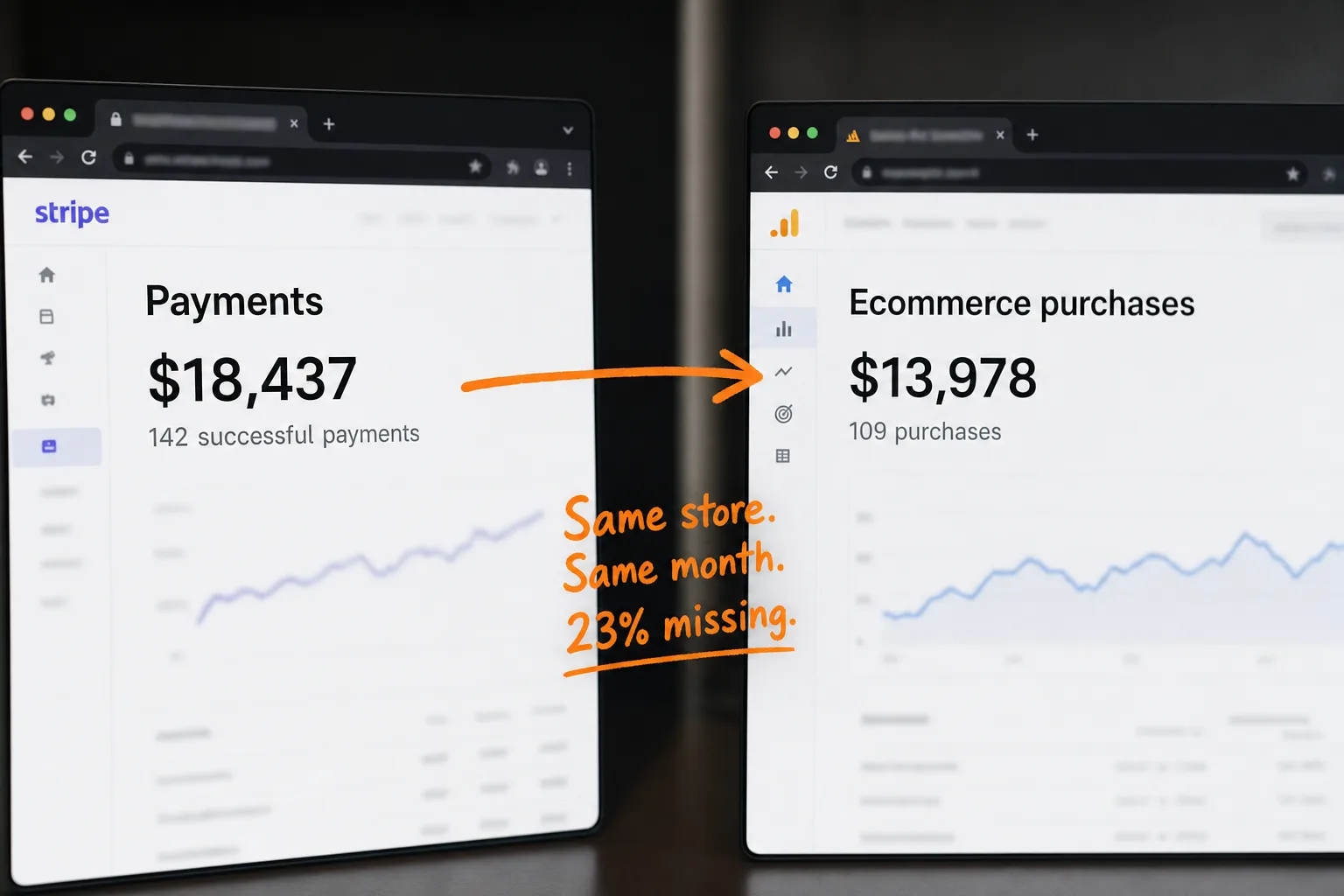
Why GA4 Revenue Never Matches Stripe
Stripe processes the payment on stripe.com, where your GA4 tag never runs. Add consent mode, ad blockers, and Safari's cookie caps, and a 20-30% revenue gap is the normal outcome. I read the public docs of 12 attribution tools that promise to fix this: 11 of them track people across sessions. Here is the mechanism behind the gap, and a way to attribute revenue that doesn't.
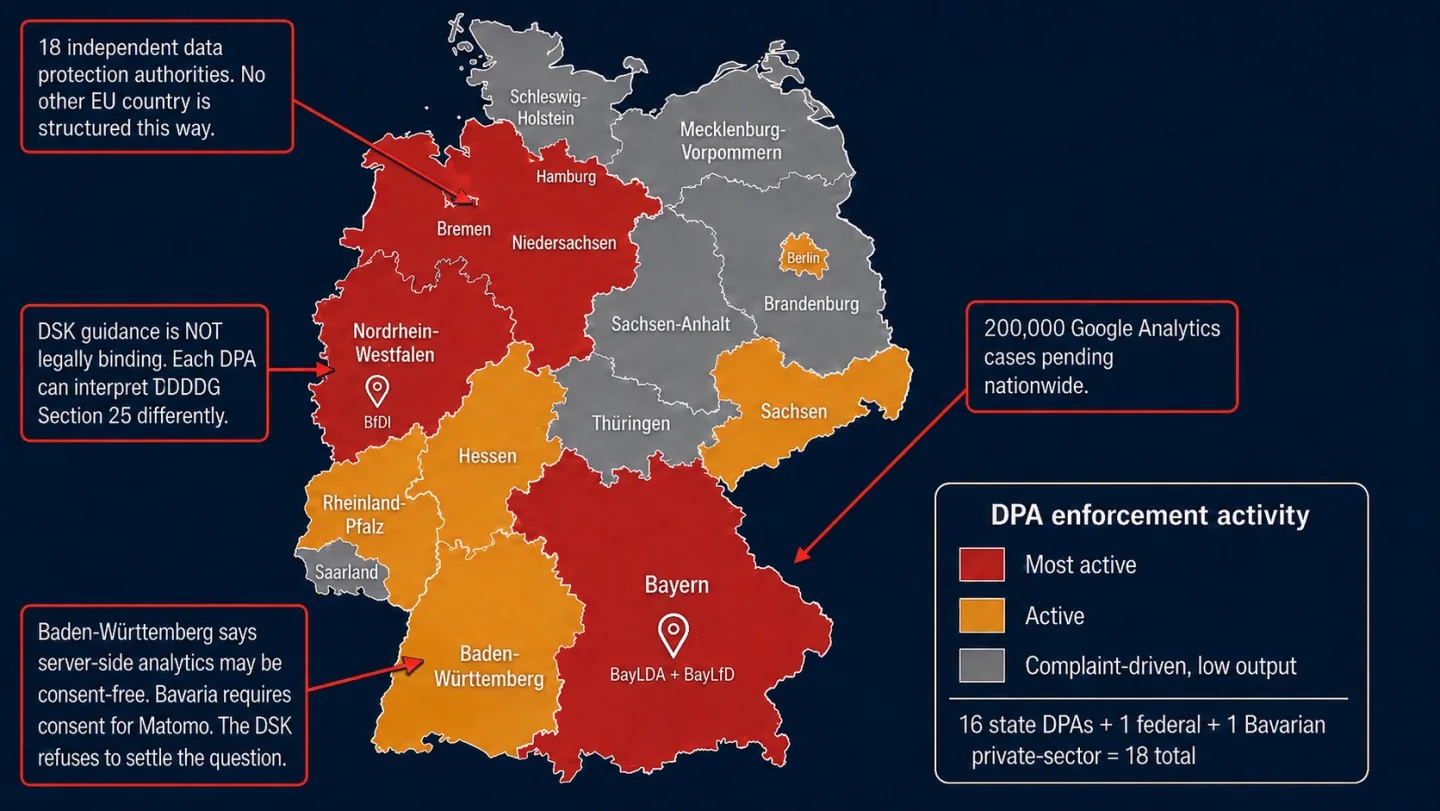
Is Google Analytics Legal in Germany? Cookie Consent, 18 DPAs, and Why It's Complicated
Germany has the strictest cookie consent rules in Europe and the most ways to get sued for violating them. 18 data protection authorities, four separate enforcement vectors, no analytics exemption, and a court system that just made your analytics provider personally liable. Cookie-based analytics see 10-20% of actual German traffic.
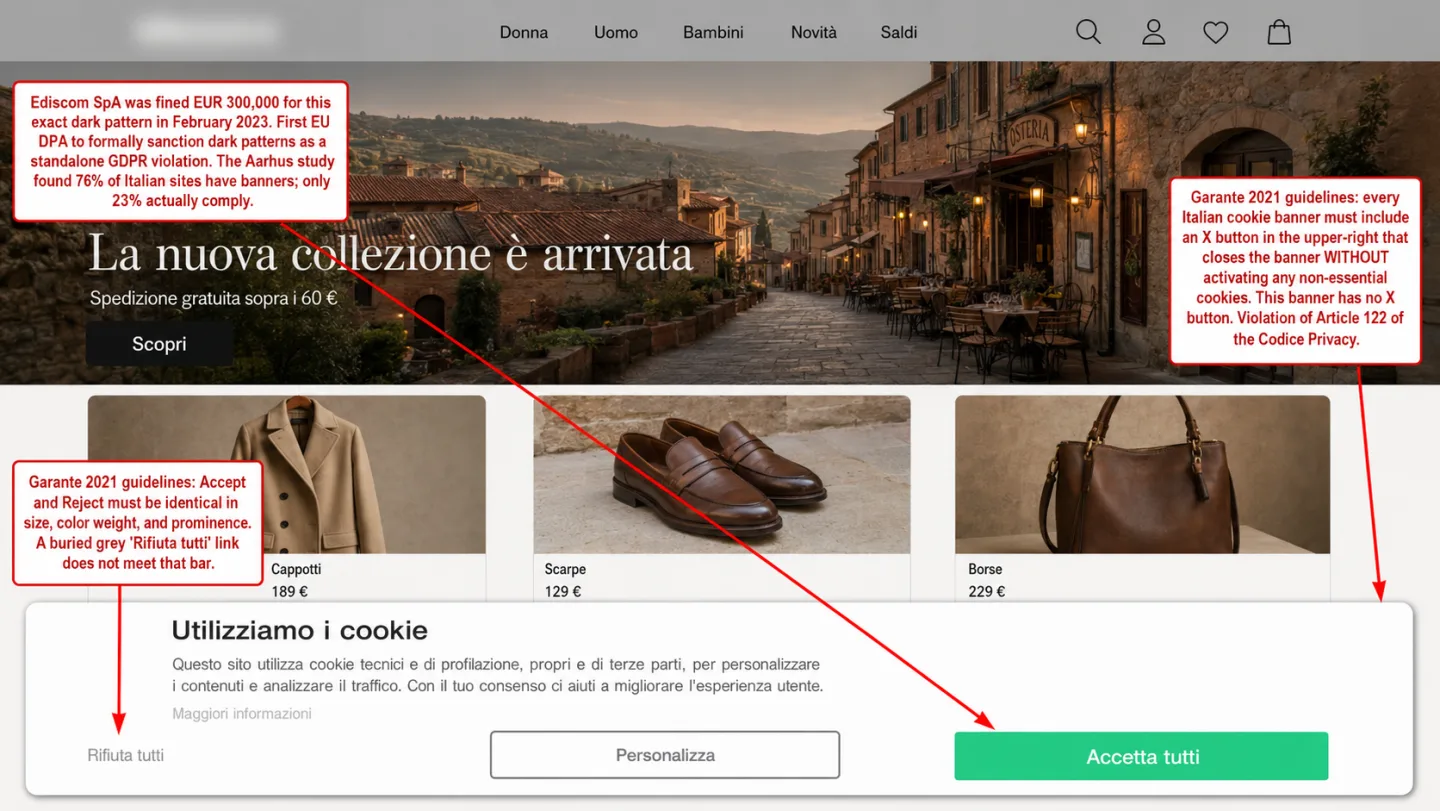
Is Google Analytics Legal in Italy? Cookie Consent, the Garante's Exemption, and Who Qualifies
82% of Italian websites still ran Google Analytics after the Garante ruled it illegal. Italy also has a consent exemption for analytics that most website owners have never configured.
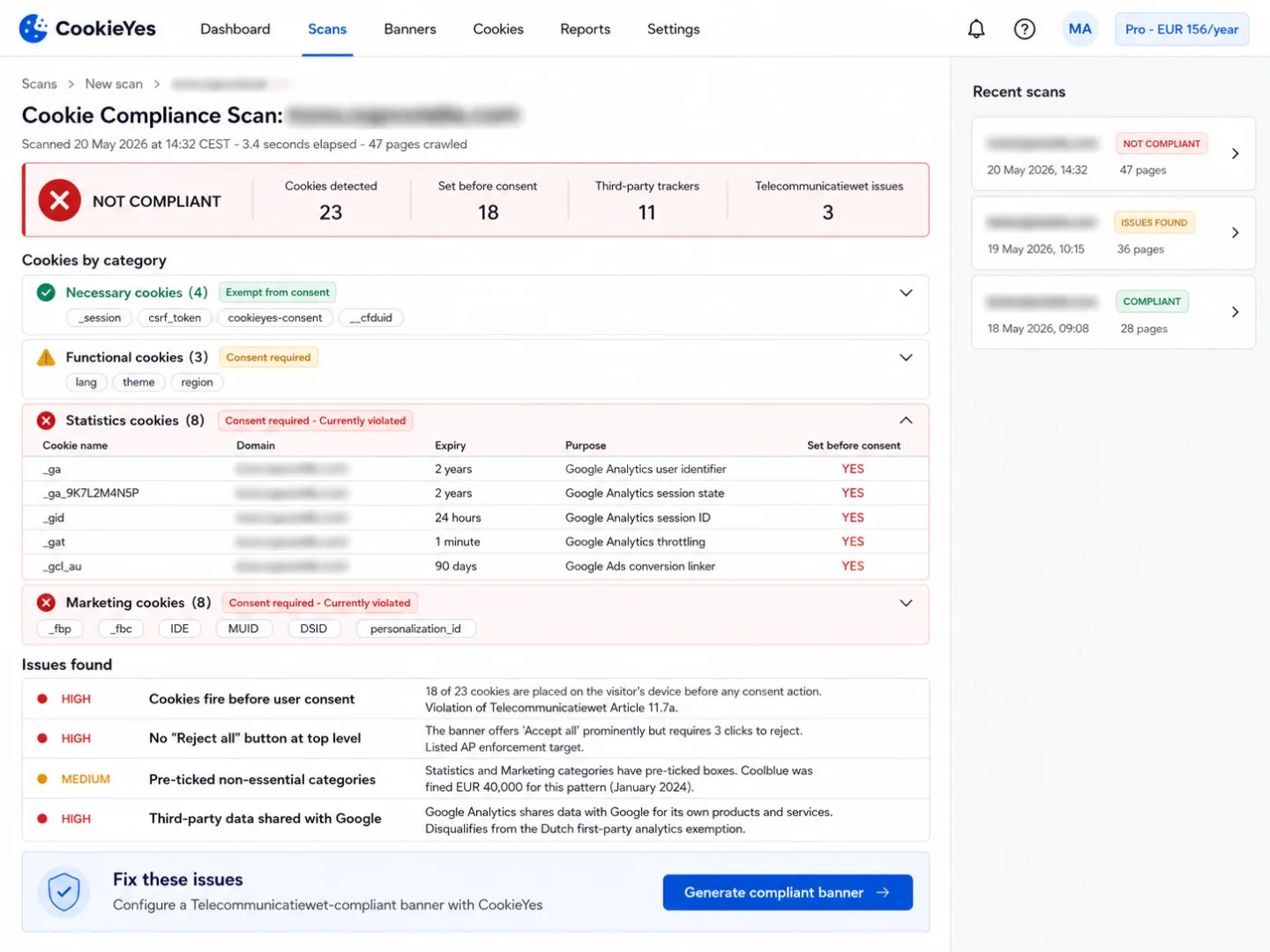
Is Google Analytics Legal in the Netherlands? Cookie Consent, 10,000 Sites Scanned, and the Exemption
715,000 Dutch websites use Google Analytics. The AP monitors 10,000 a year for cookie compliance, and GA fails the Dutch analytics exemption. Yet the AP's only GA enforcement was a reprimand that was never made public. Here's what the rules actually say.
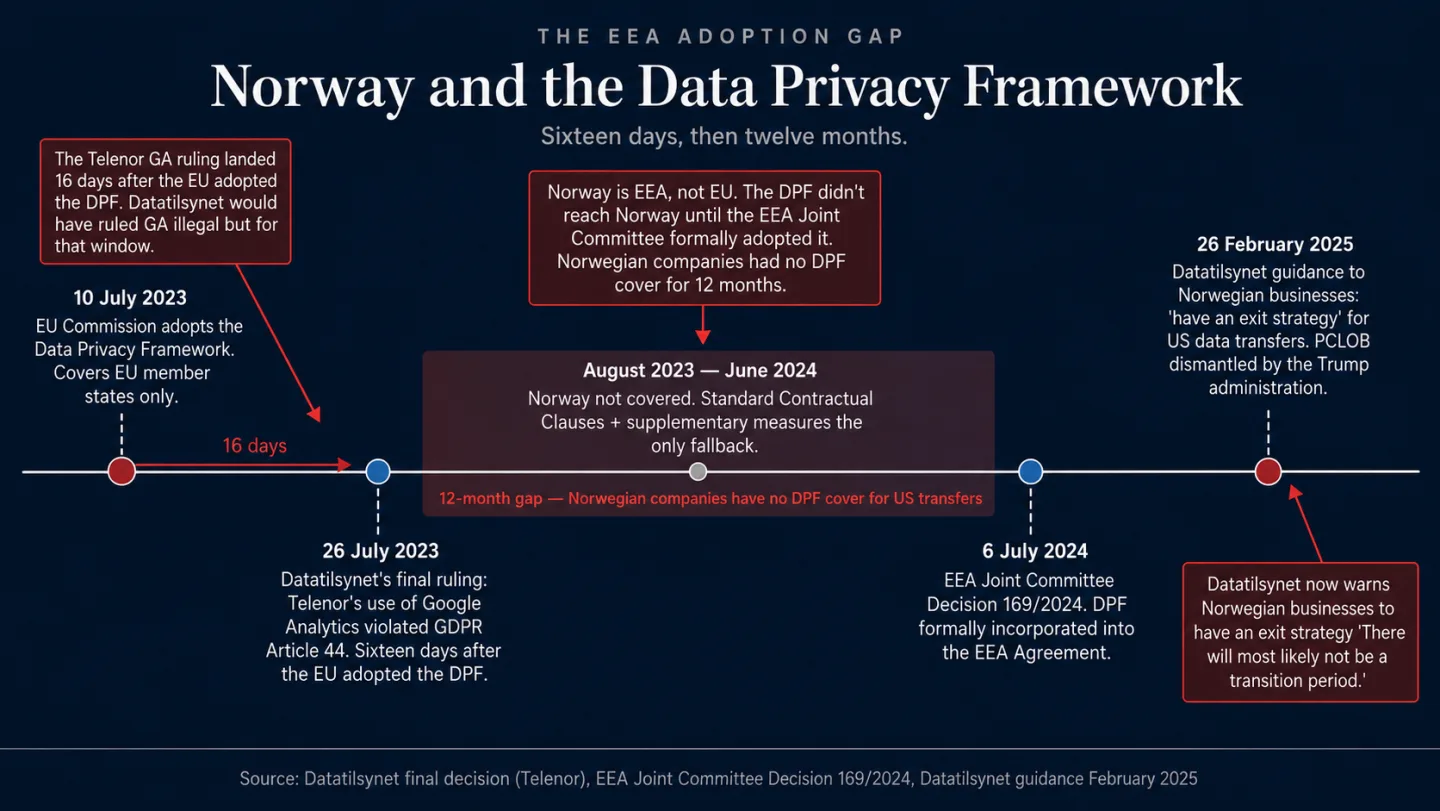
Is Google Analytics Legal in Norway? Cookie Consent, the New Law, and What Changed
Until January 2025, Norway had the weakest cookie consent standard in the entire EEA. Browser settings counted as valid consent. That loophole is closed, the new law is in force, and Datatilsynet is already sanctioning sites.
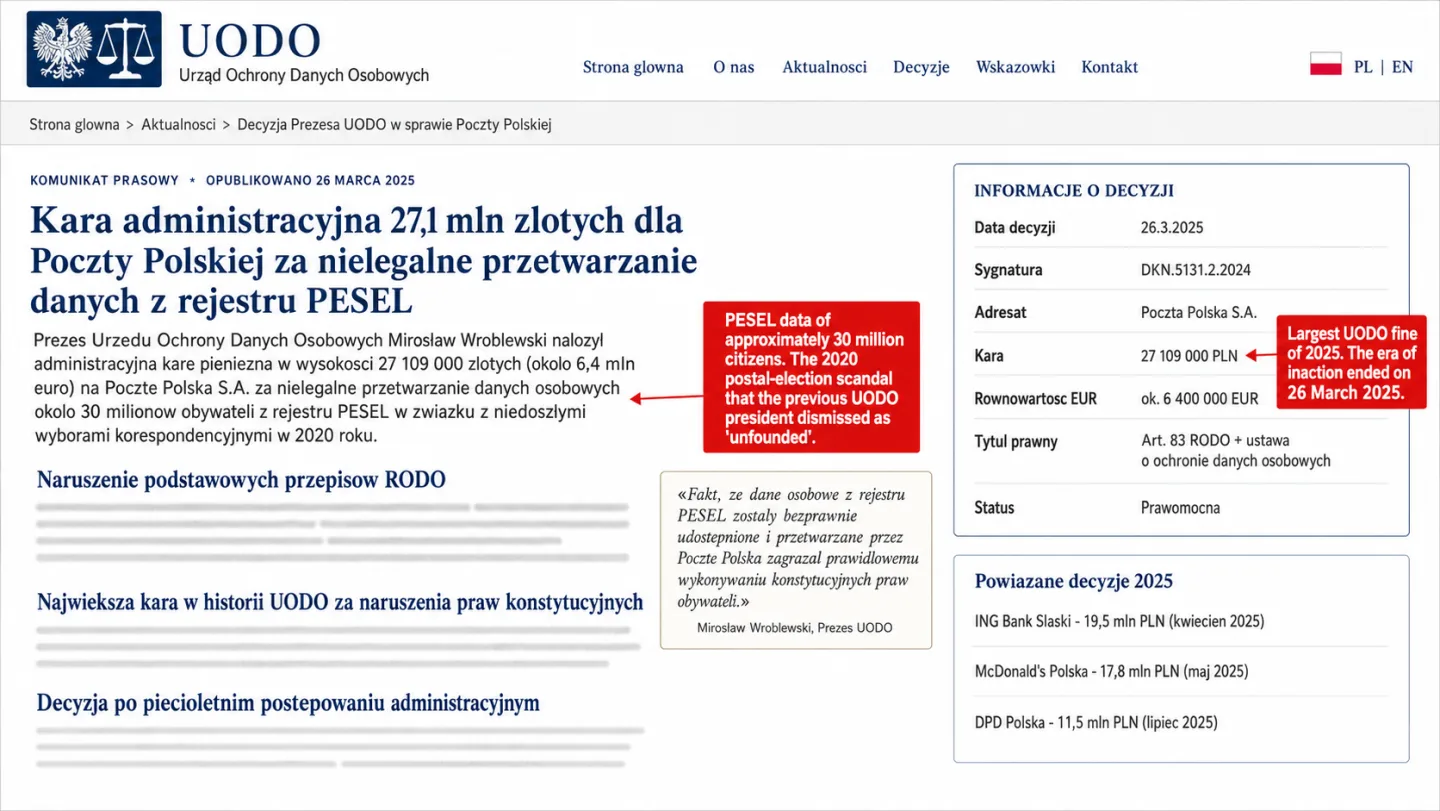
Is Google Analytics Legal in Poland? Cookie Consent, Opera's Impact, and What's Missing
Poland was the world's #1 country for ad blocker usage. Opera, with its built-in tracker blocker, ran on more than one in five Polish desktops at its early-2026 peak. UODO has received 53 noyb complaints and issued zero decisions. And the Pegasus spyware scandal showed what happens when surveillance goes unchecked.
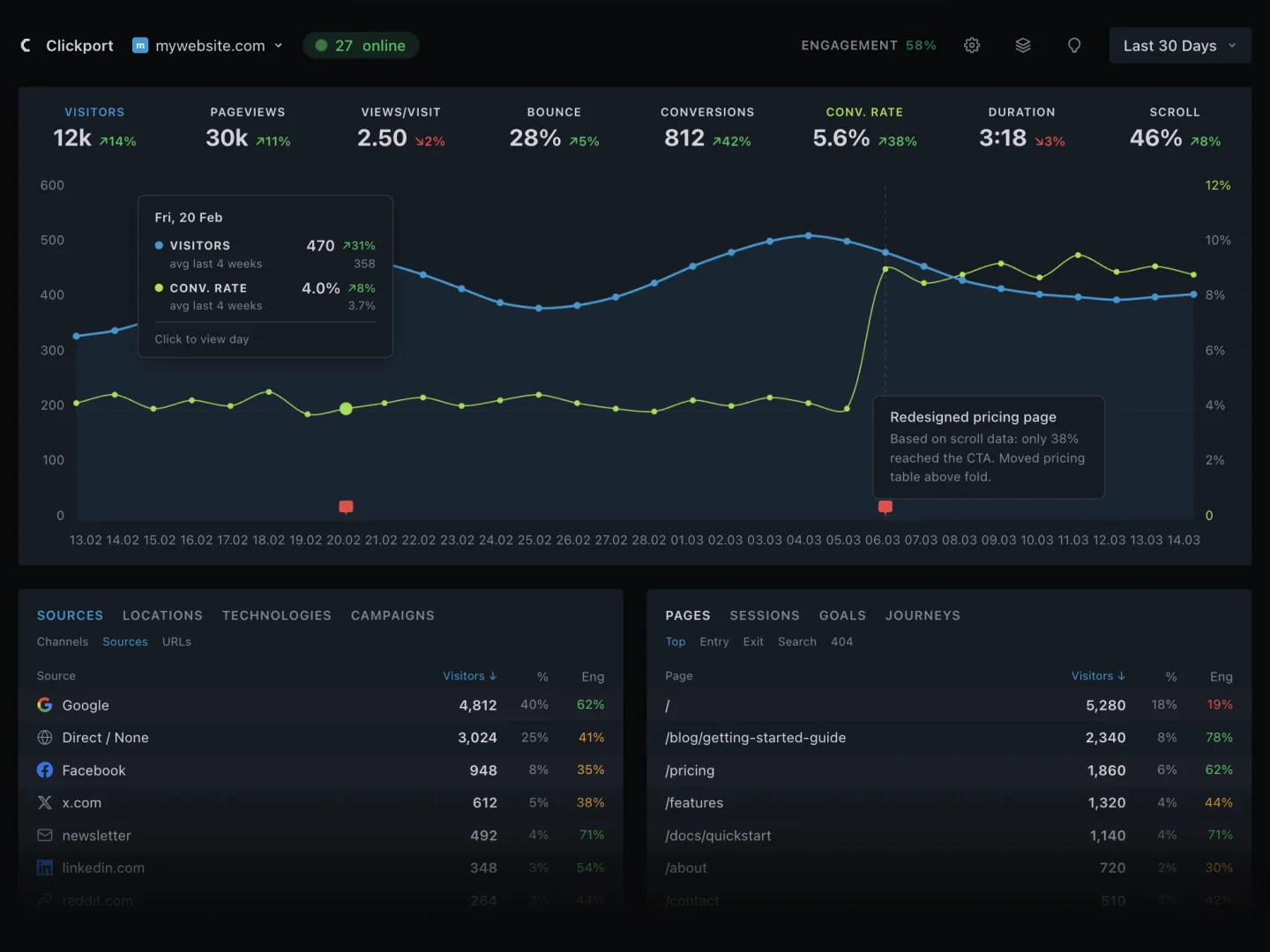
Clickport vs Google Analytics: Cookieless vs GA4
75% of SEOs are unhappy with GA4. But every comparison article tells you to switch without admitting what you lose. Here's the full version: where GA4 wins, where it fails, what it actually costs, and why I built an alternative.
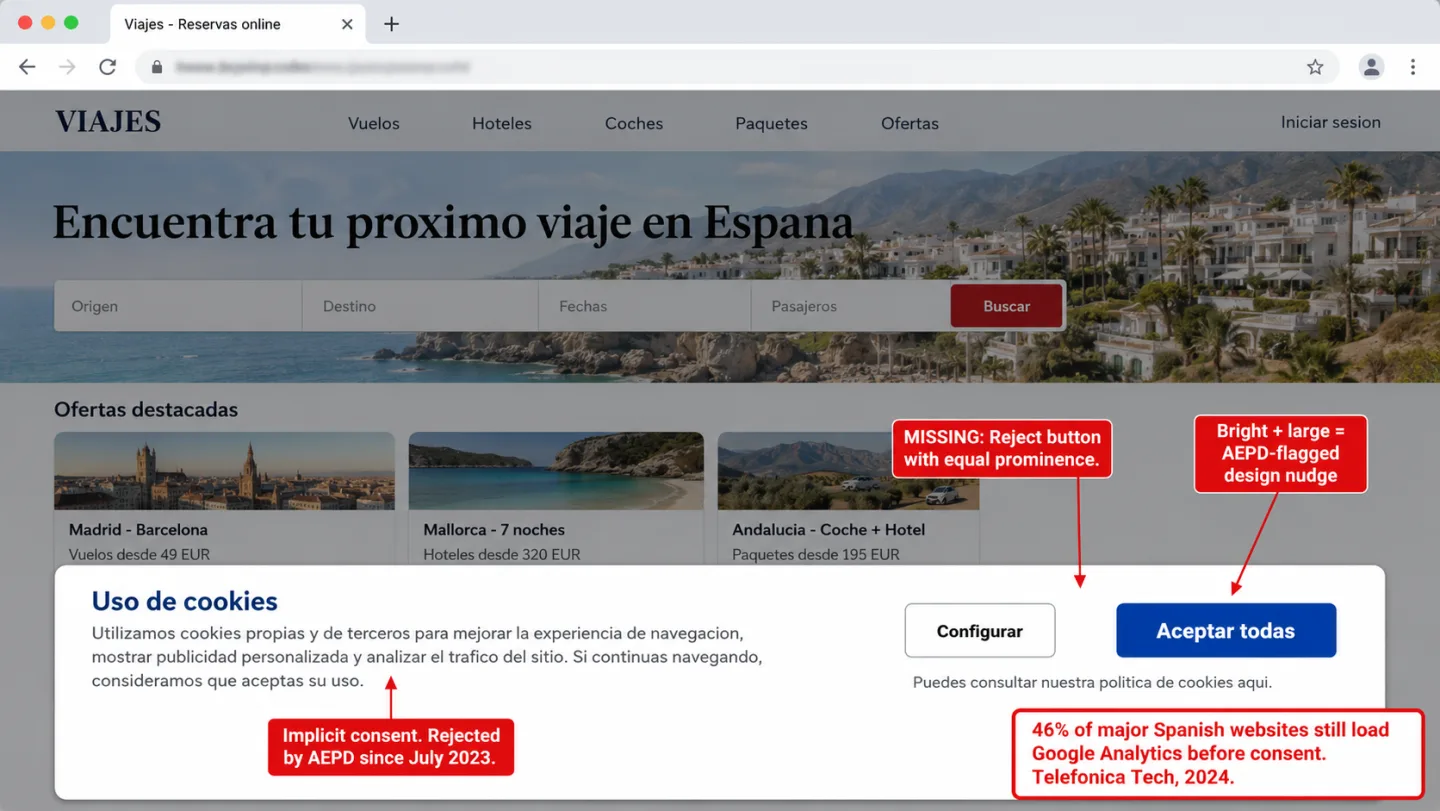
Is Google Analytics Legal in Spain? Cookie Consent, 900 Fines, and Two Opposite Rulings
Spain's data protection authority has issued more GDPR fines than every other EU country. More than 900 of them. And 72% landed on small businesses and freelancers. But Spain also offers something most EU countries don't: an analytics cookie exemption. If your tool qualifies, you don't need consent. If it doesn't, you need a very good cookie banner.
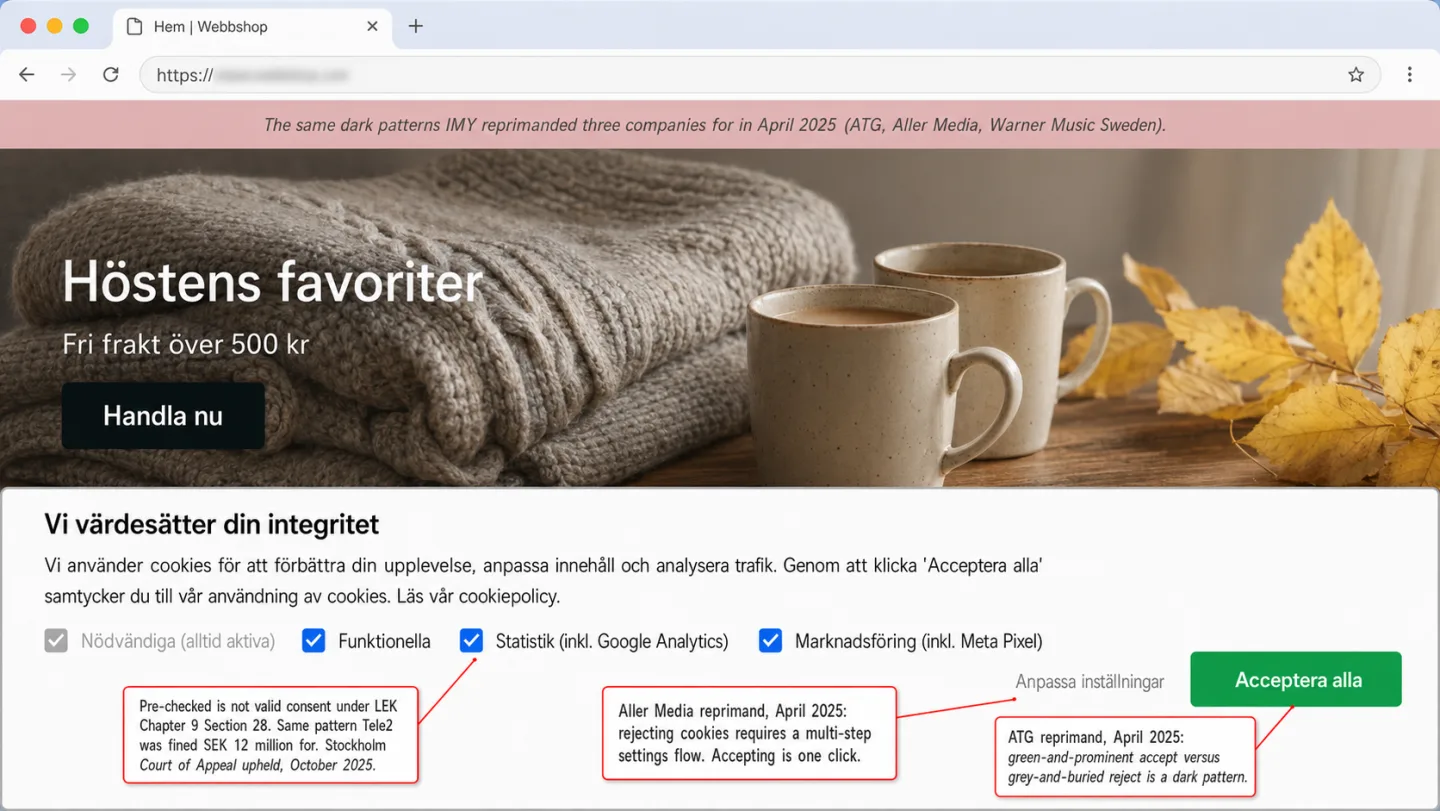
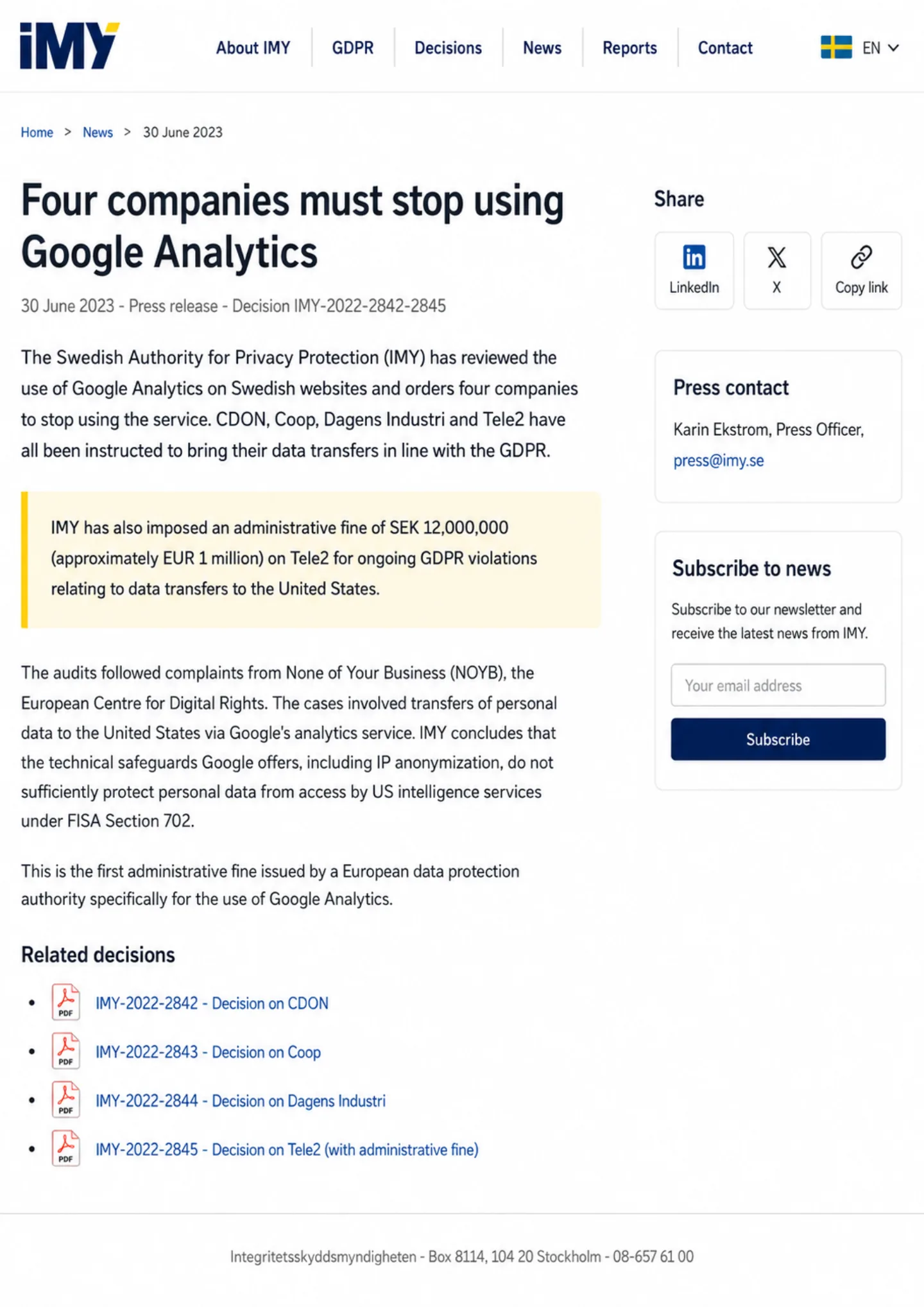
Is Google Analytics Legal in Sweden? Cookie Consent, the IMY Fine, and What the Court Said
Seven EU countries declared Google Analytics illegal. Only one put a price tag on it. Sweden fined Tele2 SEK 12 million, and the Administrative Court of Appeal in Stockholm upheld every krona.
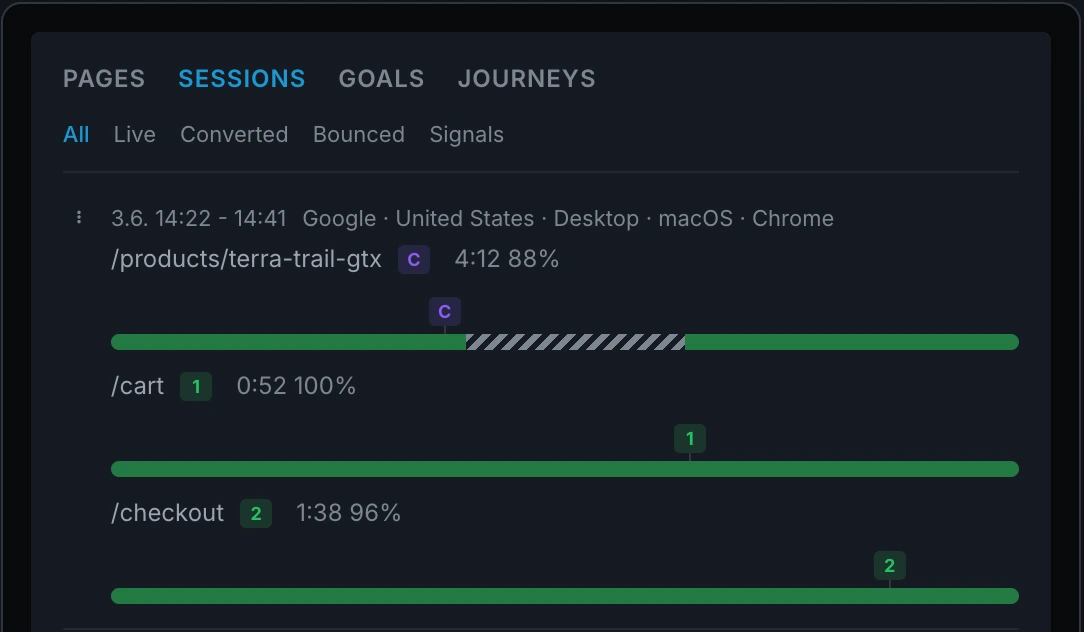
Session Timelines: See What Every Visitor Did, Second by Second (Without Recording Them)
Expand any visit in Clickport and every page unfolds into reading stretches, away gaps, and events pinned to the second they happened. Here's what that looks like, why I built it, and what our data says about how much of 'time on page' is really a tab nobody is looking at.
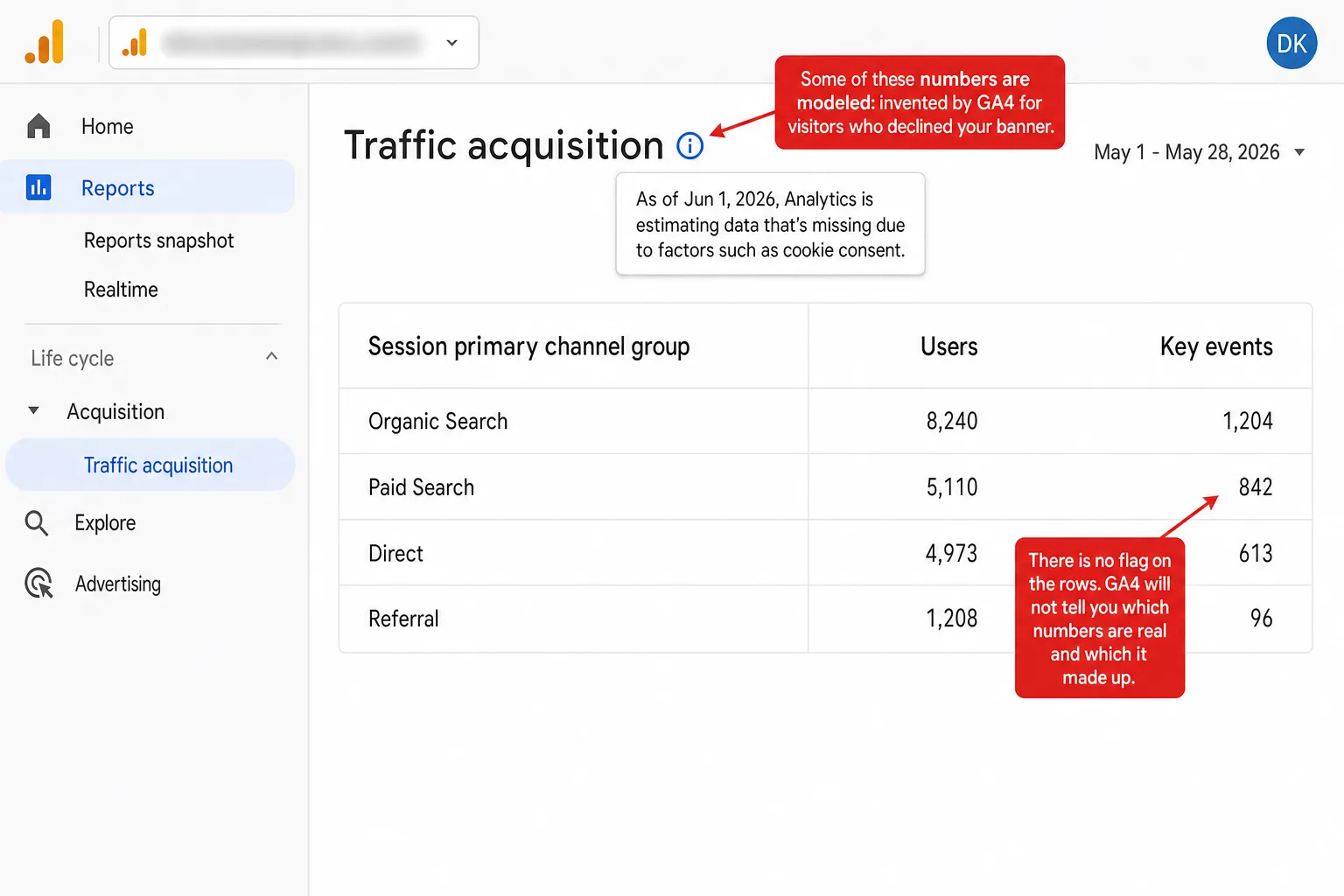
GA4 Consent Mode Modeling: The Numbers Google Invents
When a visitor declines your cookie banner, GA4 doesn't just lose them. If your site is big enough, it invents them: a model guesses what they'd have done and blends the guess into your reports. The one number that justifies it is from 2021 and isn't even about GA4.
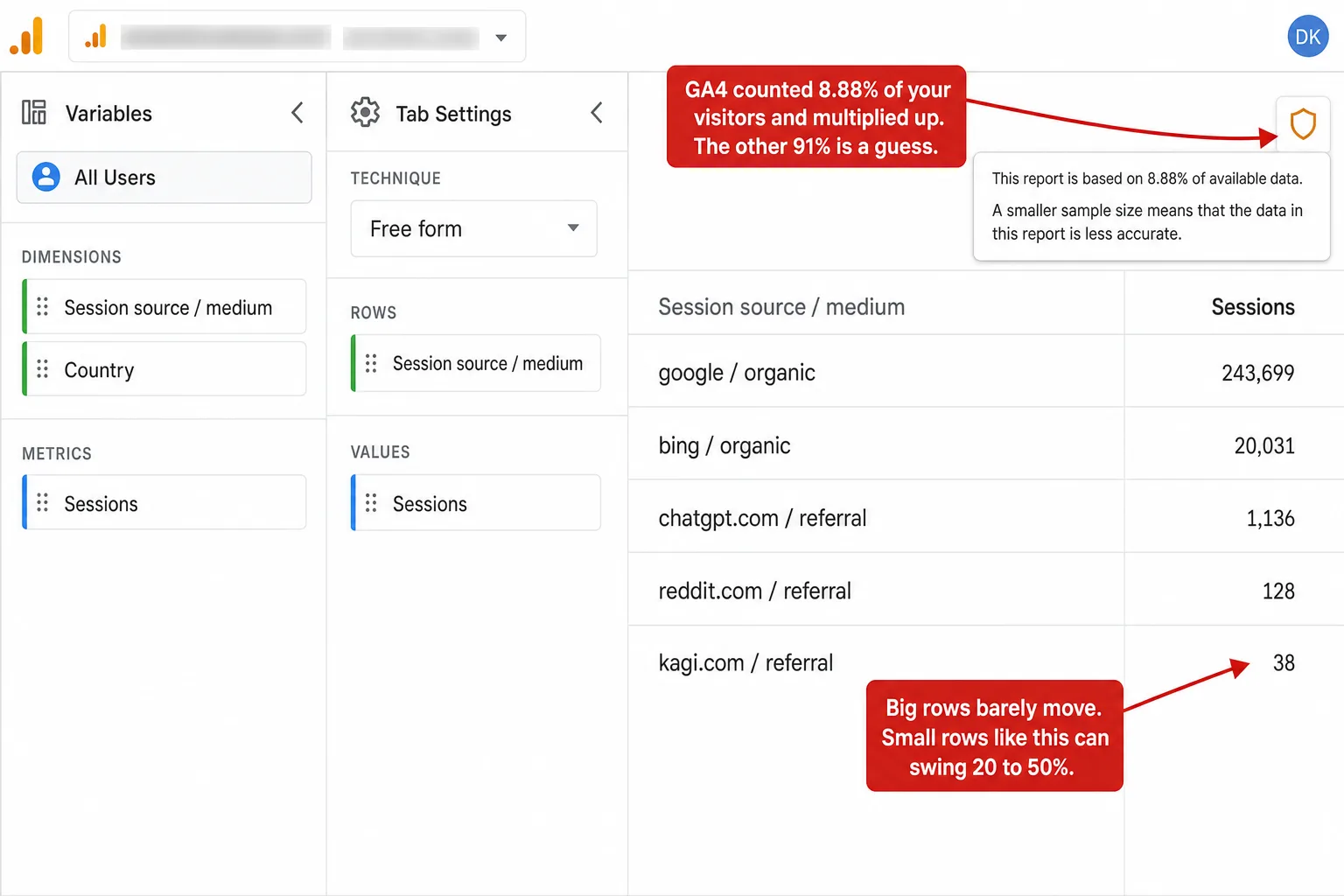
GA4 Data Sampling: Your Reports Are Estimates, Not Counts
Once a GA4 Exploration passes 10 million events, GA4 stops counting your visitors and starts estimating them. I ran the sampling math over a real site's traffic. The big numbers held. The long tail, where you find what's working, swung 20 to 50%.
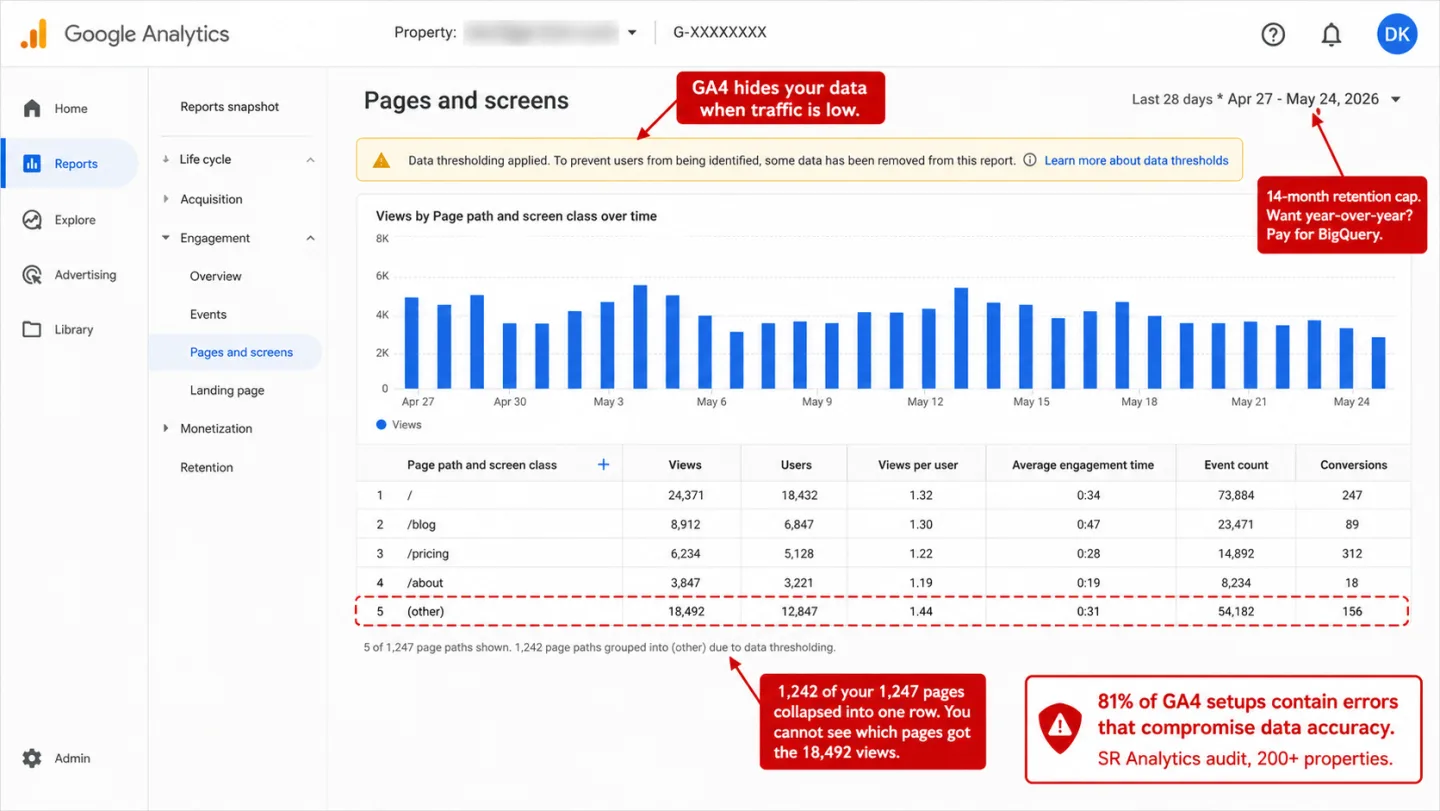
GA4 Data Thresholding: The Rows Google Hides From You
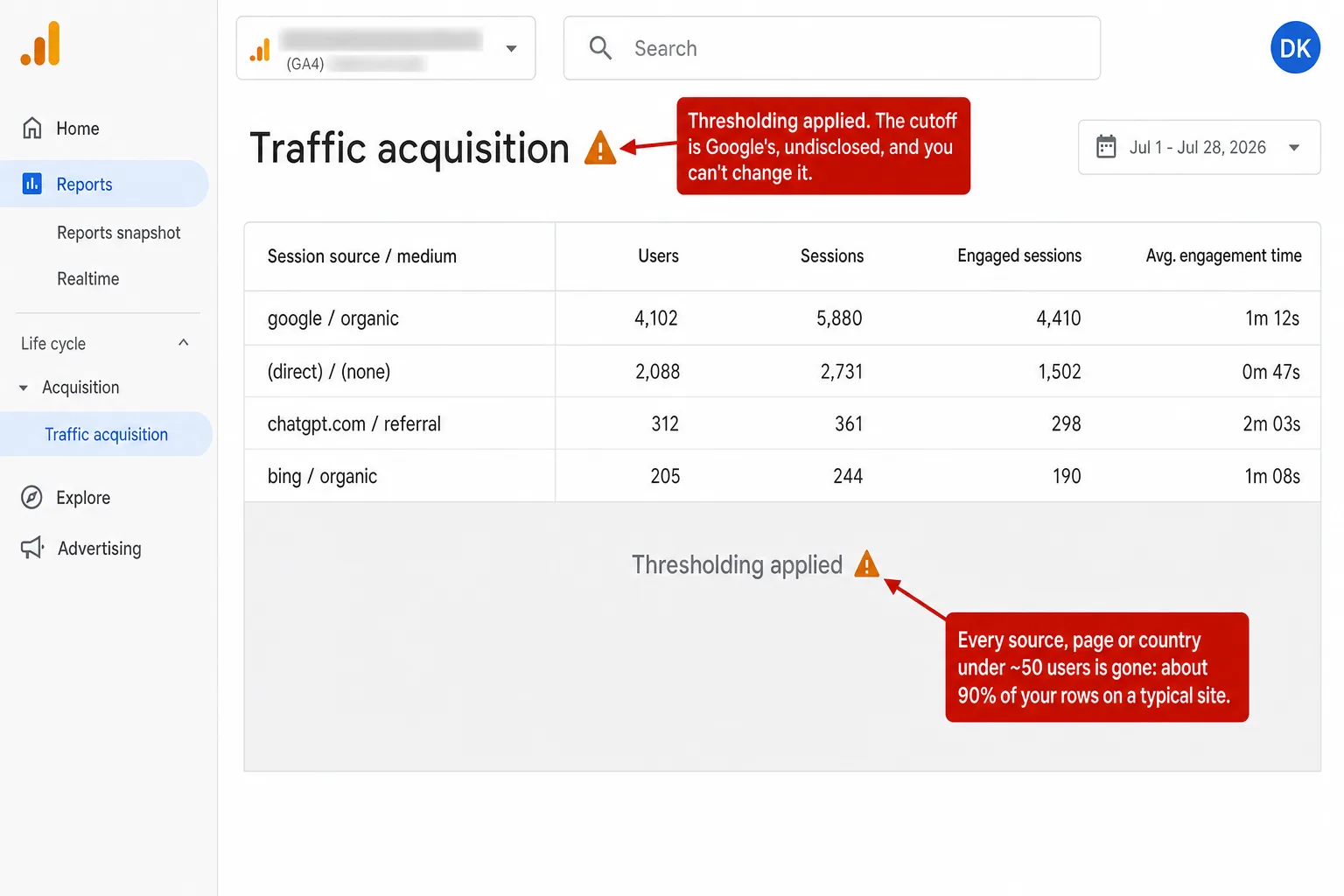
GA4 quietly hides report rows with too few users. I counted how many of a real site's rows sit under that line. On the median site it's about nine in ten. Here is why it happens, what it hides, and how to get your data back.
Is Google Analytics Legal in the UK? Cookie Consent, the DUAA, and the New Opt-Out Rule
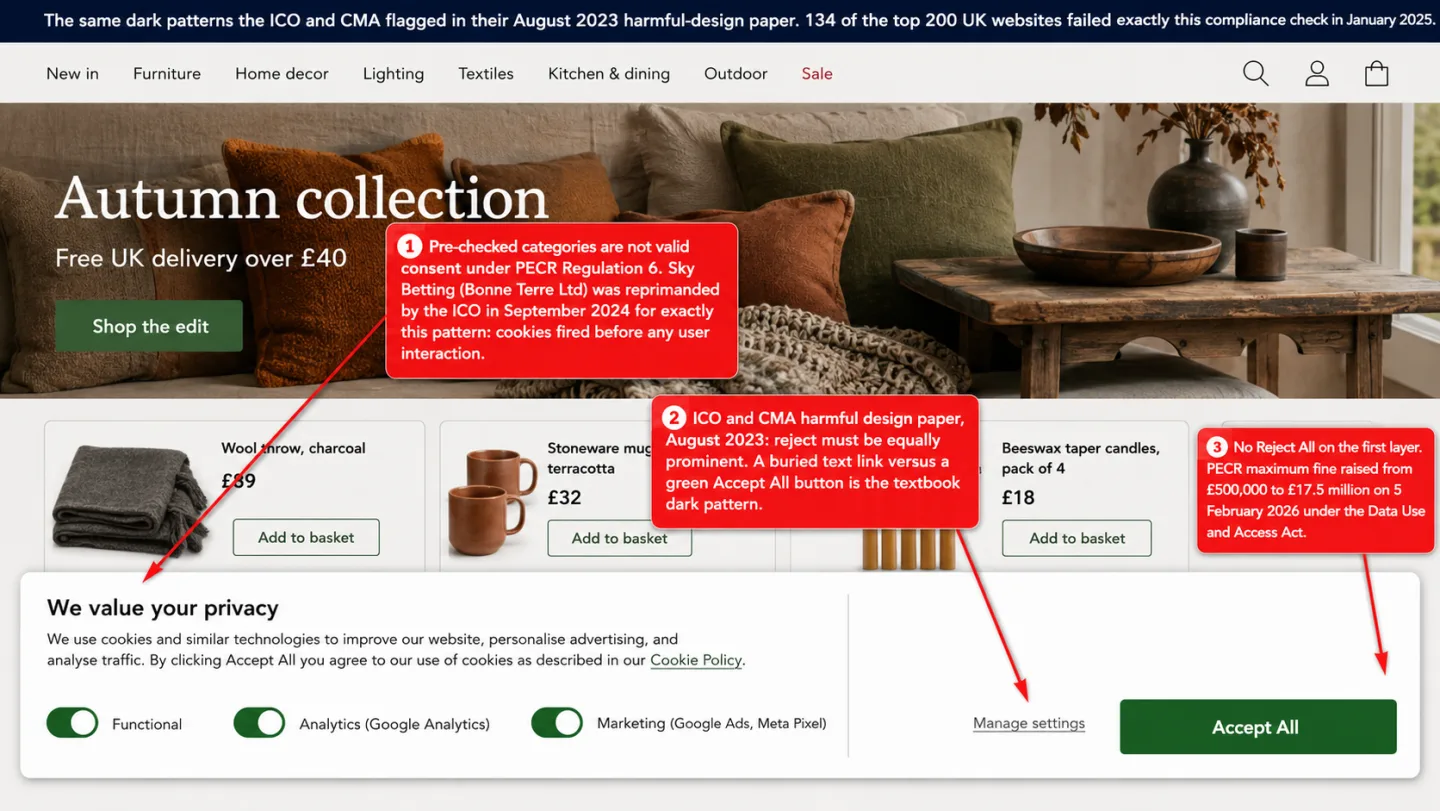
Everything UK website owners thought they knew about cookie consent changed on 5 February 2026. The Data Use and Access Act introduced an analytics exception that shifts from opt-in to opt-out. Google Analytics doesn't qualify. Here's what does.
Clickport vs Cloudflare Web Analytics in 2026
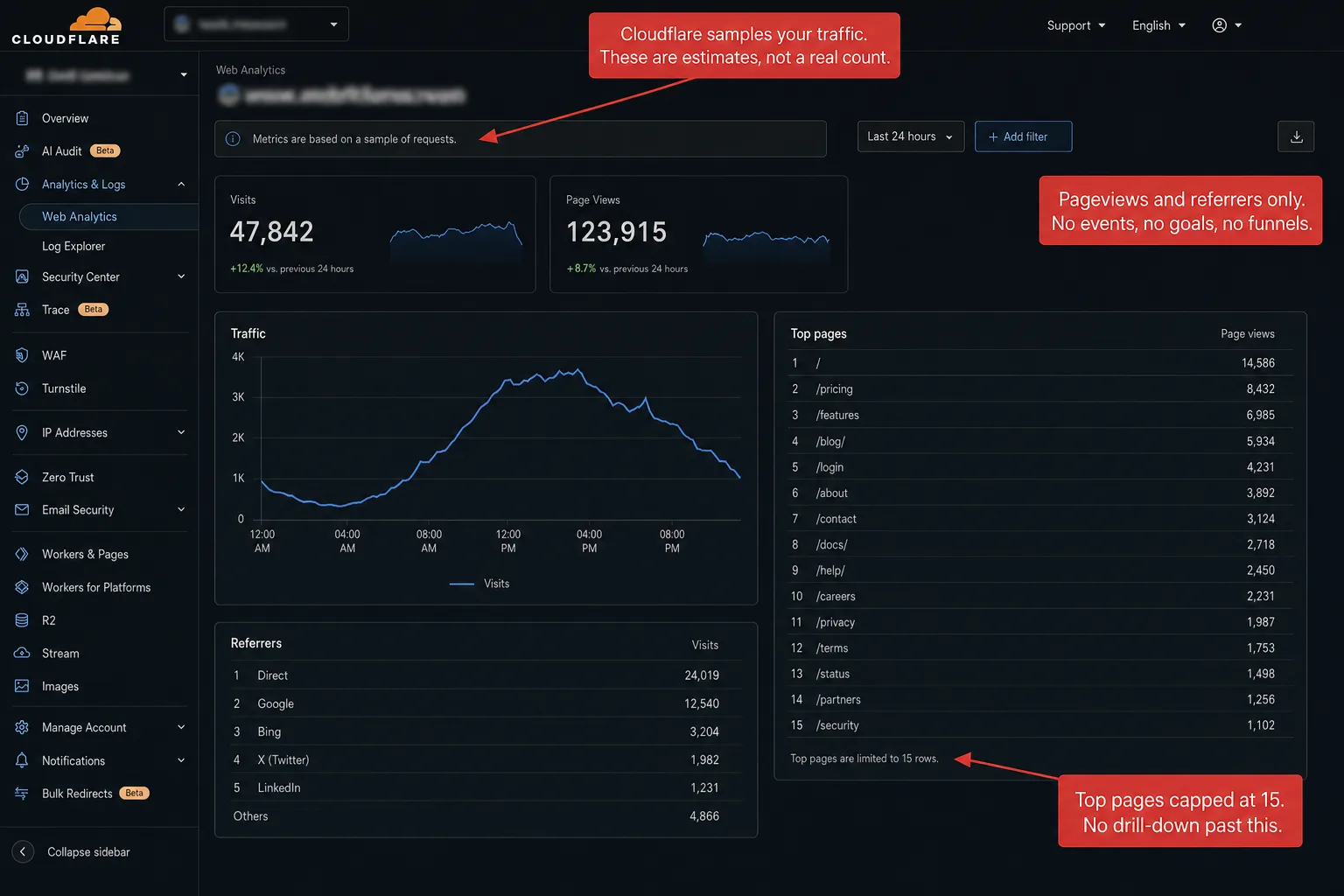
Cloudflare Web Analytics is free, cookieless, and one click away if you're already on Cloudflare. It also samples your data, shows the top 15 of everything and nothing else, and counts every entry to your site as a new visitor.

Rage Clicks and Dead Clicks: How to Find Where Your Site Frustrates Visitors (Without Recording Them)
Some visitors don't bounce and don't convert. They get stuck. Rage clicks and dead clicks are how you catch those moments. Here's what they are, what causes them, and how to find them on your own site without recording a single person.
GA4 Is Too Complicated: Why You're Not the Problem
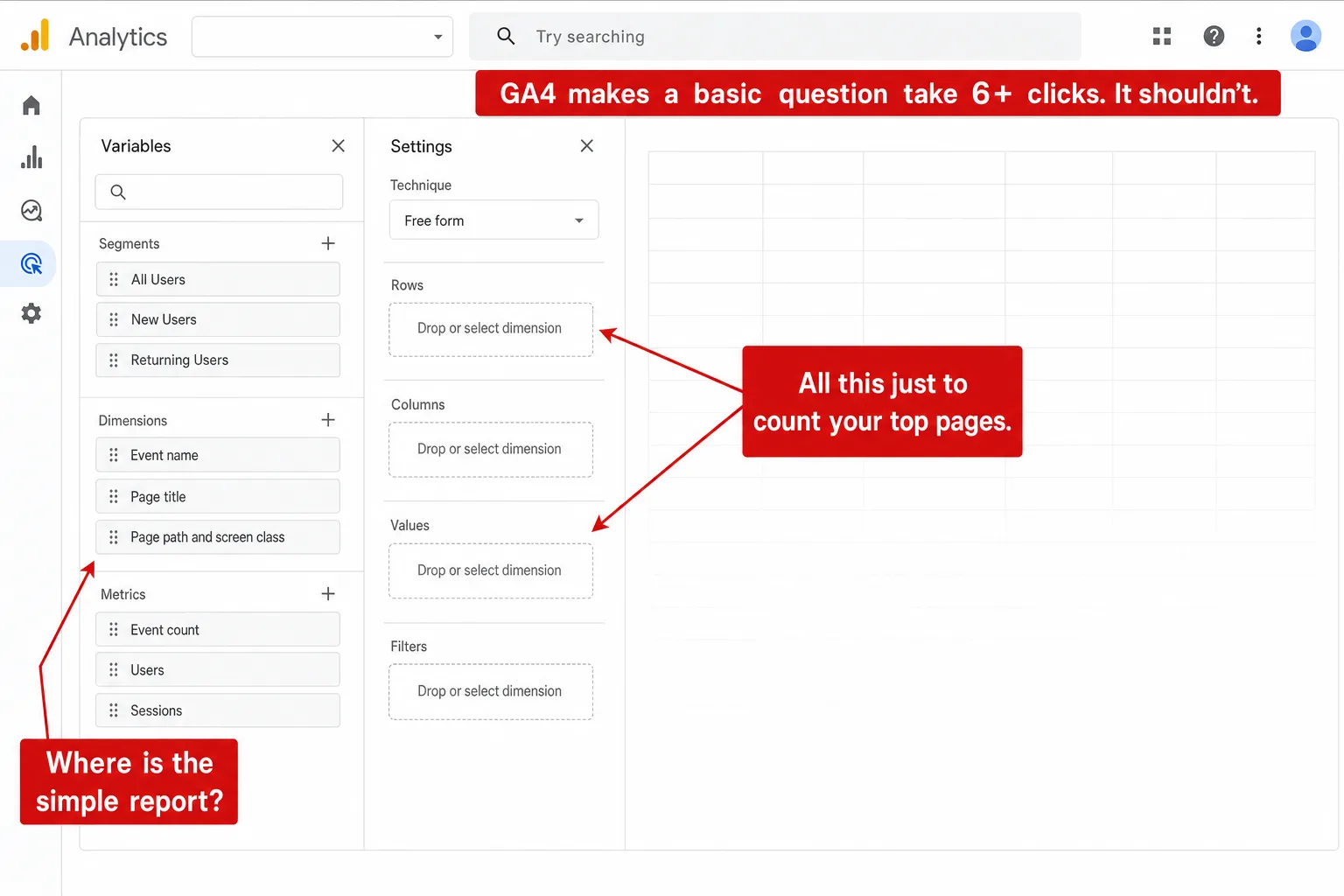
GA4 is too complicated, and it isn't your fault. The basics are buried several menus deep behind events, renamed metrics, and a report builder, and reading your own numbers even has its own certification exam. Here is the click-by-click proof, and what those answers look like on one screen instead.
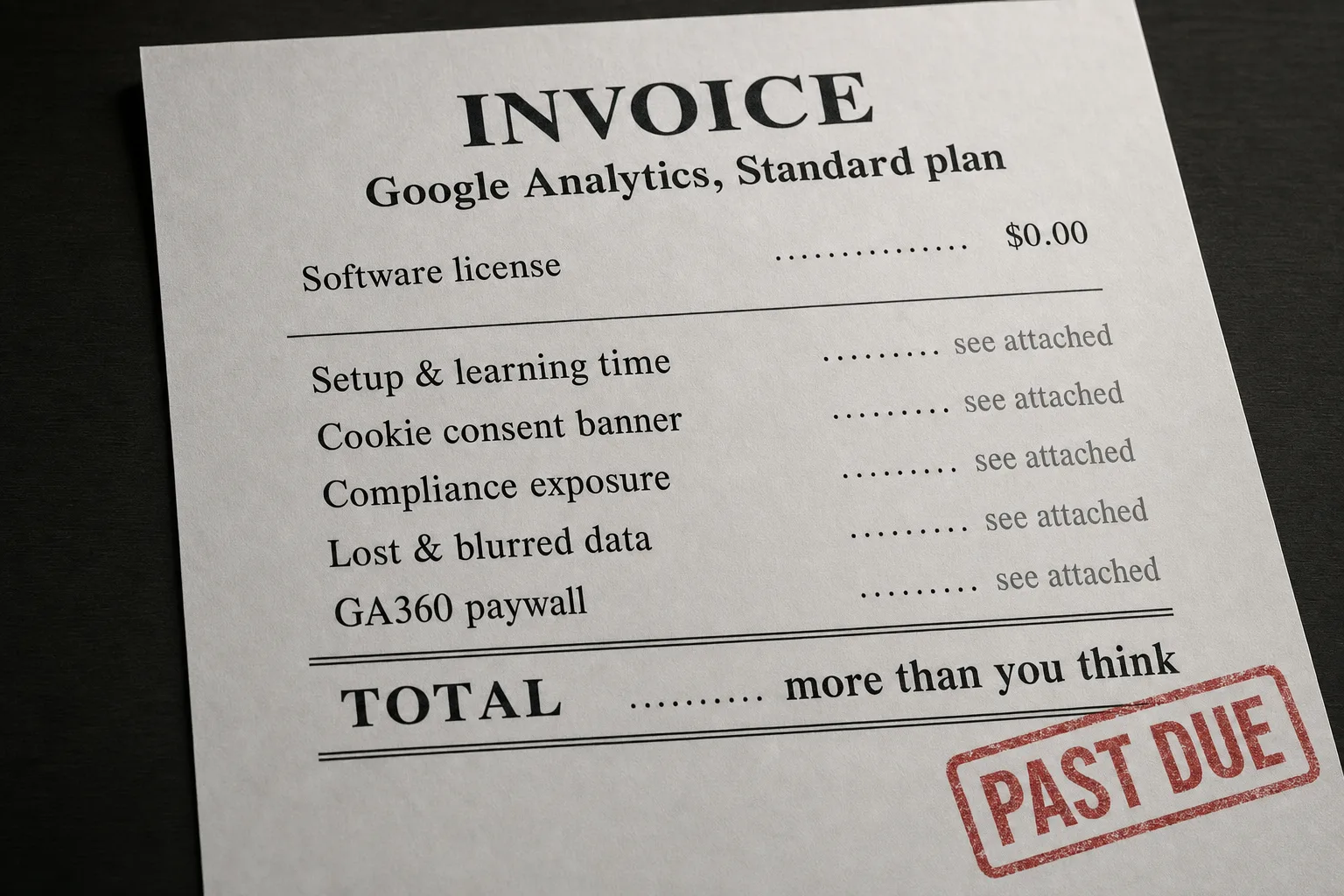
The Hidden Cost of Free Google Analytics
Google Analytics is free to install, not free to use. Here is the real invoice a normal website pays for free GA4: setup and learning hours, a cookie banner that deletes your own visitors, live compliance exposure, data that is blocked, sampled, hidden and expired on a timer, and a $50,000 ceiling the moment you need depth. Itemized, sourced, then zeroed.
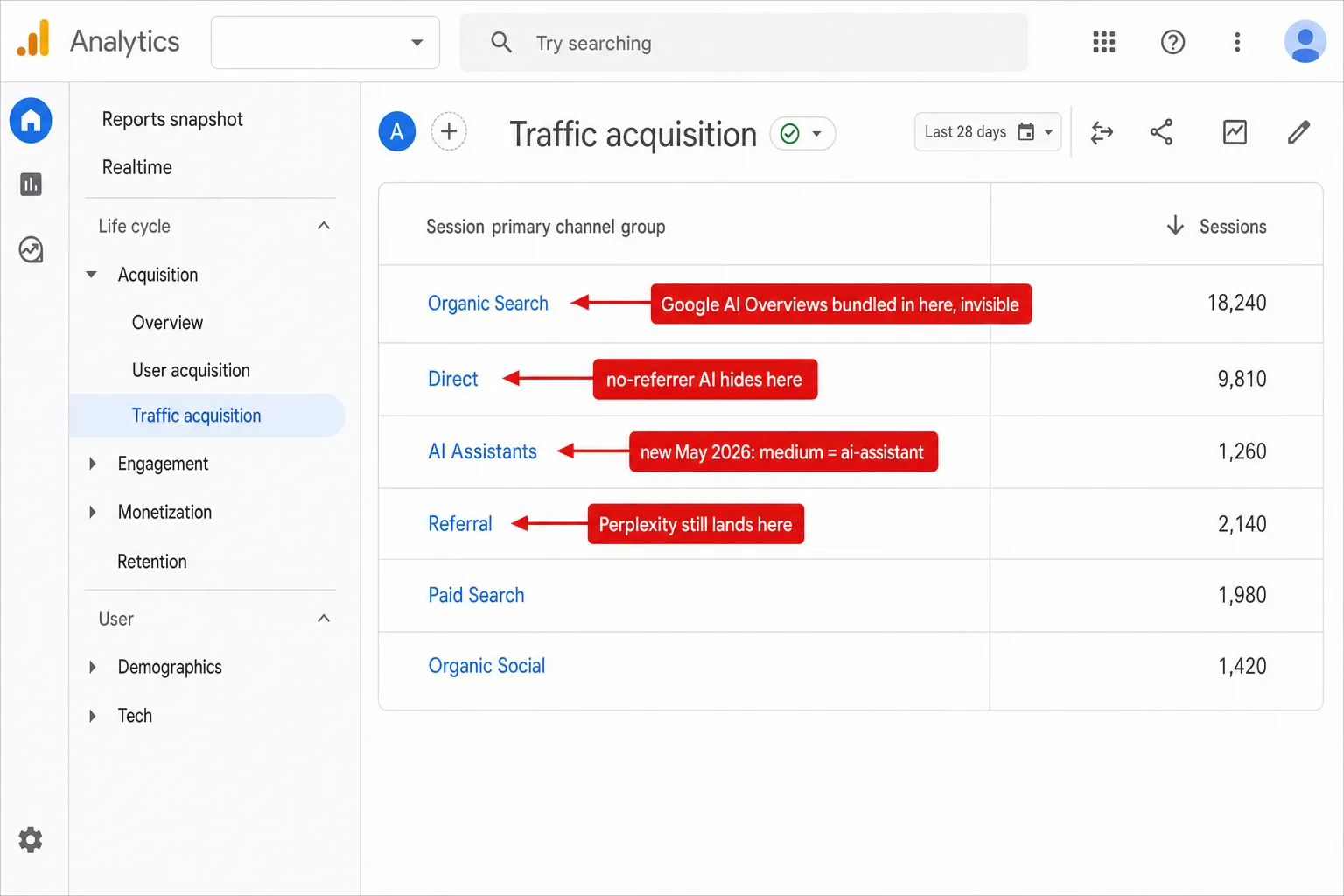
GA4 Finally Added an AI Traffic Channel. Here's What It Still Can't See.
GA4 just added a native AI Assistants channel that auto-tags ChatGPT and Gemini with no setup. It sounds like the AI attribution problem is solved. It is not. The channel only fires on a referrer it recognizes, so it still misses the no-referrer visit, Perplexity, and Google's own AI Overviews.
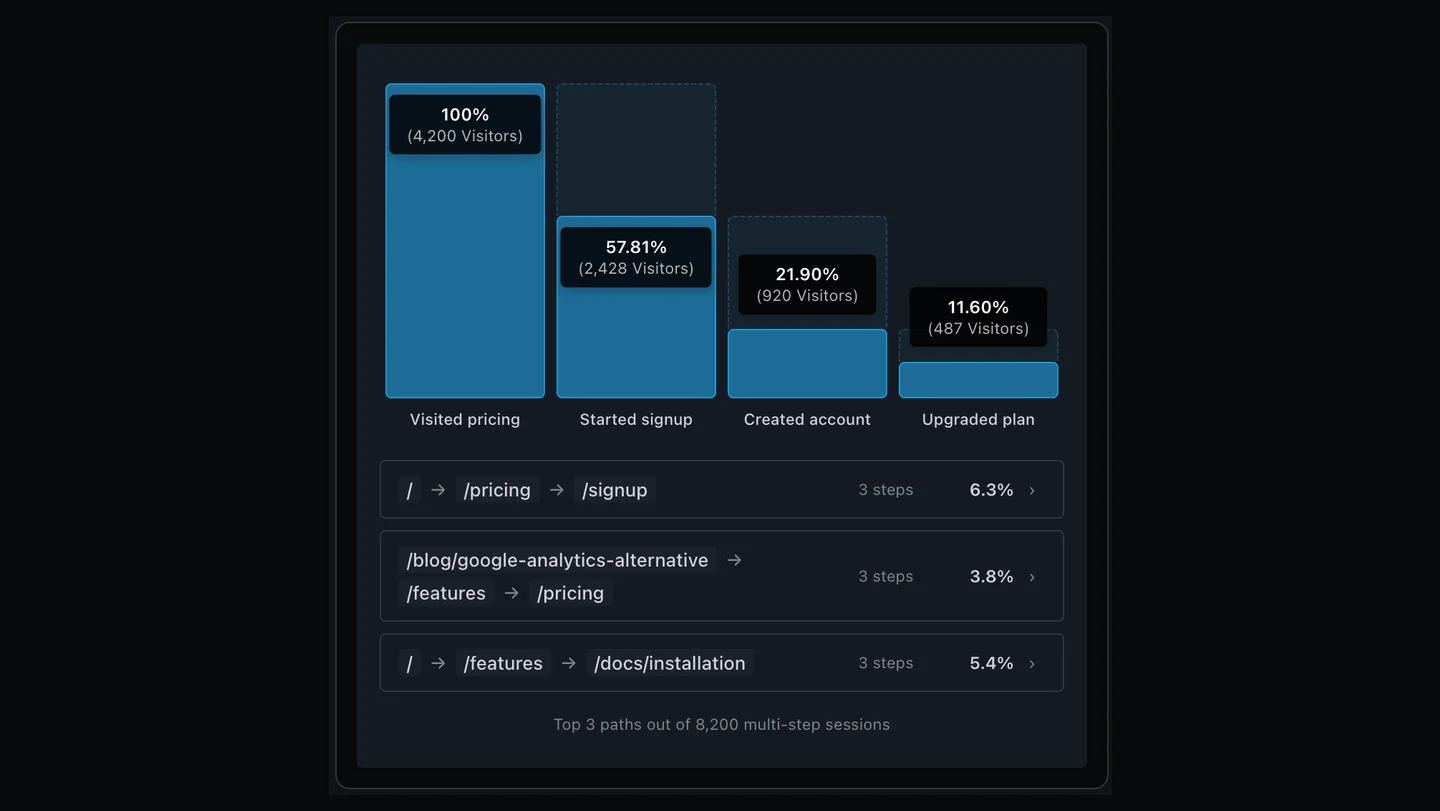
How to Track User Journeys on Your Website (2026)
Your visitors don't move through your site in a straight line. Here's how to track real user journeys, find the paths that lead to signups, and measure them with flows and funnels, all without a cookie banner or GA4's Explore-section setup.
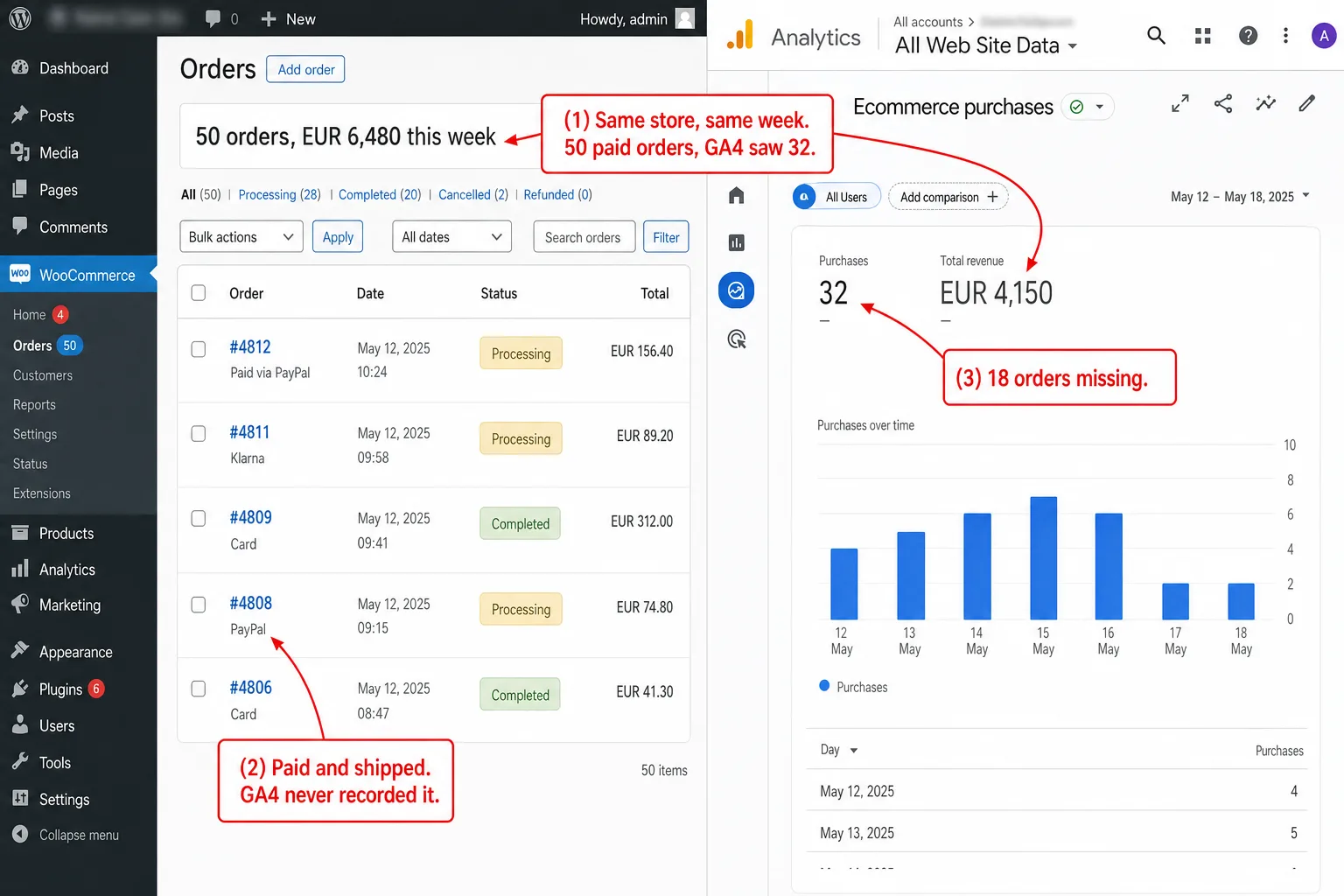
WooCommerce Sales Not Tracking in GA4? We Audited 75 Stores
WooCommerce orders go missing in GA4 because the purchase event fires once, in the browser, on a page many buyers never see. I audited 75 live WooCommerce stores: every one running GA4 or Tag Manager tracked purchases client-side only, with no server-side fallback. Here is why orders vanish, why server-side GTM doesn't fix it, and the one hook that does.
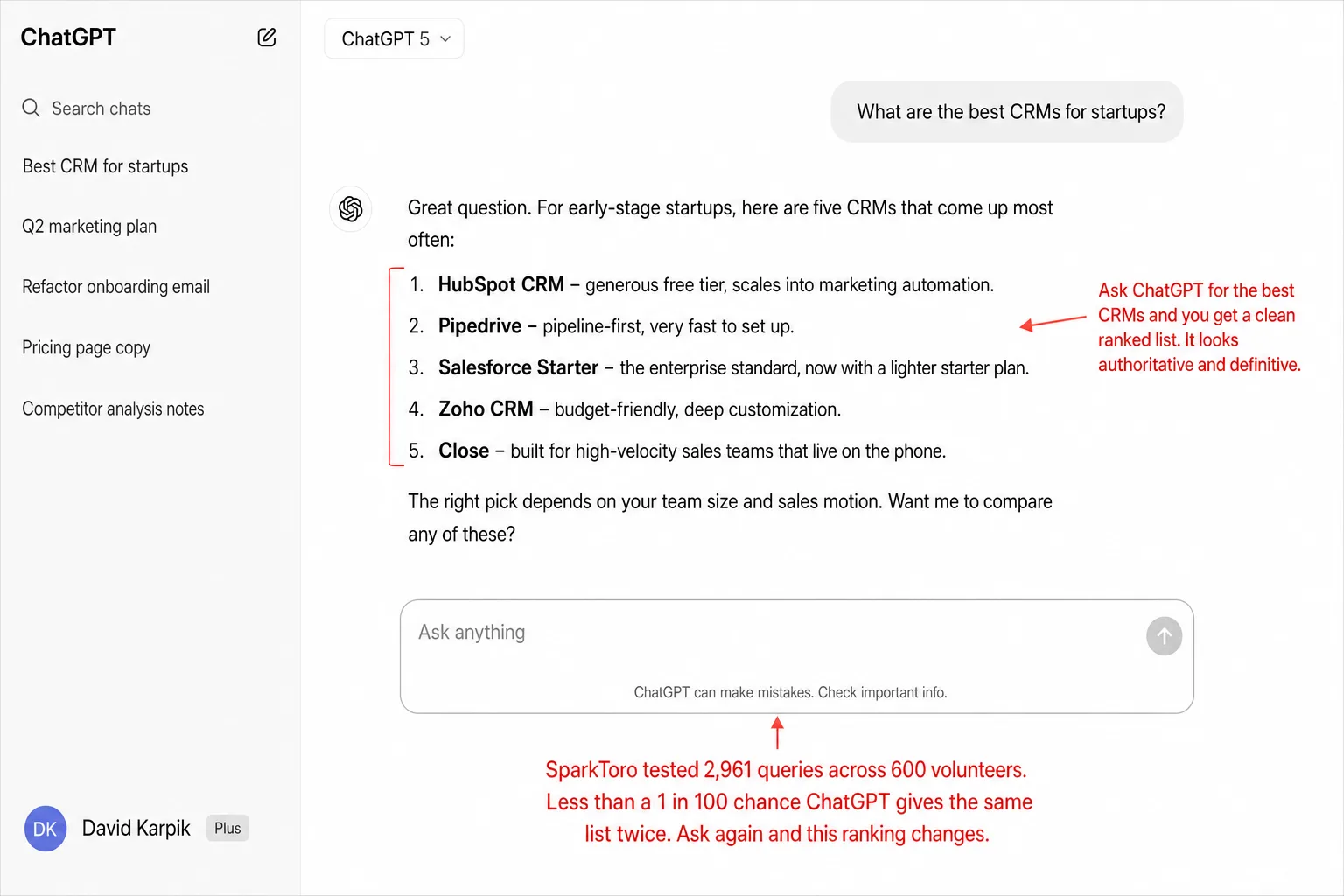
The New Vanity Metrics: Why AI Visibility Scores Are the Klout of 2026
A growing industry sells AI visibility scores built on synthetic prompts, panel estimates, and proprietary formulas. SparkToro found less than a 1% chance AI gives the same brand list twice. Here's why these scores buy you nothing, and what to measure instead.
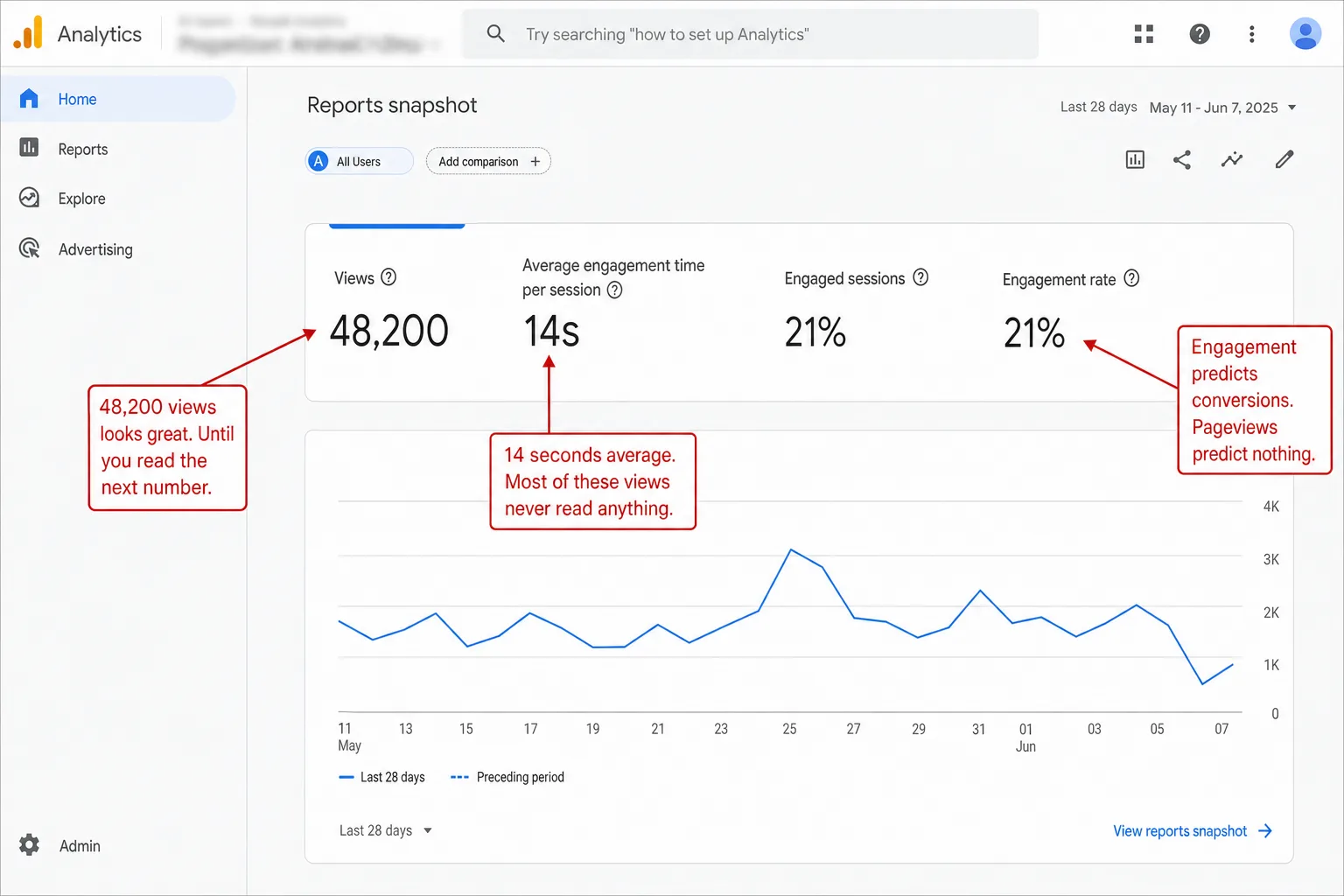
Beyond Pageviews: The Engagement Metrics That Actually Matter
53% of visitors bounce after a single page. Average engaged time: 28 seconds. Pageviews tell you someone arrived. Engagement data tells you whether you answered their question. Here's how to measure what actually matters.
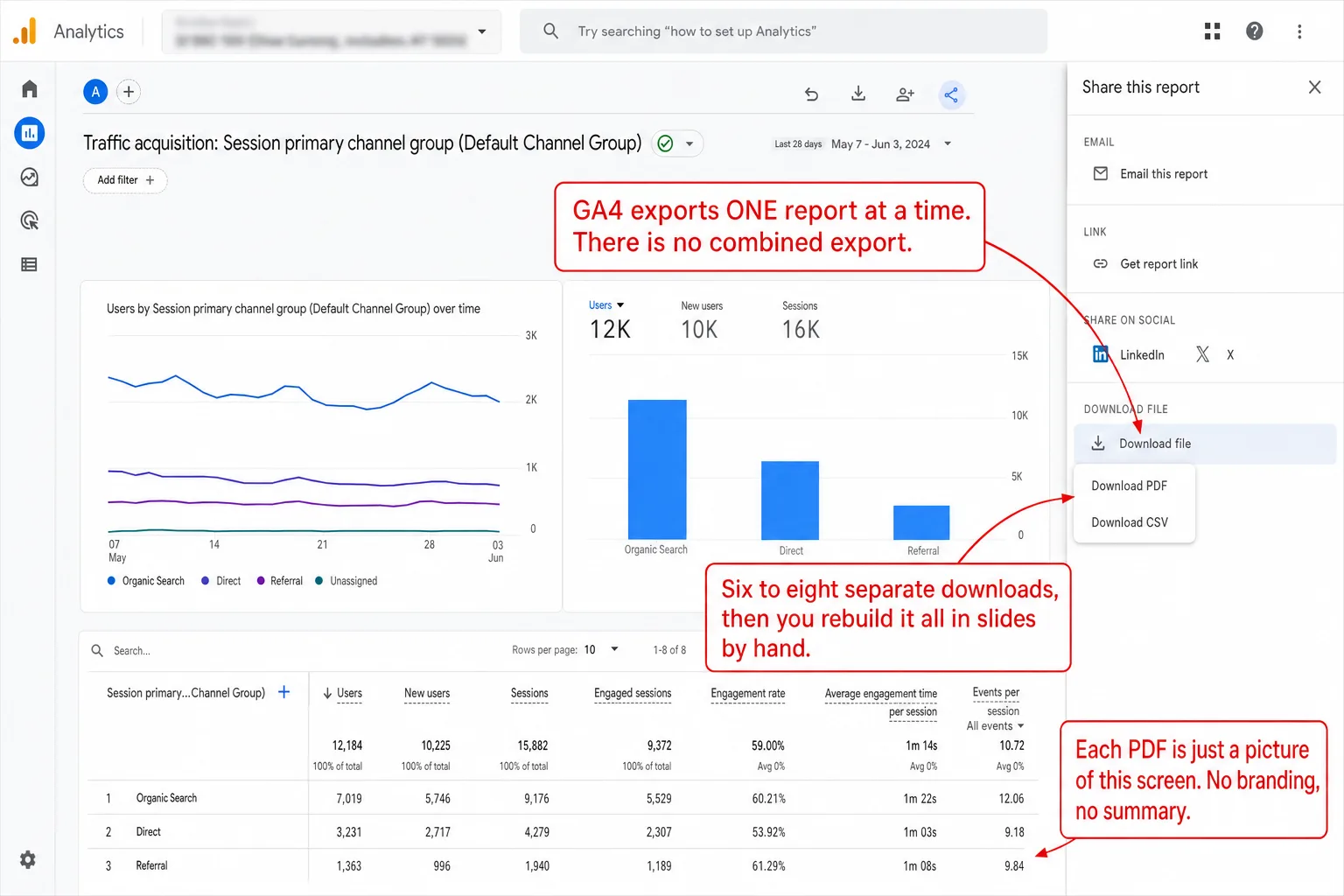
How to Send Your Client an Analytics Report in 60 Seconds
Manual client reports take 3-5 hours each in GA4. There's a faster way: one click, a 3-page PDF, and your client has everything they need.
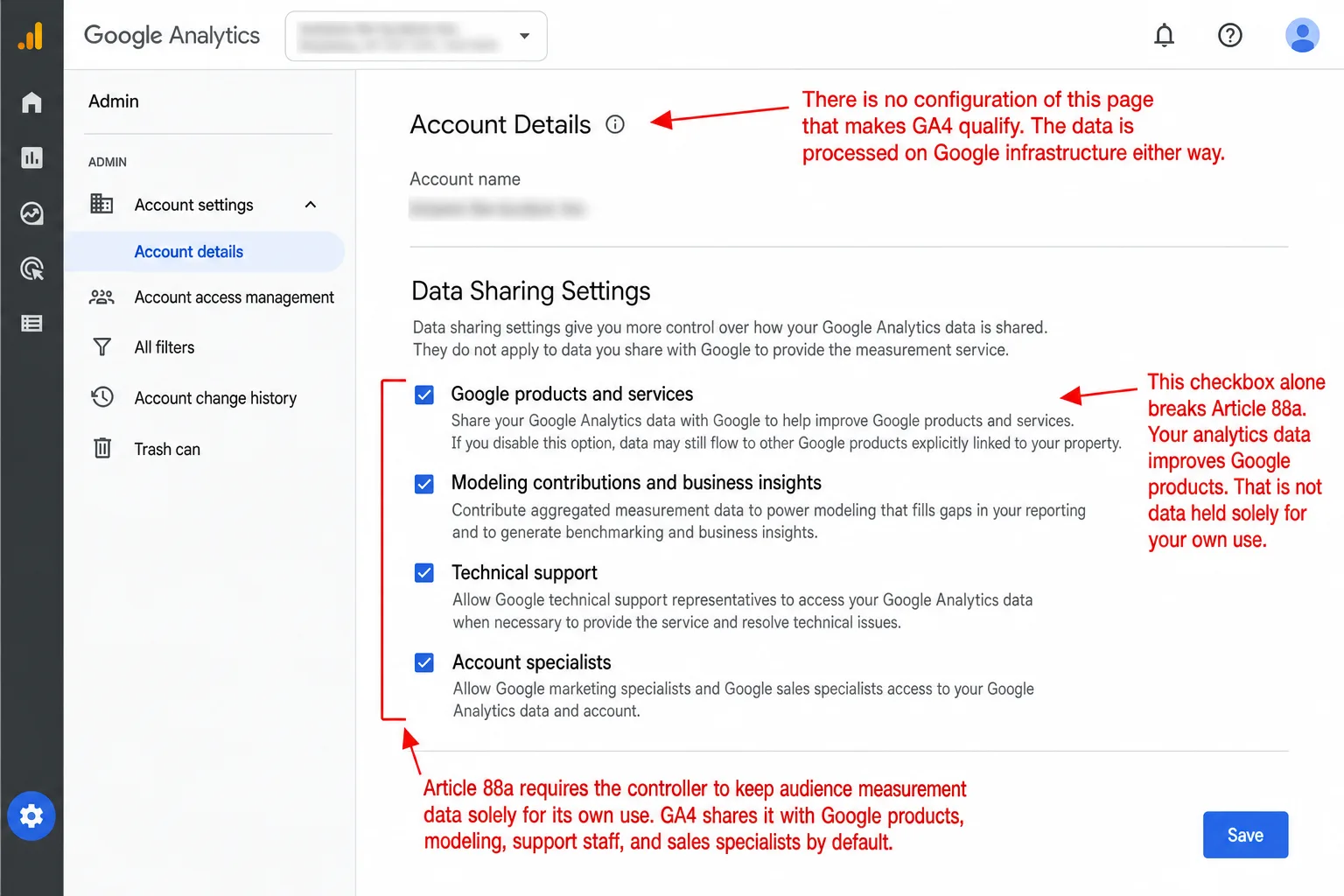
The EU Digital Omnibus Act: What It Means for Your Analytics (and Whether GA4 Qualifies)
The EU is rewriting the cookie rules. A new consent exemption for analytics could eliminate cookie banners for qualifying tools. Google Analytics doesn't qualify. Here's everything you need to know about Article 88a and what it means for your website.
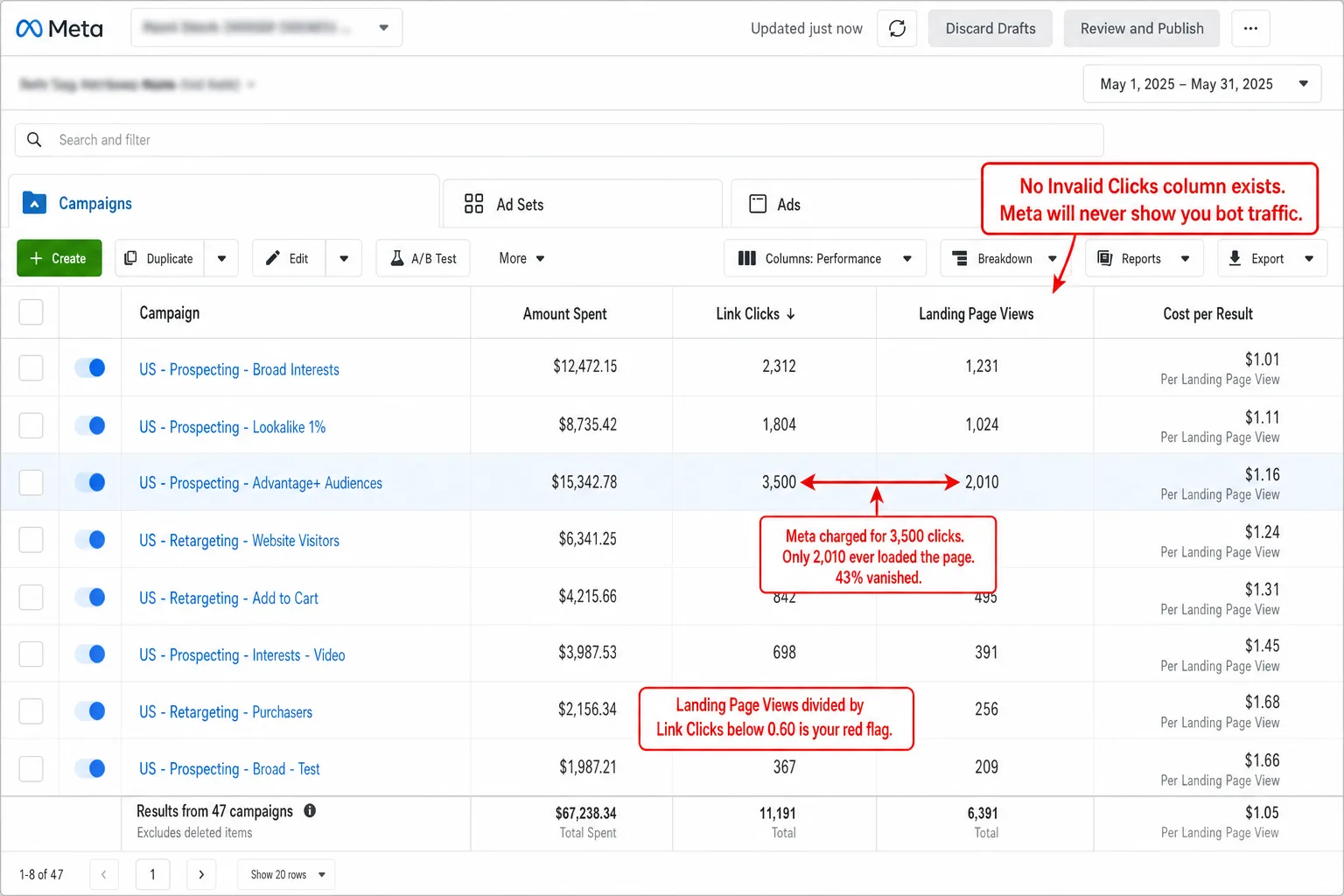
Facebook Ads Bot Traffic: Why Your Conversion Rate Is a Lie
652 link clicks. 47 real sessions. Zero sales. That Reddit post got 125+ upvotes because hundreds of advertisers recognized the pattern. Meta earned $16 billion from scam-adjacent ads in 2024. Their terms say they're 'not responsible for click fraud.' Your analytics is the only thing that can show you the truth.
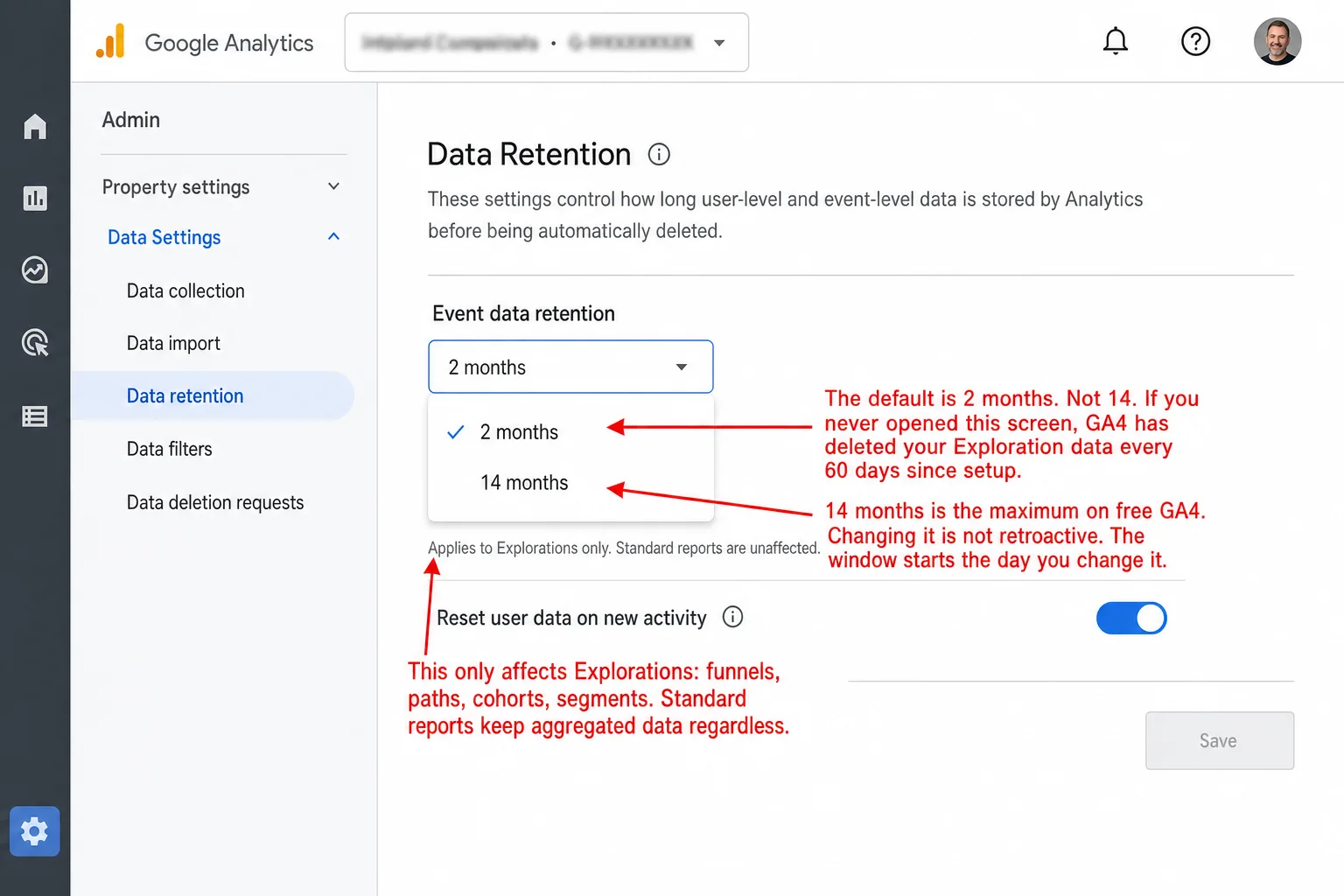
Your GA4 Data Disappears After 14 Months. Here's What Google Won't Tell You.
GA4 deletes your event-level data after 14 months. The default is 2 months. The official workaround requires SQL skills and a Google Cloud account. Every other analytics tool keeps your data forever.
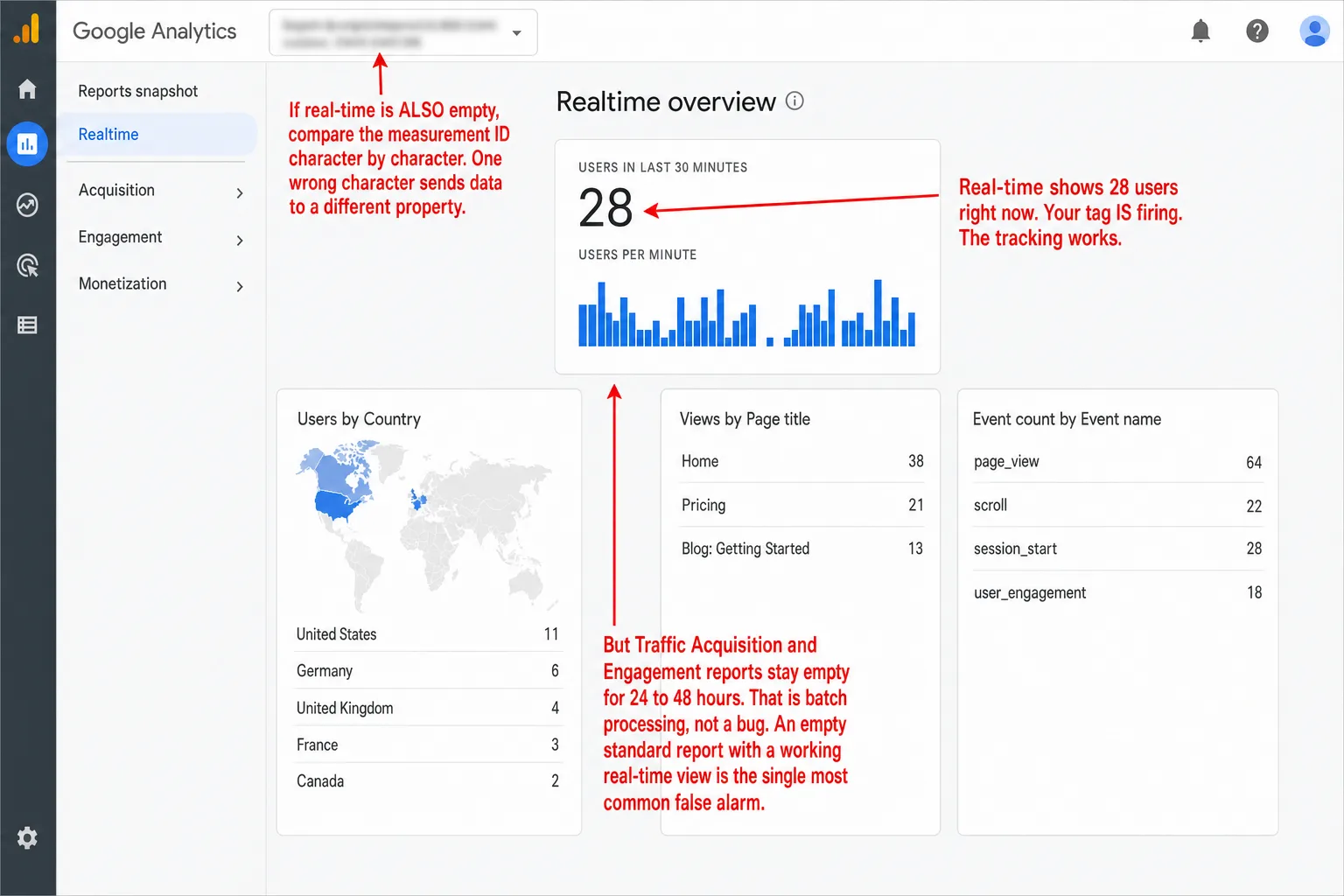
GA4 Not Showing Data? Every Fix (and Why It Keeps Happening)
Your GA4 dashboard is empty. Here's how to fix it, why it happens, and why some of the data loss is permanent.
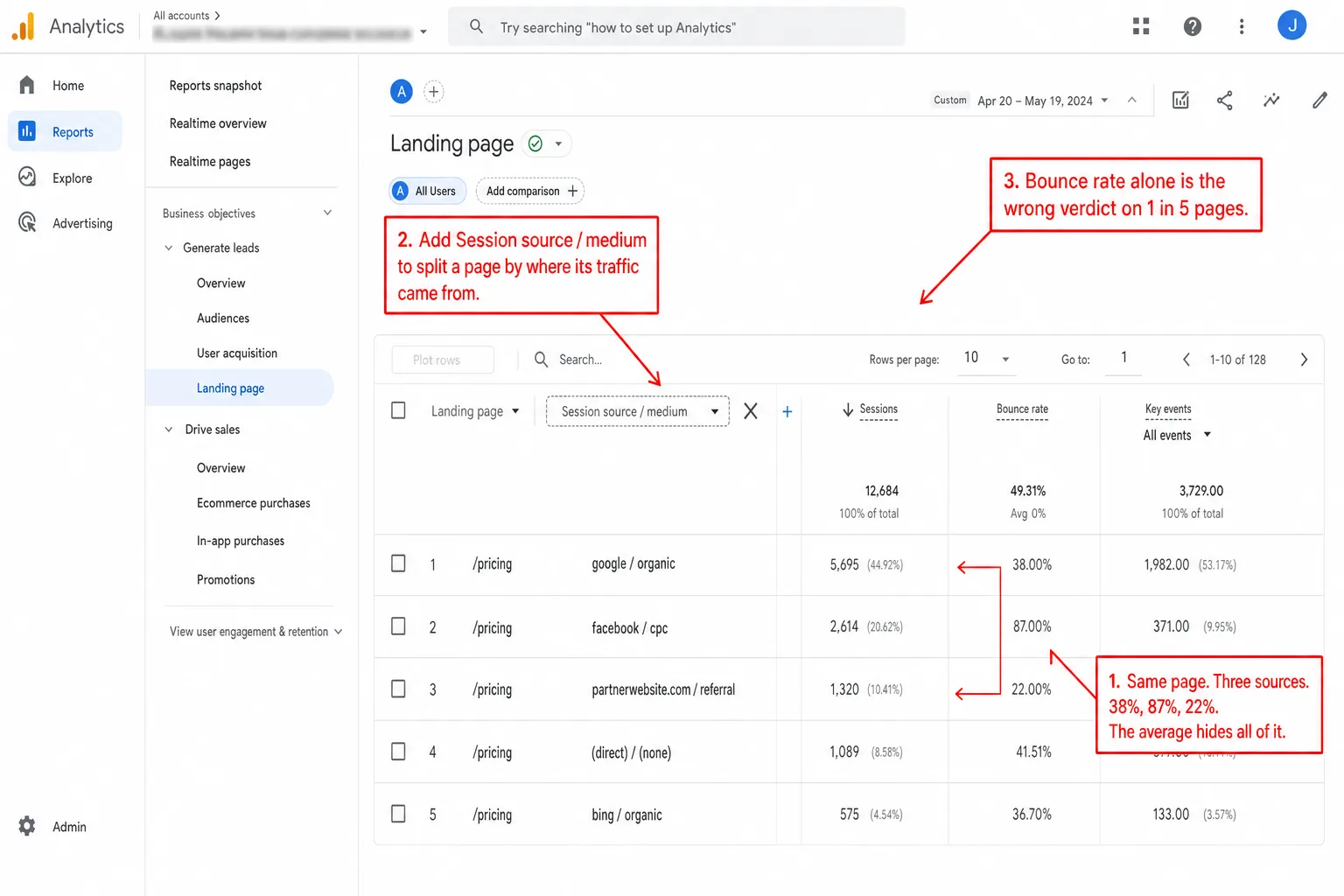
How to analyze landing pages: the four signals beyond bounce rate
Most landing-page reports lead with bounce rate. I looked at 1,007 landing pages across the sites we measure: 1 in 5 high-bounce pages had visitors who actually scrolled and stayed. Here are the four signals to read first.
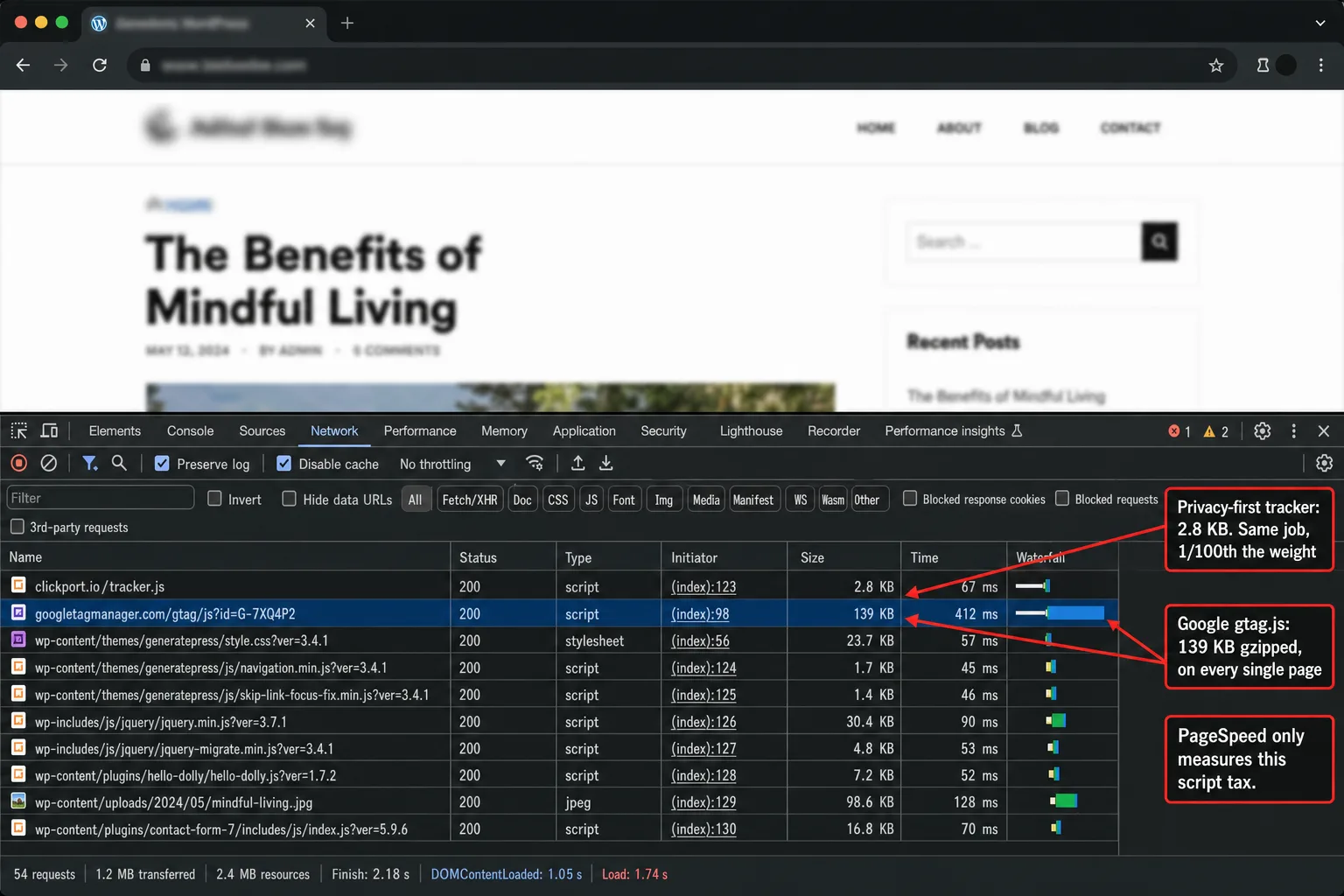
Lightweight WordPress Analytics: I Measured Them All
I downloaded eight WordPress analytics tools and weighed every byte. The smallest tracker belongs to Plausible. The heaviest plugin is 27.8 MB. Here's what 'lightweight' actually means once you measure all four dimensions.
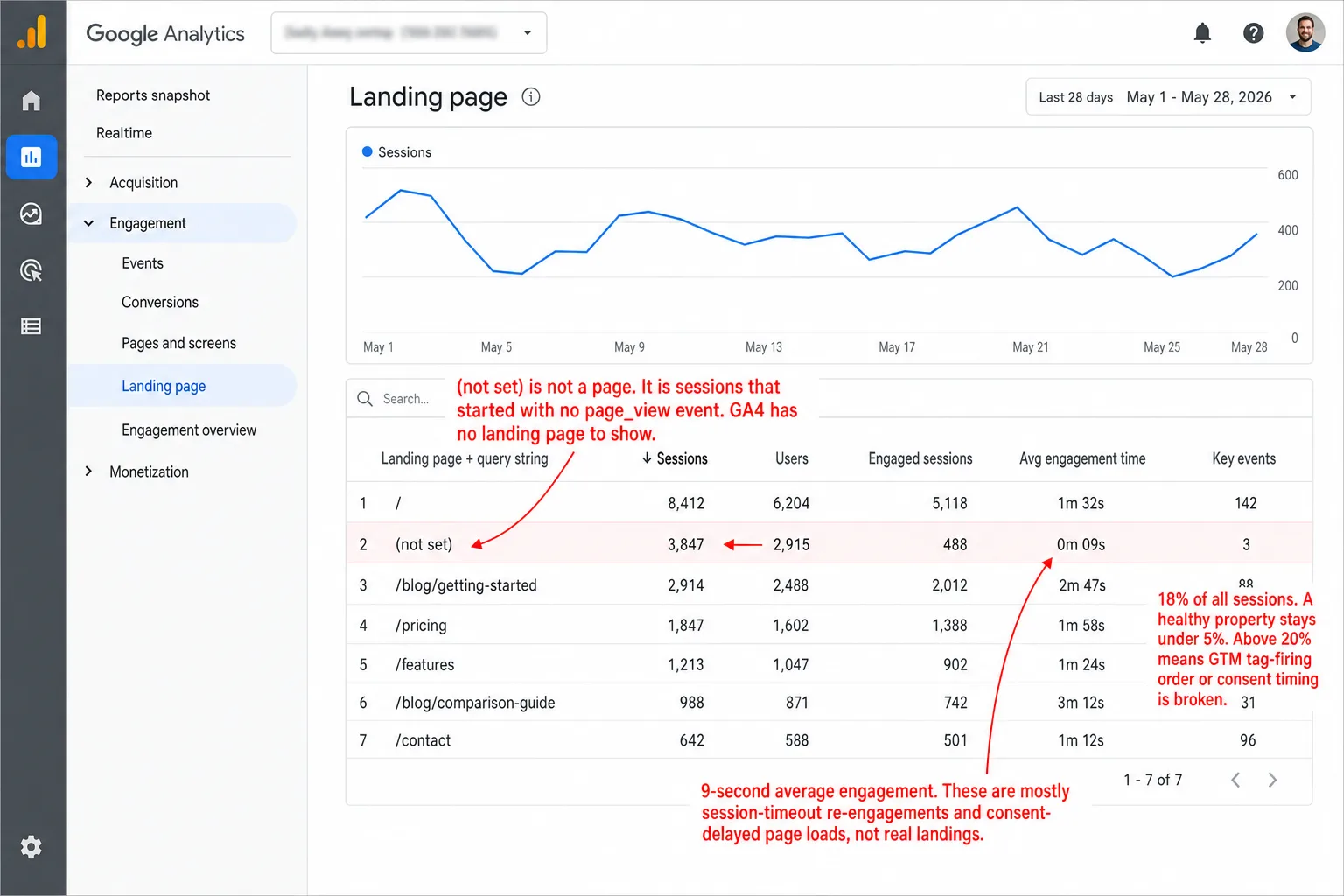
(Not Set) in GA4: What It Means and How to Fix It
Every GA4 property has (not set) in its reports. Some of it is fixable. Some of it is architectural. Here's how to tell which is which.
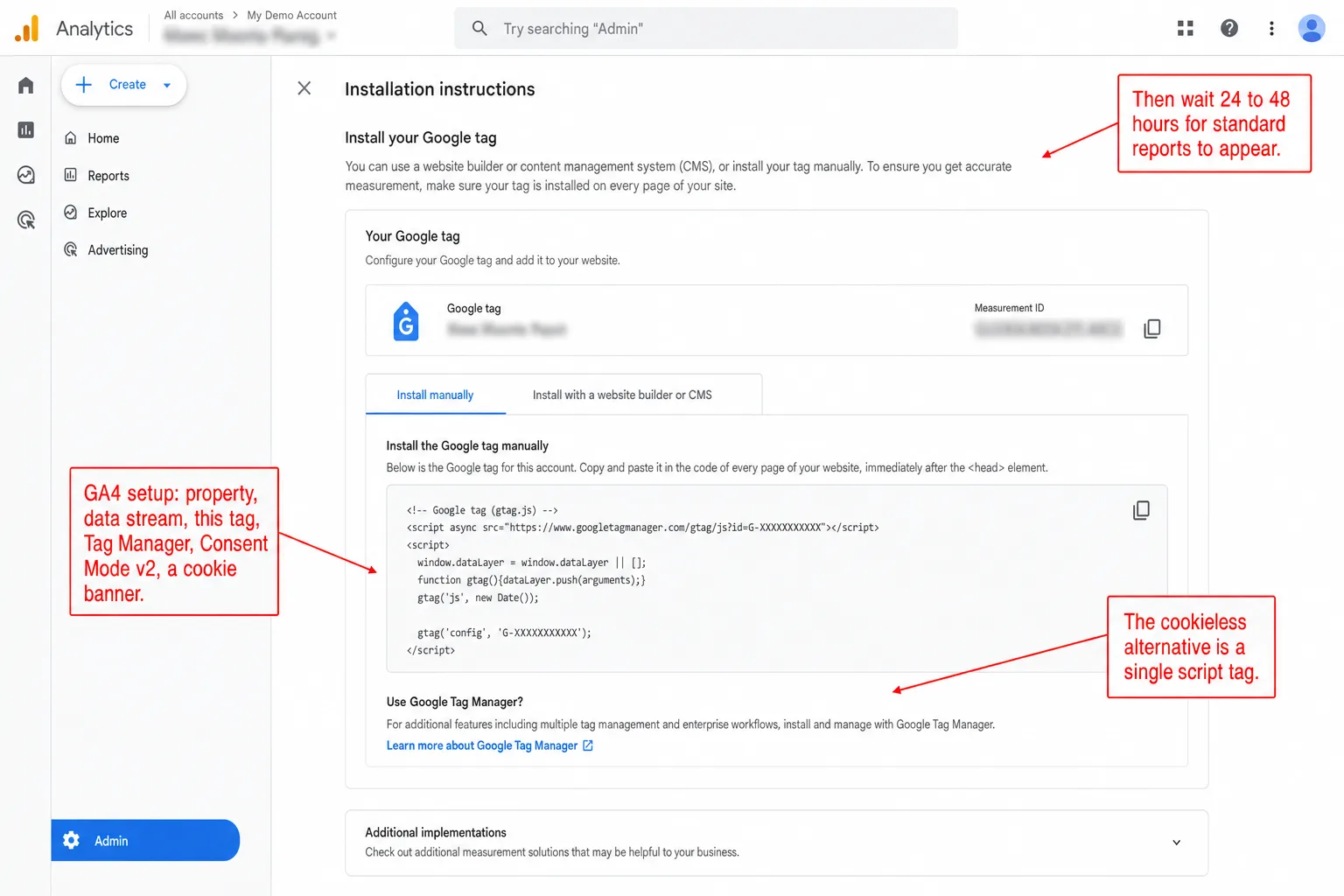
How to Switch from GA4 to Clickport Analytics
A practical guide to switching from Google Analytics 4 to Clickport. No fluff, no stats dump. Just the step-by-step: how to set up, where to find your data, and how every GA4 feature maps to Clickport.

The Internet's Broken Promise
The internet was supposed to eliminate the middleman. Instead, it created the most powerful middlemen in human history.
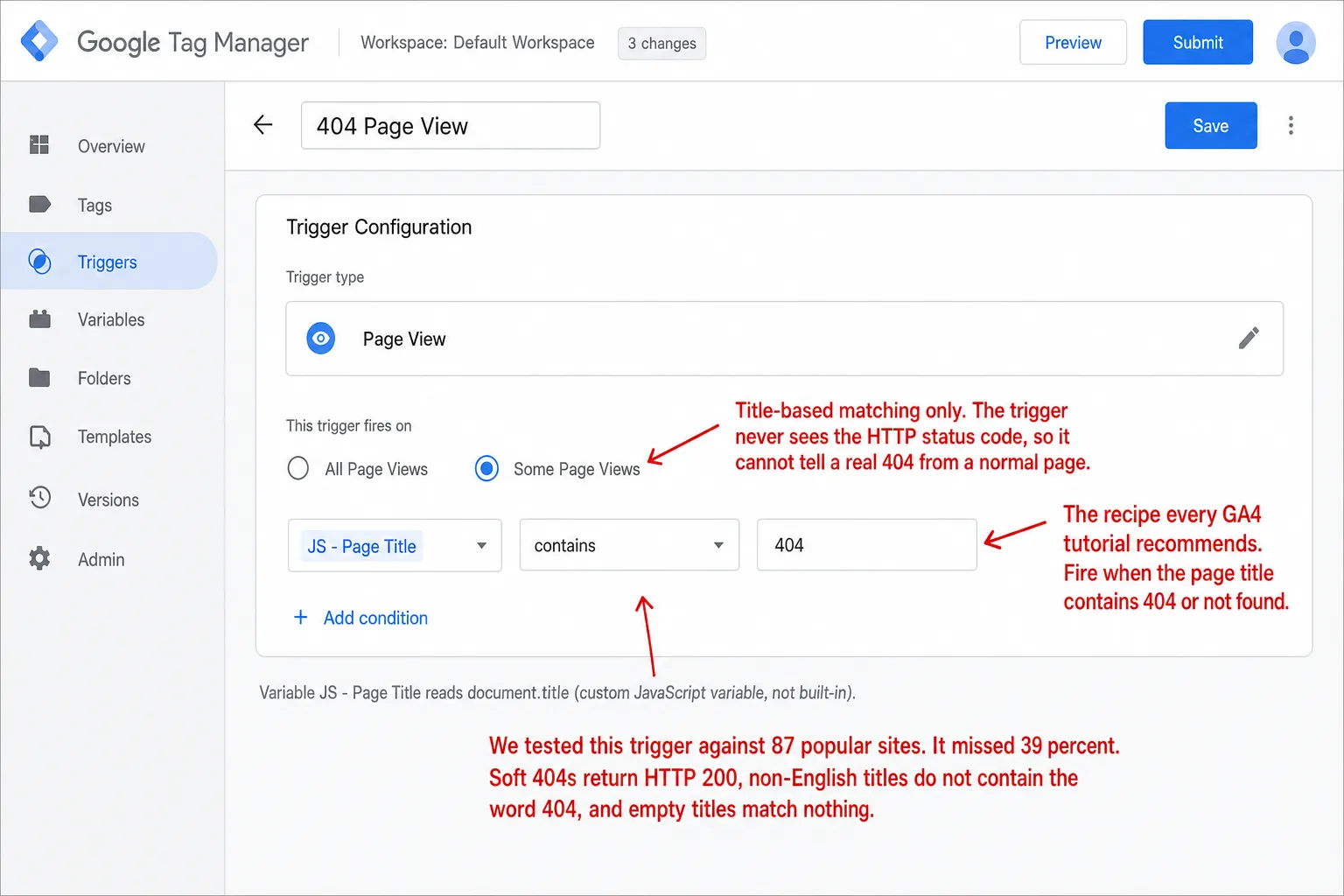
Track 404 Pages in GA4: Why 39% Get Missed Silently
Every GA4 tutorial recommends the same Tag Manager trigger: fire when the page title contains '404' or 'not found.' We tested that recipe against 87 popular websites. It missed 39%. Here's what's broken, and what actually works.
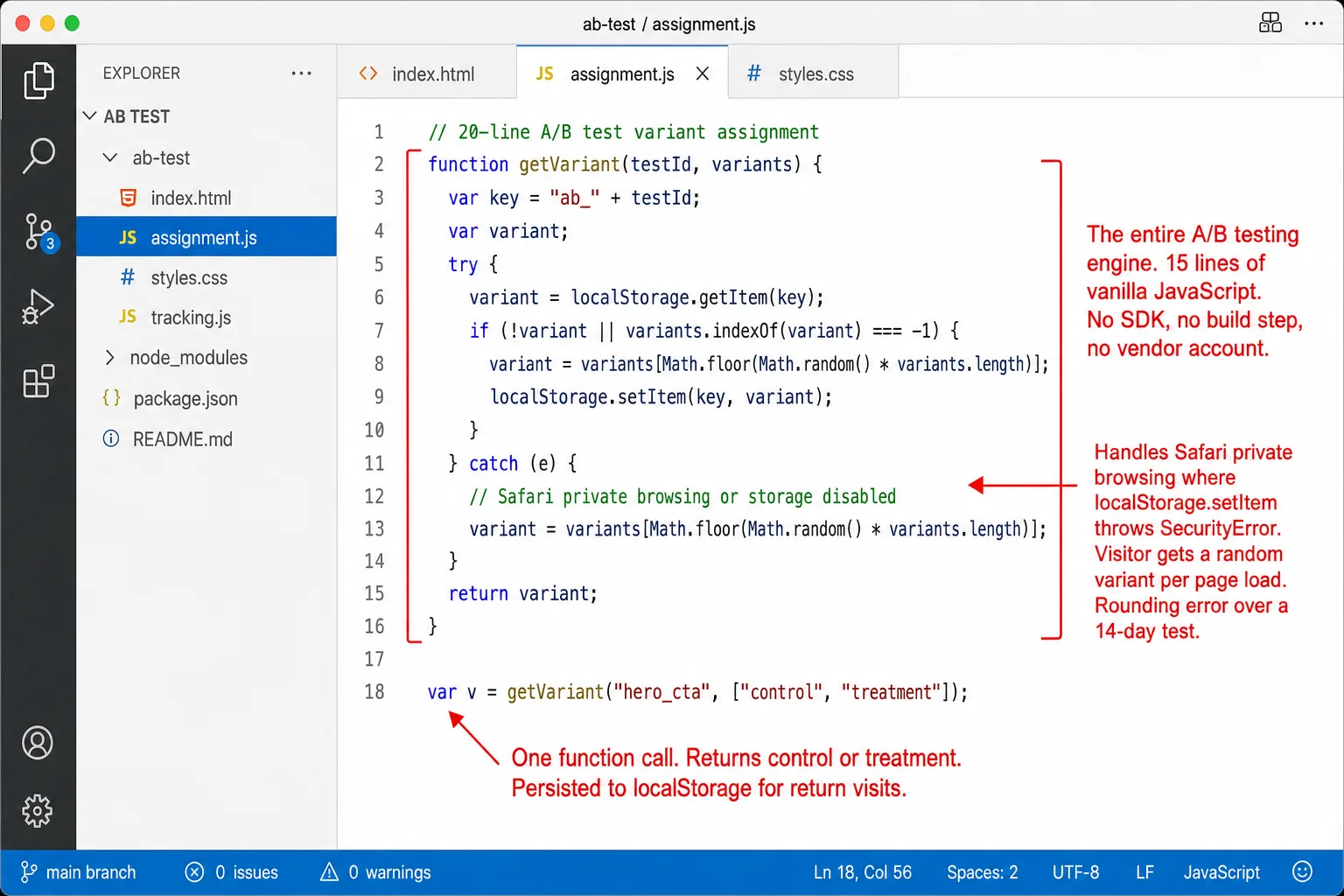
How to A/B Test Your Website Without Paying for Tools
Google Optimize is dead. The replacements cost $299-$113,000/year. But a simple A/B test is just 20 lines of JavaScript and an analytics tool that tracks custom events. Here's the full implementation, the statistics you need, and how to read the results.
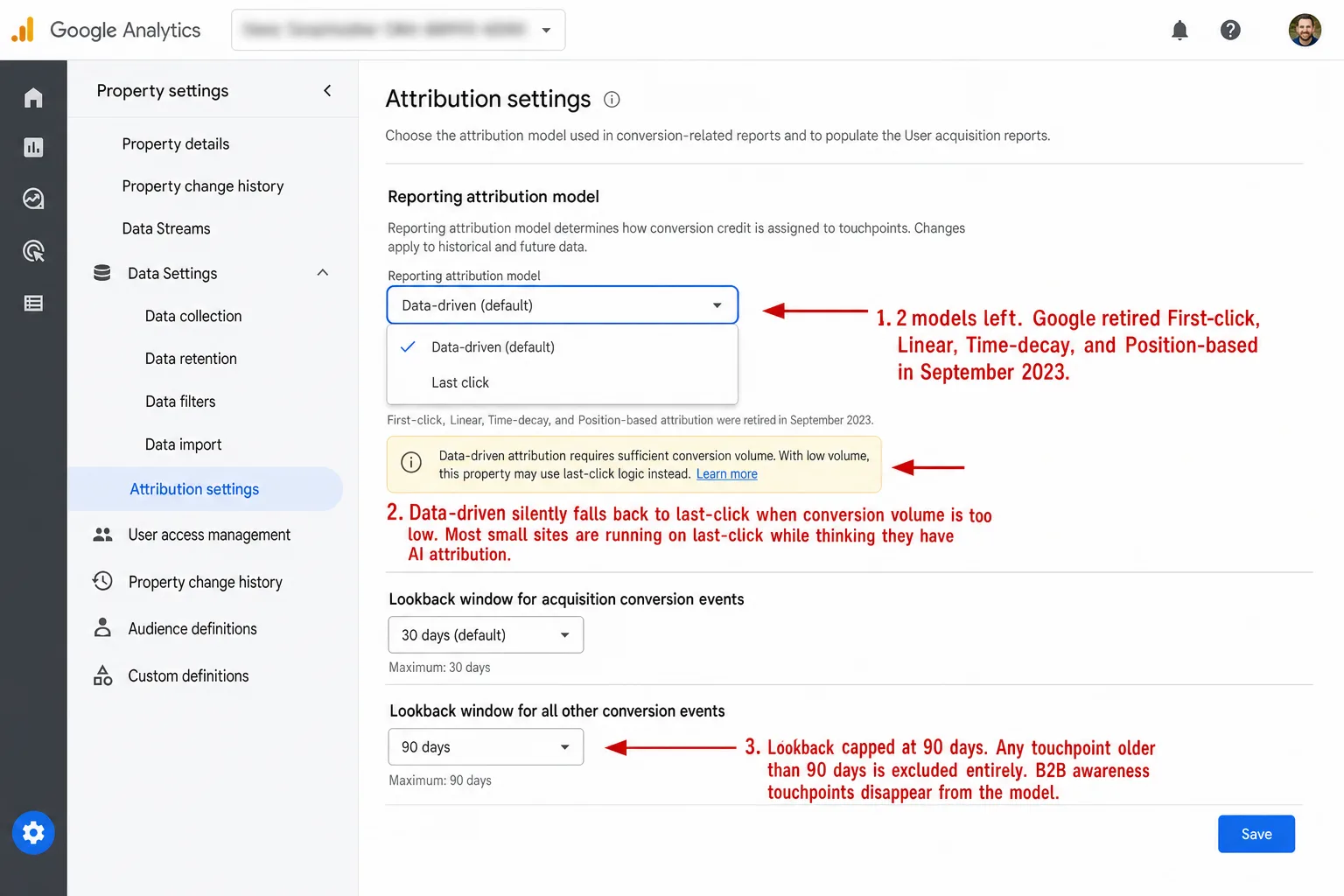
Attribution Modeling Explained: Every Model, The Math, and What Actually Works in 2026
GA4 removed 4 of its 6 attribution models, and the remaining 'data-driven' model is a black box that silently falls back to last-click. Every model explained with actual math, plus what works in a privacy-first world.
Best Google Analytics Alternatives in 2026: 15 Compared
Every 'best GA alternatives' article is written by an analytics company that ranks itself #1. This one is too. But I'll tell you when GA4 is actually the right choice, and when another tool is a better fit than mine.
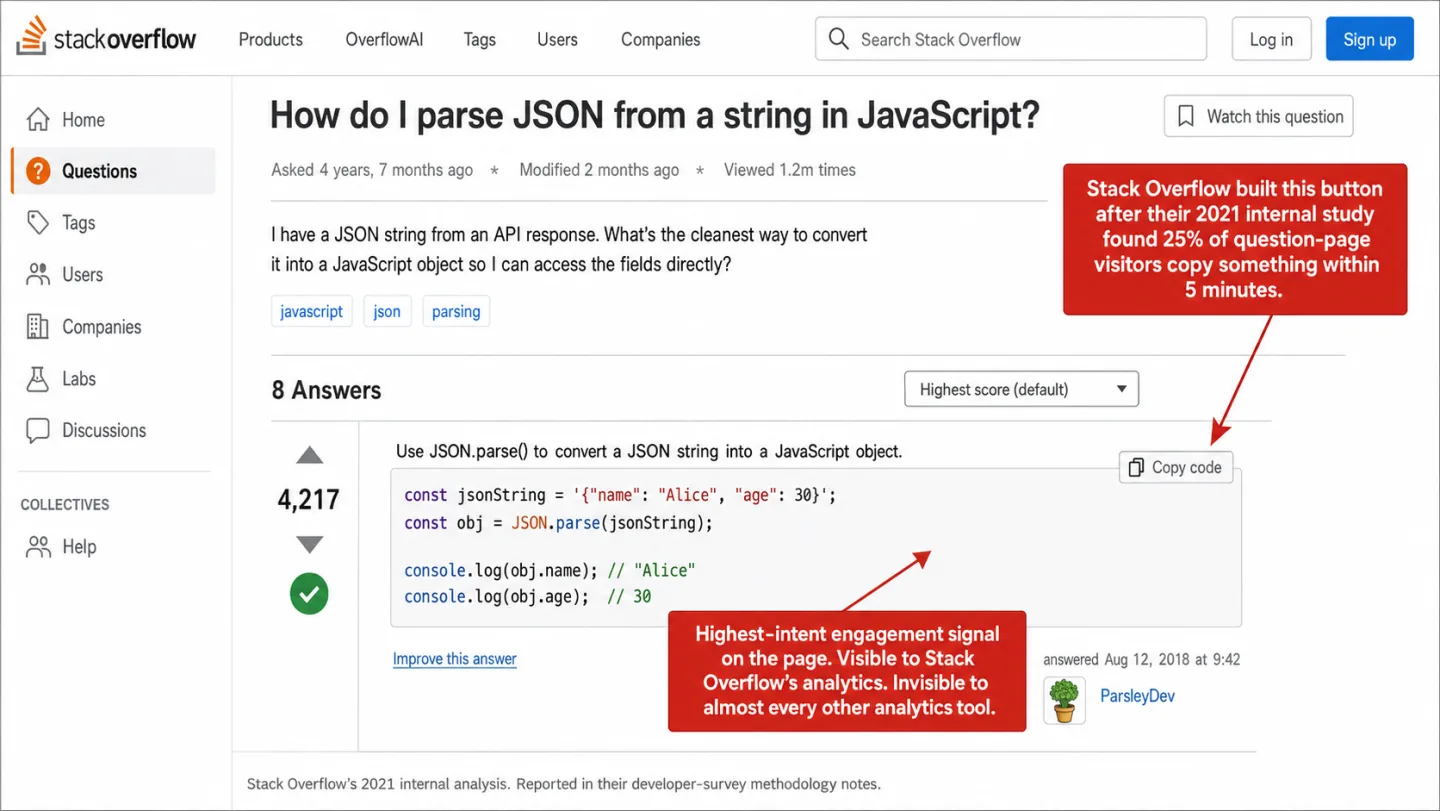
Content Engagement Metrics: The Signals That Prove Visitors Actually Read Your Content
On Stack Overflow, 25% of visitors copy something within five minutes. On most sites, nobody tracks this. The result: a massive blind spot between 'someone visited' and 'someone found something worth keeping.'
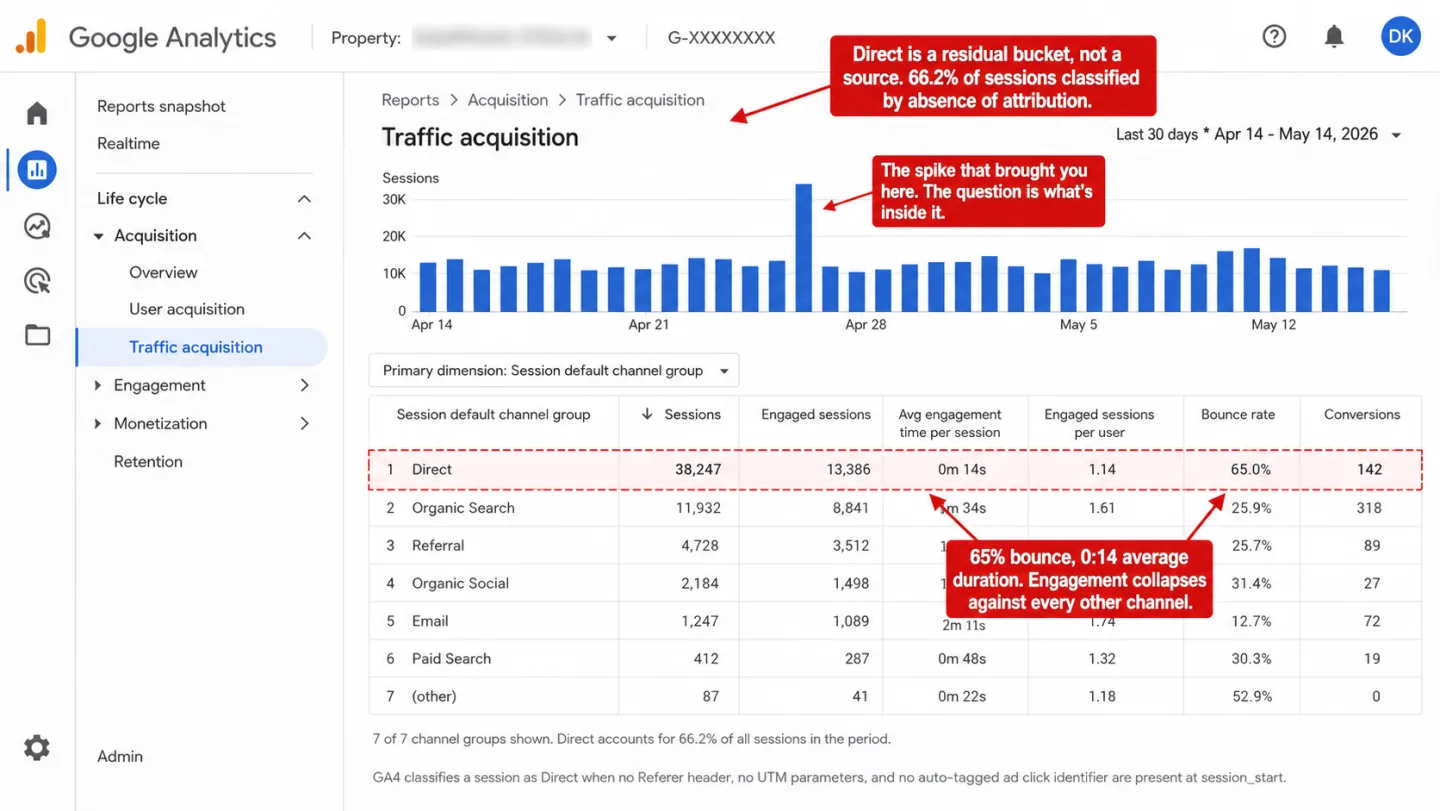
Sudden Spike in Direct Traffic: Is It Bots? (2026 Study)
On one of the biggest sites we monitor, 76% of sessions show as Direct, even after ingestion-layer bot filtering. Most of what ends up there is bots, dark social, or referrer loss. Here is how to tell which one is hitting you.
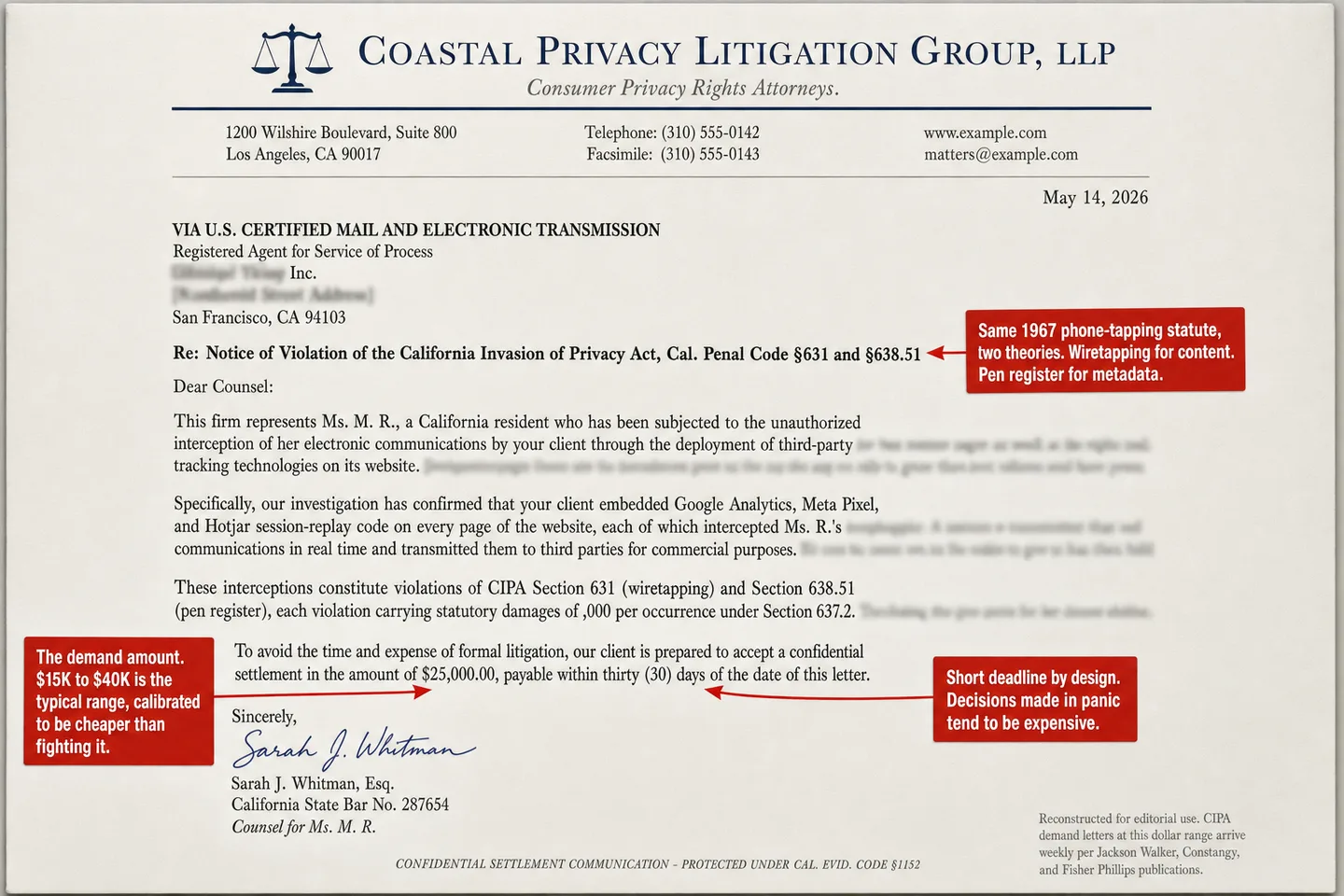
Is Your Analytics Script a Wiretap Under California Law?
2,341 lawsuits filed. $5,000 per violation. No proof of actual harm required. A 1967 phone-tapping law is now the biggest legal threat to anyone running Google Analytics, Meta Pixel, or a chatbot on their website. Here's what you need to know.
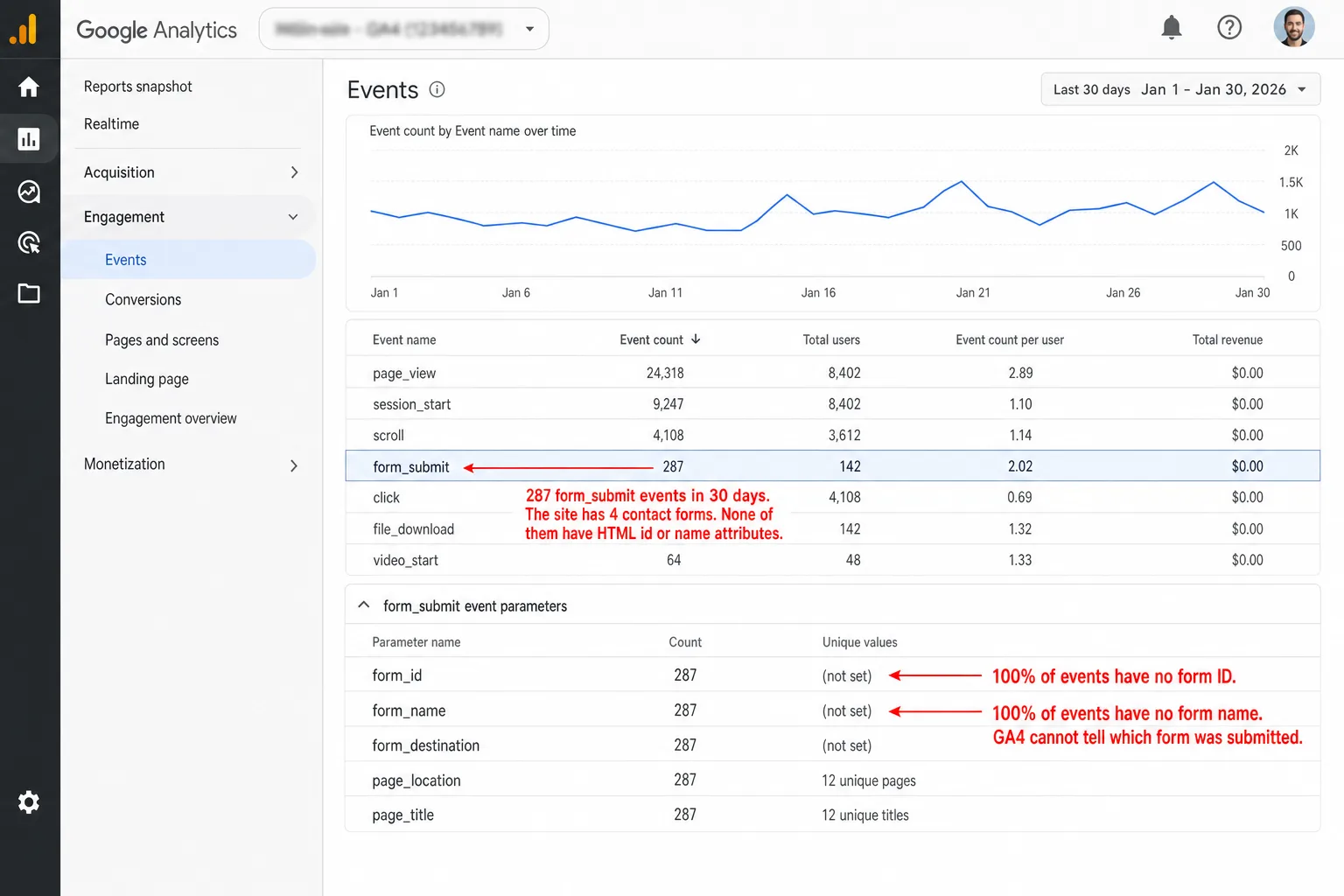
How to Track Form Submissions Without Google Analytics
GA4's form tracking is its weakest feature. It misses AJAX forms, can't tell your forms apart, and loses 50-70% of EU data to consent banners. Here's how to track every form submission with zero configuration, no cookies, and no Tag Manager.
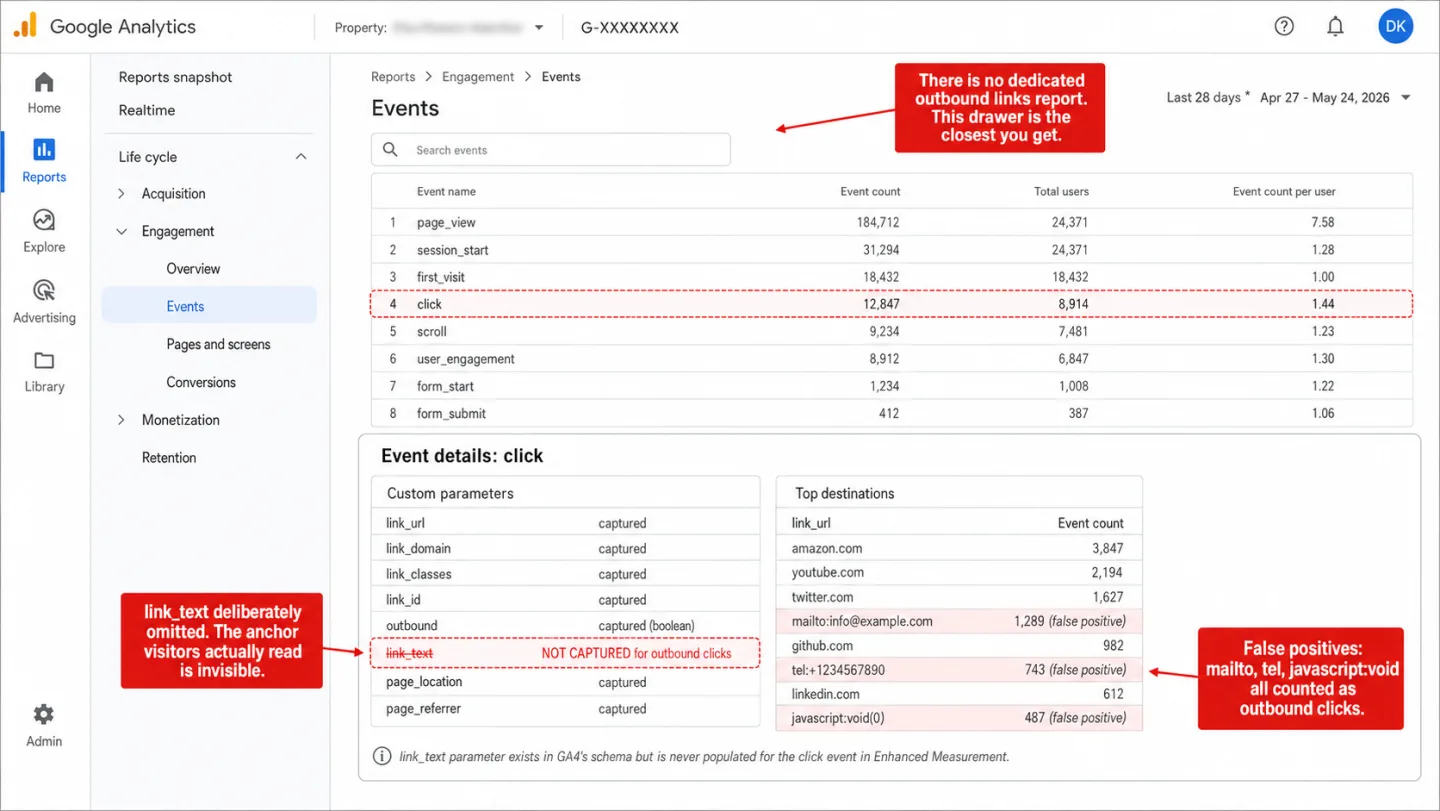
How to Track Outbound Links in GA4 (And the Easier Way)
GA4 tracks outbound clicks automatically, but strips the link text, inflates counts with mailto: links, and hides the report. Here's how to fix it.
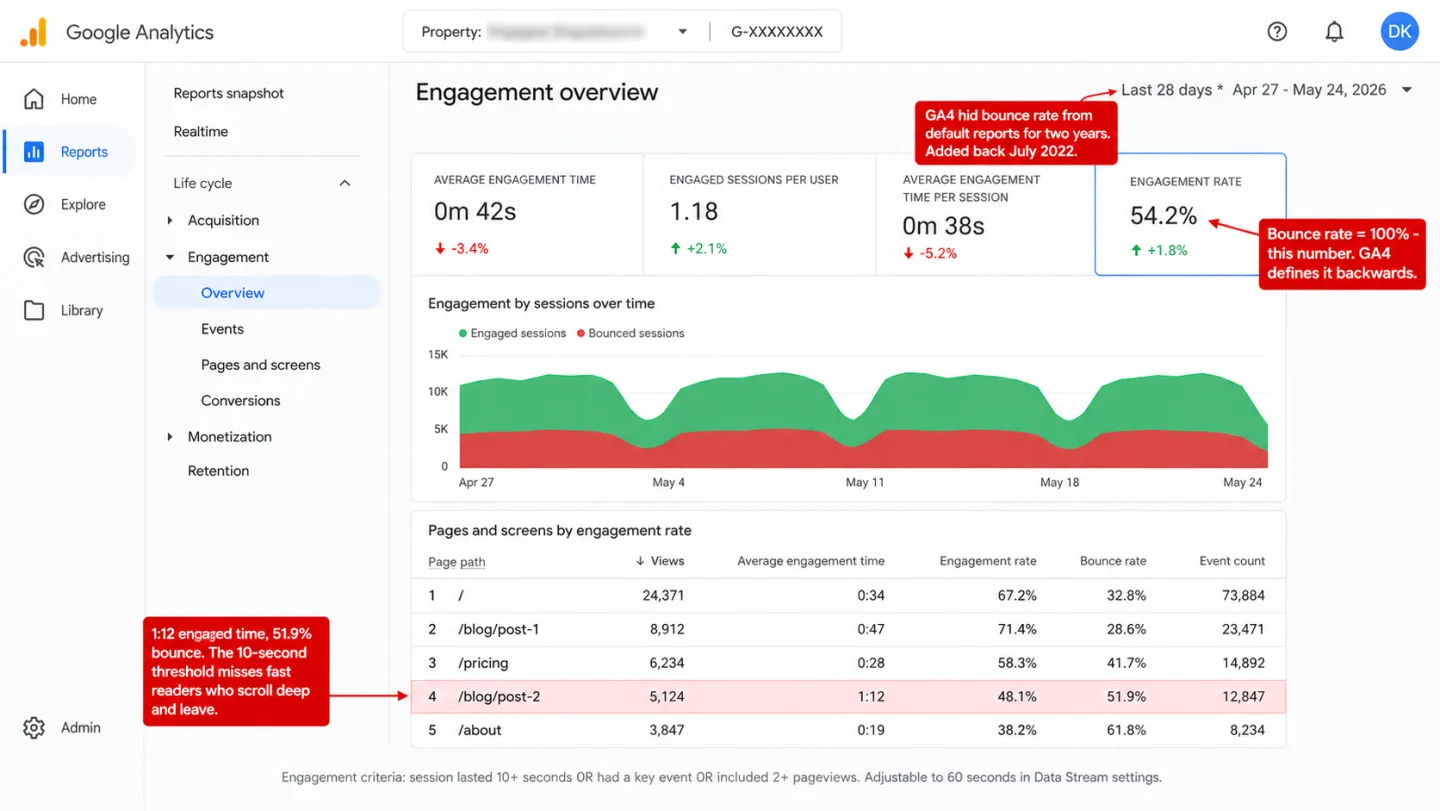
What Is Bounce Rate? Your Analytics Tool Is Probably Measuring It Wrong
Bounce rate is the most misunderstood metric in web analytics. Three different tools will give you three different numbers for the same traffic. Here's everything you need to know: how it's calculated, what the benchmarks actually are, whether it affects SEO, and why your bounce rate is probably wrong.
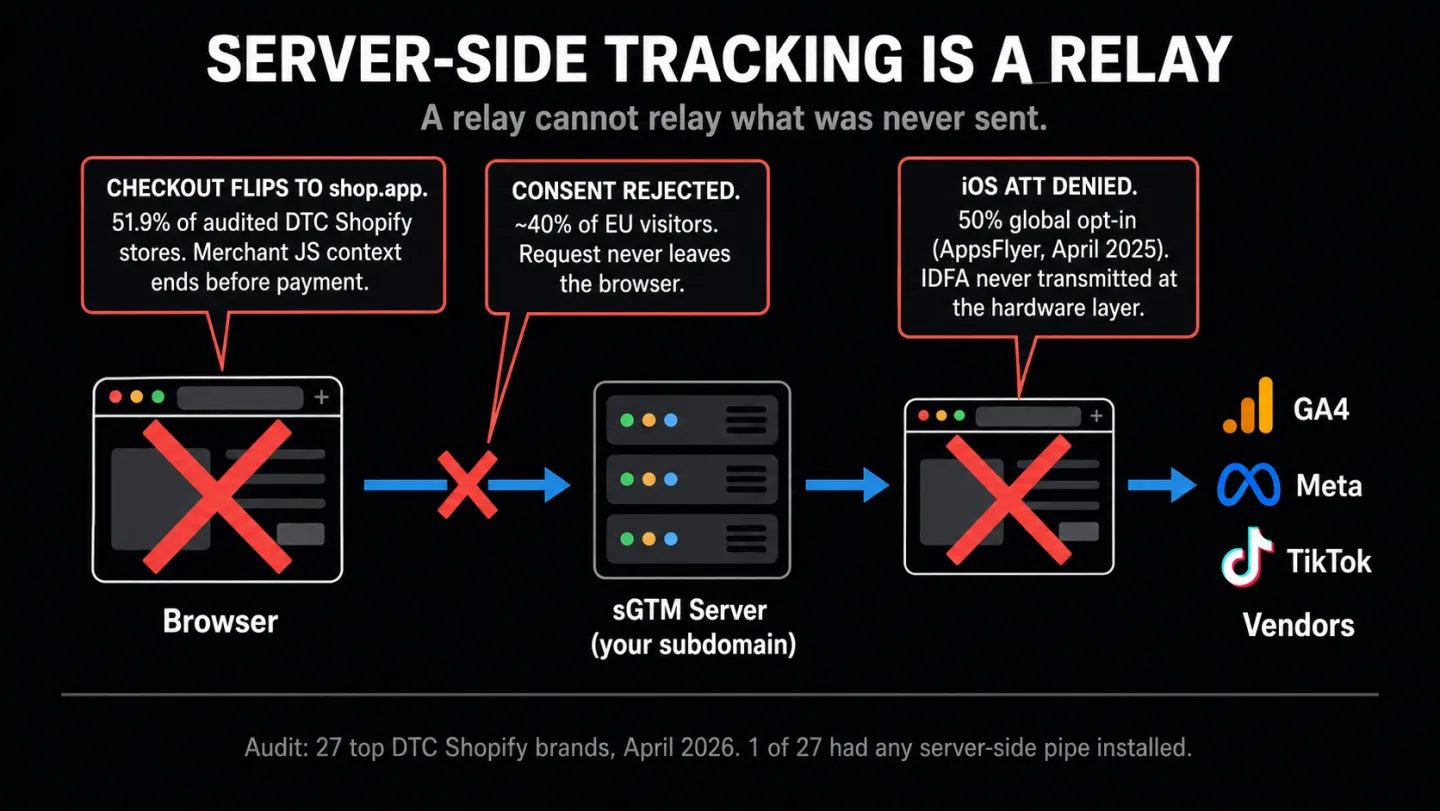
Server-Side Tracking: What It Fixes and What It Doesn't
Server-side tracking is pitched as the fix for every modern ecommerce data problem. In our April 2026 re-audit of 27 top DTC Shopify brands, one of them uses any server-side pipe. In more than half the sample, it wouldn't have closed the main gap anyway. Here is what server-side tracking actually fixes, what it cannot touch, and the real 2026 pricing math for the rescue ecosystem.
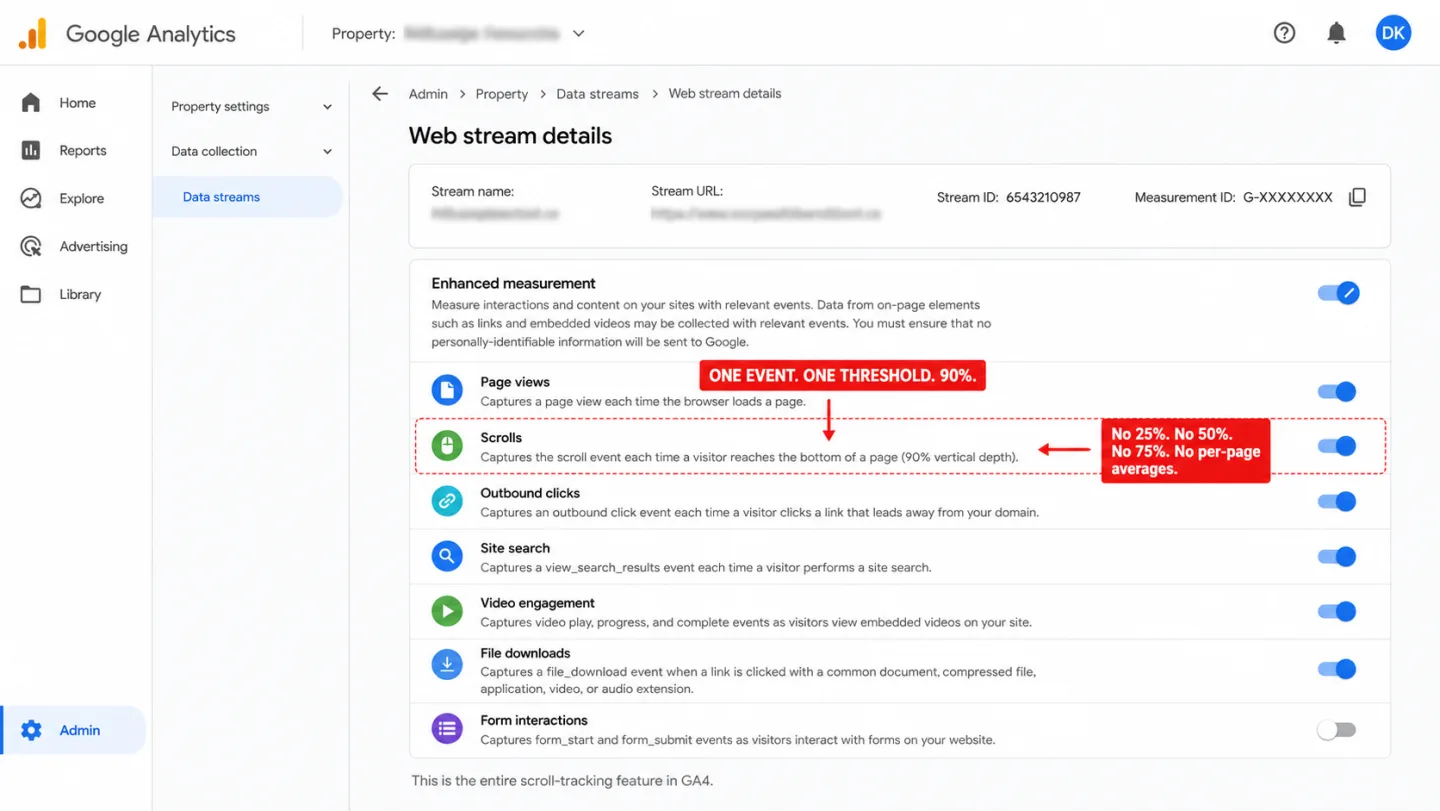
GA4 Scroll Depth Tracking: The 90% Problem (And How to Fix It)
GA4 fires one scroll event at one threshold: 90%. No 25%. No 50%. No 75%. No per-page averages. The tool that tracks your visitors' screen resolution has no idea whether anyone read past your headline.
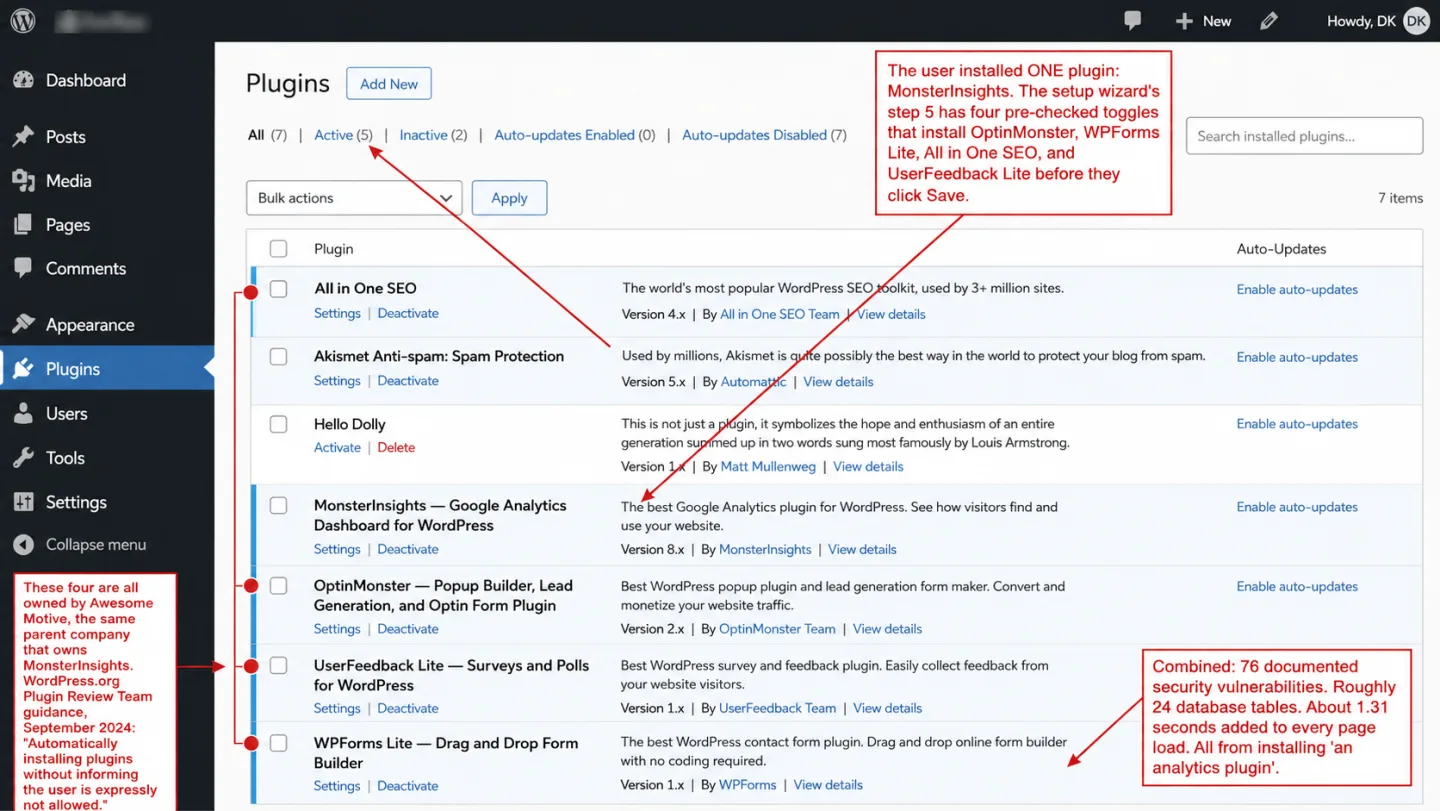
The Best WordPress Analytics in 2026 Isn't a Plugin
Every WordPress analytics plugin adds PHP overhead, database tables, and security vulnerabilities. The best WordPress analytics in 2026 installs nothing in WordPress at all.
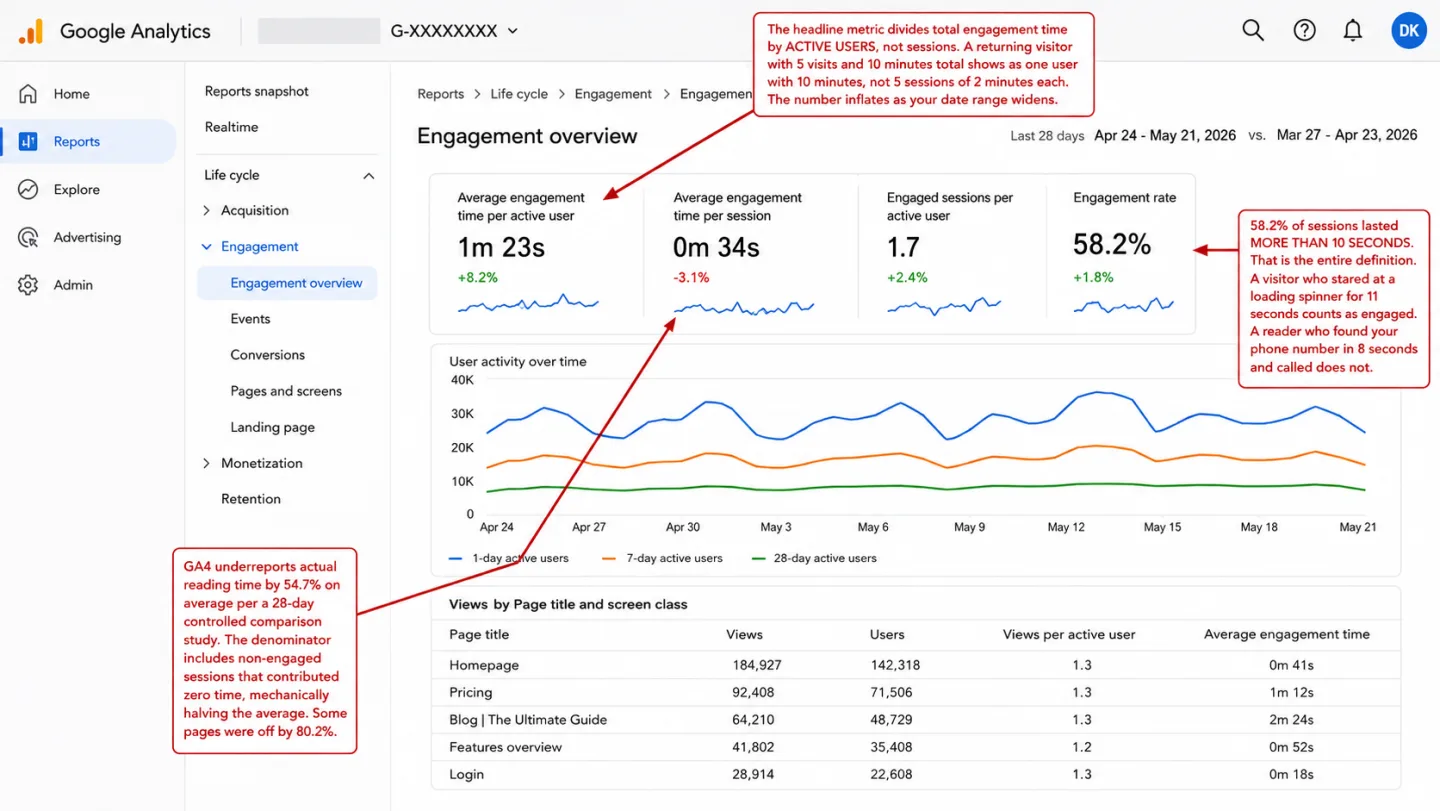
Everything Wrong with GA4's Engagement Overview (With Data)
GA4's engagement rate takes a binary 10-second threshold, inverts it, and calls the result 'engagement.' A visitor who stares at your loading spinner for 11 seconds is 'engaged.' Here is everything wrong with GA4's engagement metrics, backed by data.
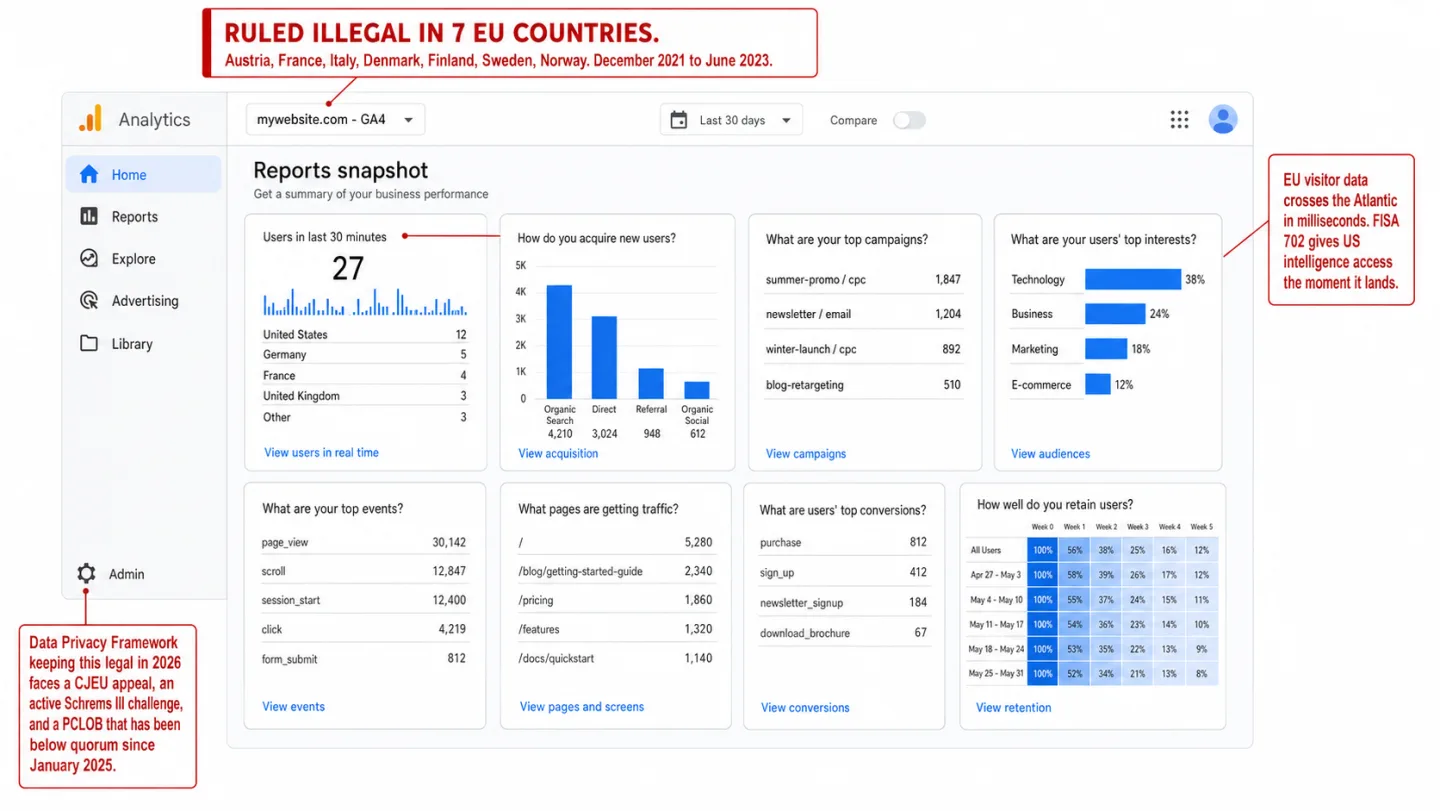
Is Google Analytics Legal in 2026? EU Rulings, US Lawsuits
Seven EU countries have ruled Google Analytics illegal. 2,341 US wiretapping lawsuits have been filed. The legal bridge keeping GA4 alive in Europe is cracking. And Google just turned your analytics into an AI advertising tool. Here's the full picture for 2026.
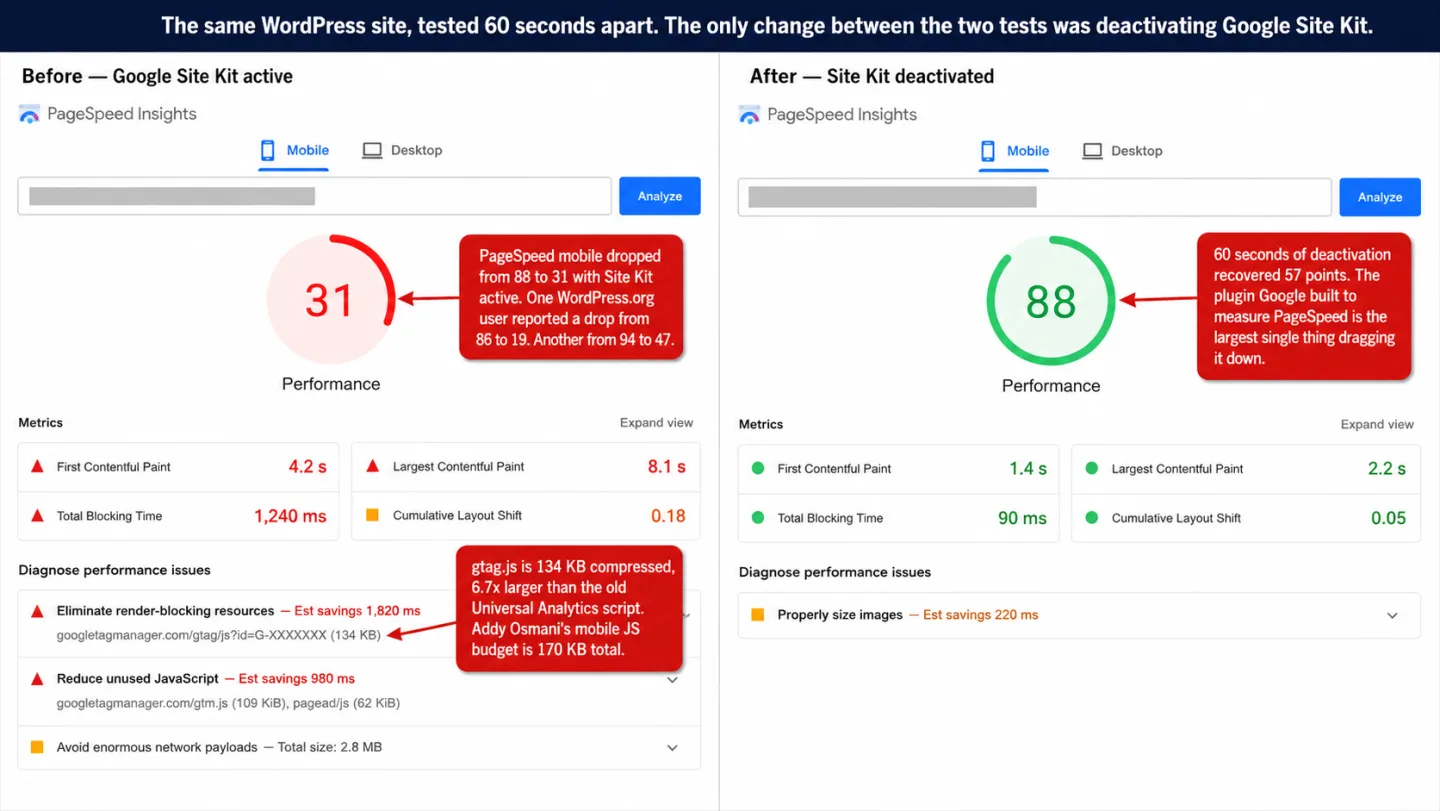
Google Site Kit Dropped My PageSpeed by 40 Points. Here's What I Did.
Site Kit users report PageSpeed drops of 20 to 67 points. Google's own plugin loads 134 KB of tracking JavaScript, adds 1 MiB of PHP overhead, and hurts the very scores it measures.
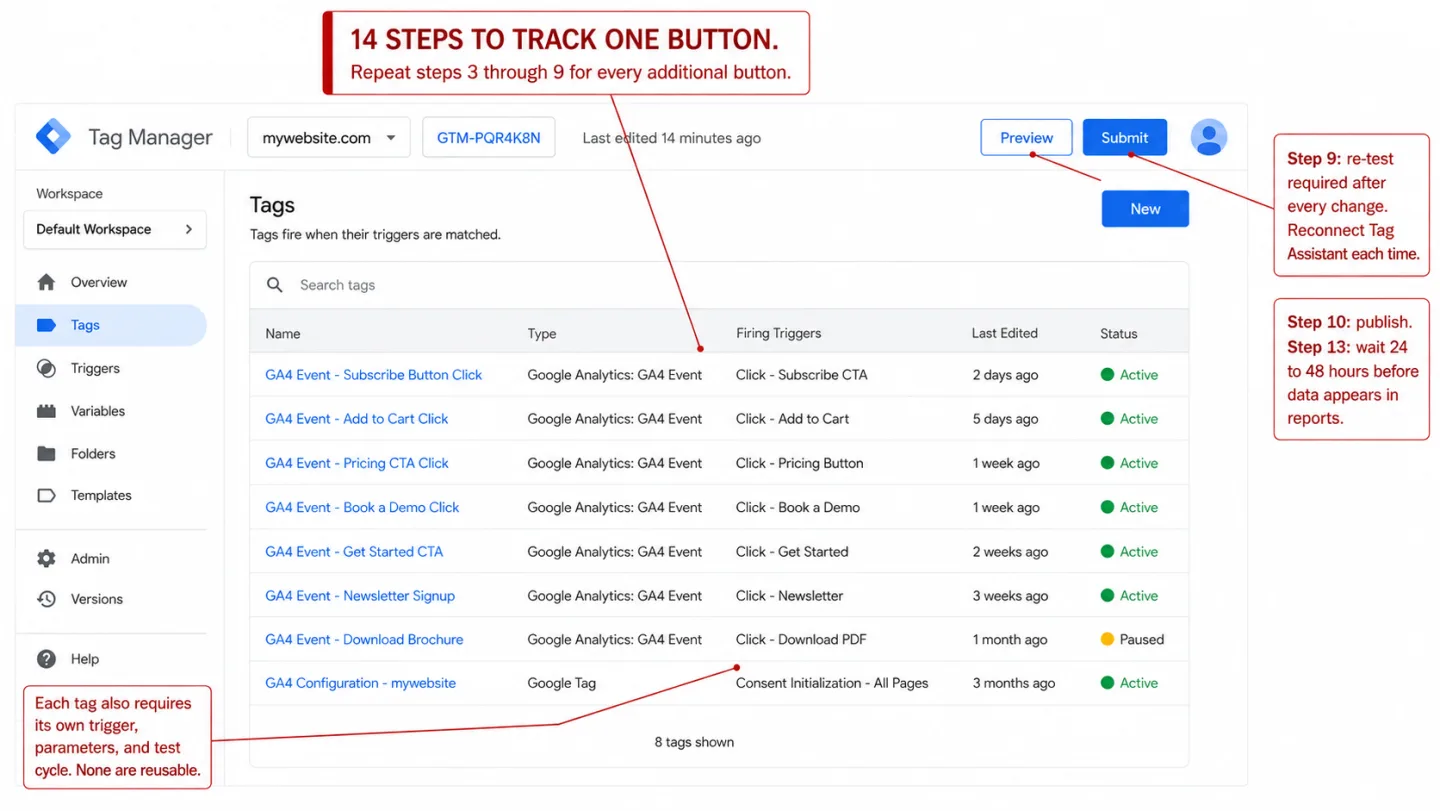
Track Button Clicks in GA4: The 14-Step Problem (And the 1-Line Fix)
GA4 does not track button clicks. Not your signup CTA. Not your Add to Cart. To track a single button, you need 14 steps across 3 platforms and a 48-hour wait. Here's the full process, every pitfall, and a 1-line alternative.
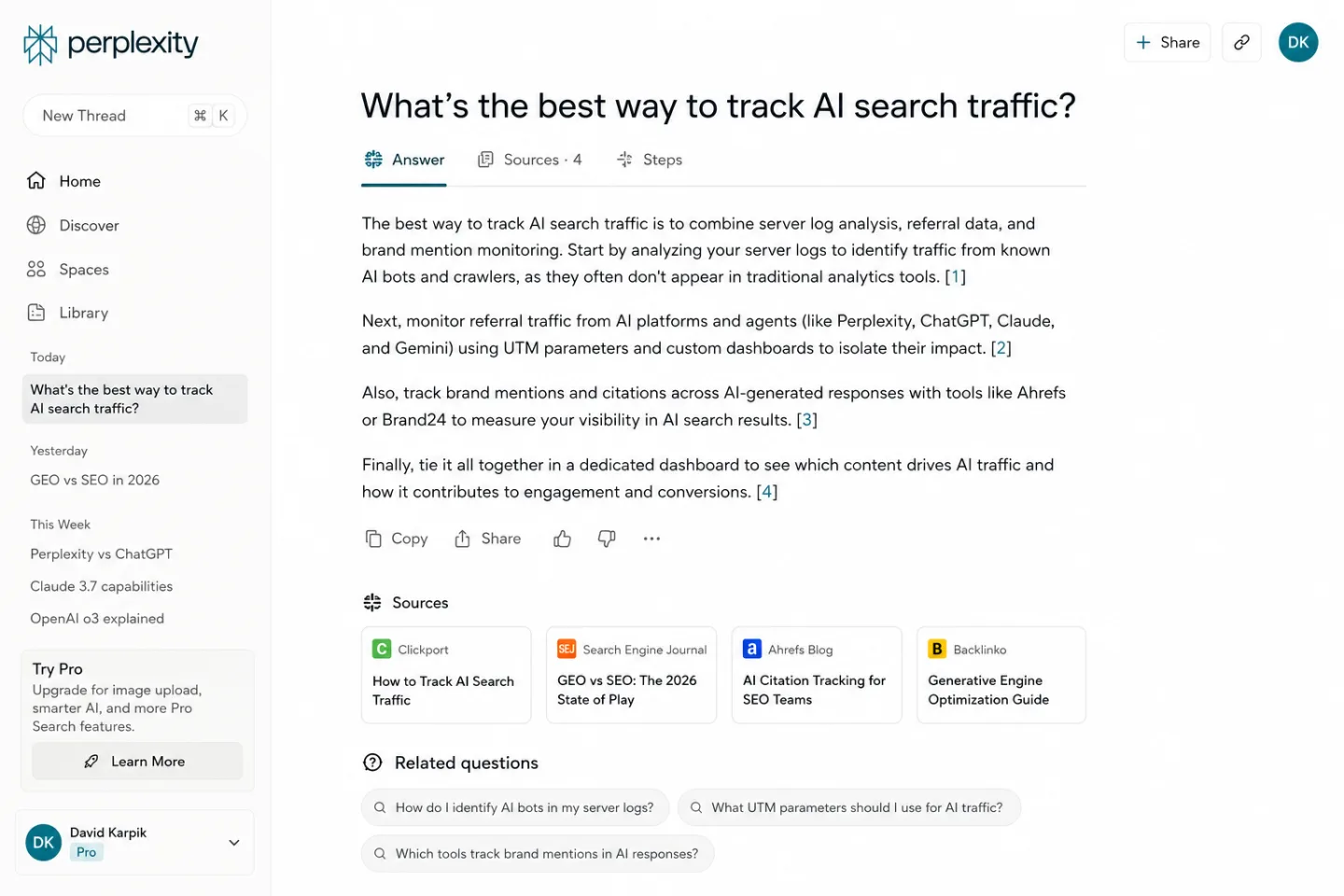
Whatever You Call It, AI Search Traffic Engages More Than Any Other Channel
There's a loud debate on LinkedIn right now about whether GEO is a real discipline or just SEO renamed. I'm not picking a side. But on the Clickport platform, AI search visitors score the highest engagement of any traffic channel, by a wide margin, and the most consistent. Here are the numbers.

What Using Cookie-Banner-Free Analytics Actually Means for Your Site
The UK's privacy regulator lost 90.8% of its tracked traffic after implementing a proper consent banner. That's the system working as intended. Here's what actually changes when your analytics don't need a cookie banner: from data accuracy and page speed to mobile UX, legal risk, and visitor trust.

Shopify Analytics: The Store Owner's Guide to Better Data
Shopify's built-in analytics miss 30-50% of EU visitors, misattribute much of your traffic as 'Direct,' and lock custom reports behind a $399/month plan. Here's what store owners need to know, and what better data actually looks like.
Why You Should Stop Using Google Analytics in 2026
Google Analytics is illegal in 8 European countries, classified as a wiretap in California, blocked by a quarter of all browsers, and costs $5,000 to $18,000 in hidden expenses. Here's every data point I could find.